
A lot of brands understand the importance of culturally adapted translation for content aimed at global audiences. However, some still confuse language services and which one they actually need.
In this blog, we’ll break down two commonly confused services: localization and transcreation.
Both go beyond direct translation by adding an extra step: cultural adaptation. But the differences between them matter. Knowing what sets them apart helps businesses avoid wasting time and budget on the wrong approach.
So, let’s define localization and transcreation first.
What Is Localization?
Localization is translation that makes text feel “local” to the target audience. It goes beyond language by taking into account dialect, cultural references, measurement units, date formats, UX layouts, and any other cultural signifier that needs to be adapted.
If you want to go deeper into the technical side of building multilingual-ready products, check our Localization vs Internationalization Guide.
Common use cases of localization include websites, apps, eCommerce platforms, software products, and video games, anywhere the user experience matters as much as the words.
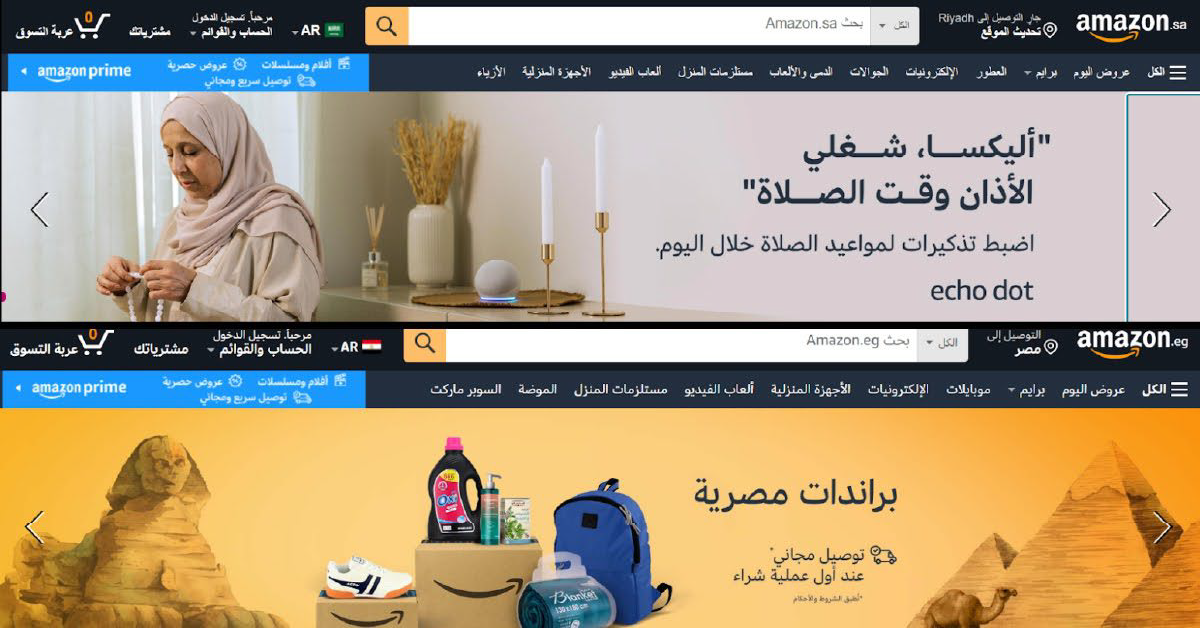
Brands well-known for strong localization efforts in global markets include Amazon, Nintendo, and Netflix.
Examples of Amazon’s Website Localization: Gulf Arabic vs. Egyptian Arabic
What Is Transcreation?
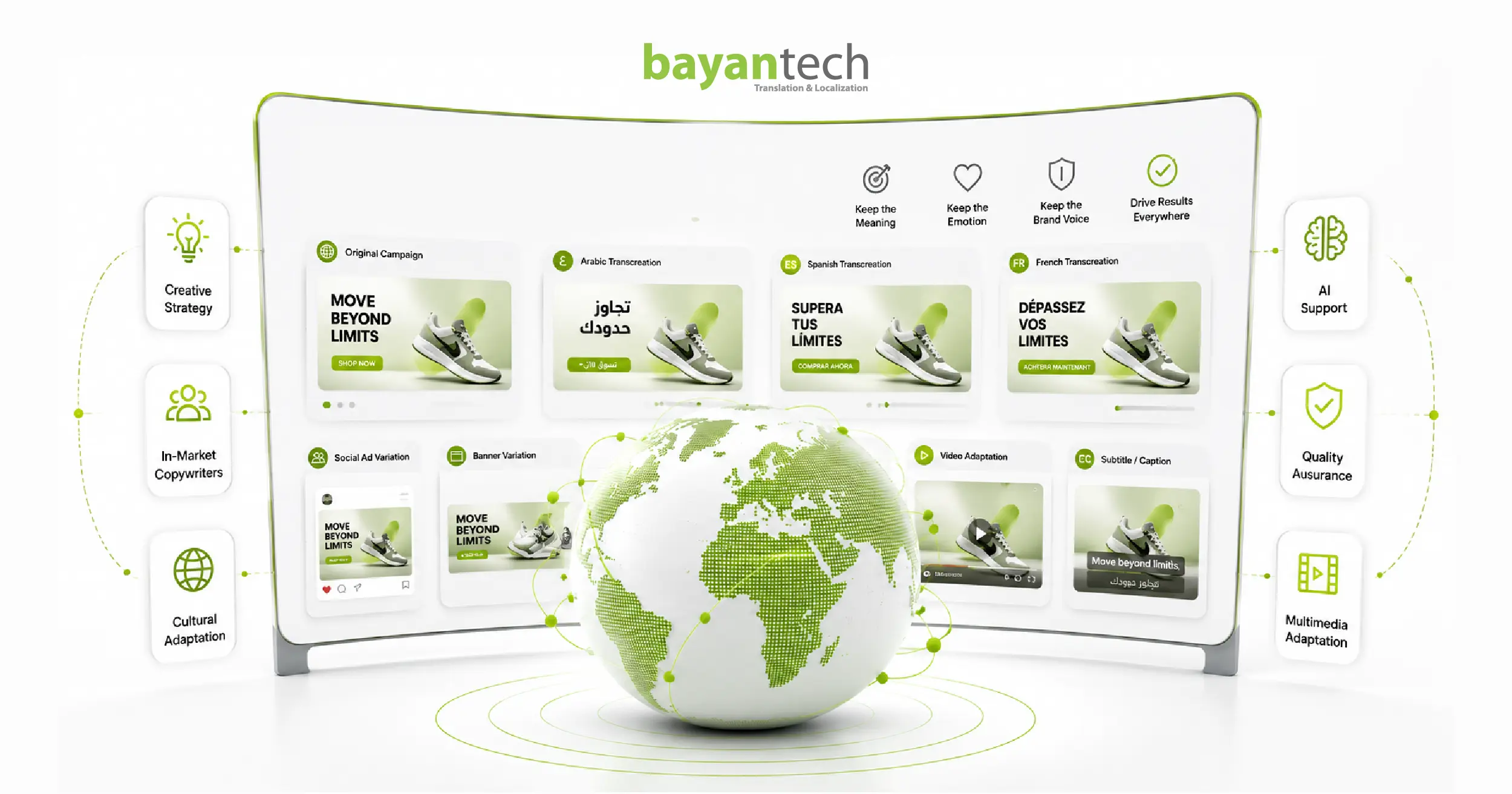
Transcreation involves both translation and creation, as the name suggests. It recreates content with the same intent and message of the source text, but in different phrasing in the target language.
This service is needed to create the same emotional impact of the source text, whether it be humor, empathy, or any other emotion.
Use cases of transcreation are slogans, brand campaigns, marketing copy, and social media content.
Transcreation requires professional translators with creative writing skills to both grasp the meaning in the source language and reflect it in the transcreated text.
Transcreation vs Localization: How to Know Which One You Need
4 Differences between Localization and Transcreation
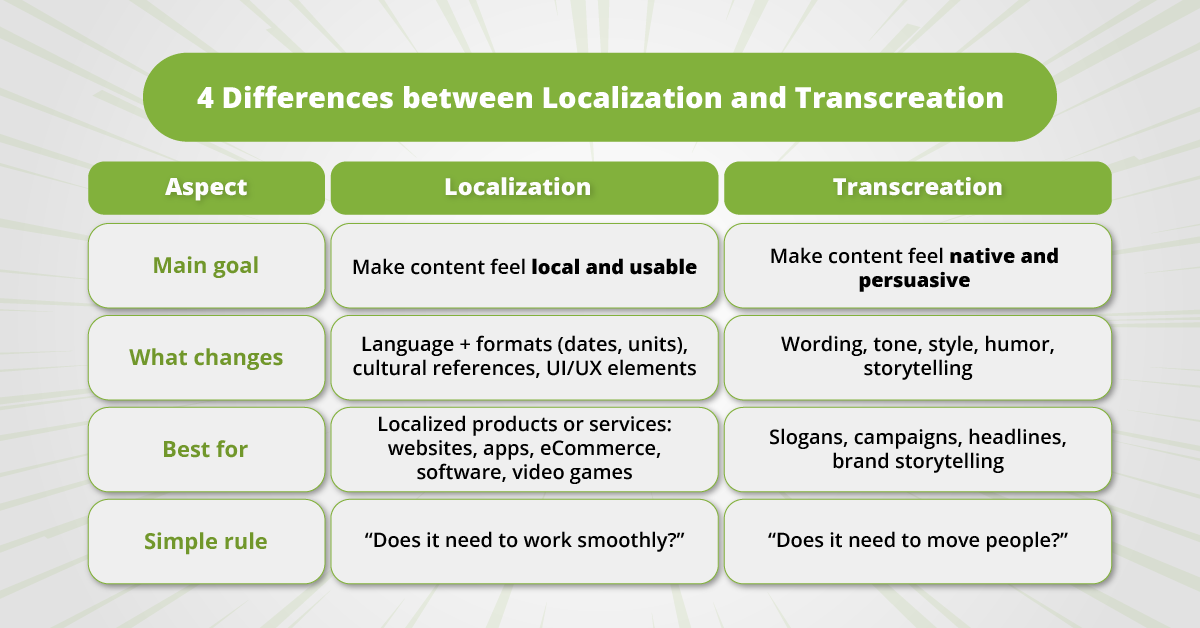
A simple way to think about it is this: both are built on understanding the target audience, but they solve different problems, especially when language and culture shape how a message lands.
Advantages: What Each One Is Best At
Localization = structure, functionality, clarity.
It’s ideal when your goal is to adapt a product so the user experience feels smooth and familiar. It focuses on consistency, usability, and reducing confusion so the content feels like it was originally made for that market.
Transcreation = creativity, cultural resonance, persuasion.
It’s the right choice when your original message depends on tone, emotion, or brand personality. The goal isn’t to mirror the source text word-for-word, but to recreate the same effect in a way that feels natural in the target language.
Use localization when:
- You need to adapt a product like a website, app, game, or platform experience
- Your content is informational, functional, or technical, and clarity matters more than creativity
- You need a consistent experience across UI elements, help content, settings, and support pages
- You’re optimizing for usability, accuracy, and trust (especially in regulated industries)
Use transcreation when:
- Your original message relies on humor, emotion, or brand personality.
- A slogan, headline, or campaign needs reinvention, not a direct translation.
- You’re entering a market where audiences interpret messaging through culture and context, not literal meaning.
- Your goal is to persuade, inspire, entertain, or drive action.
A quick rule of thumb:
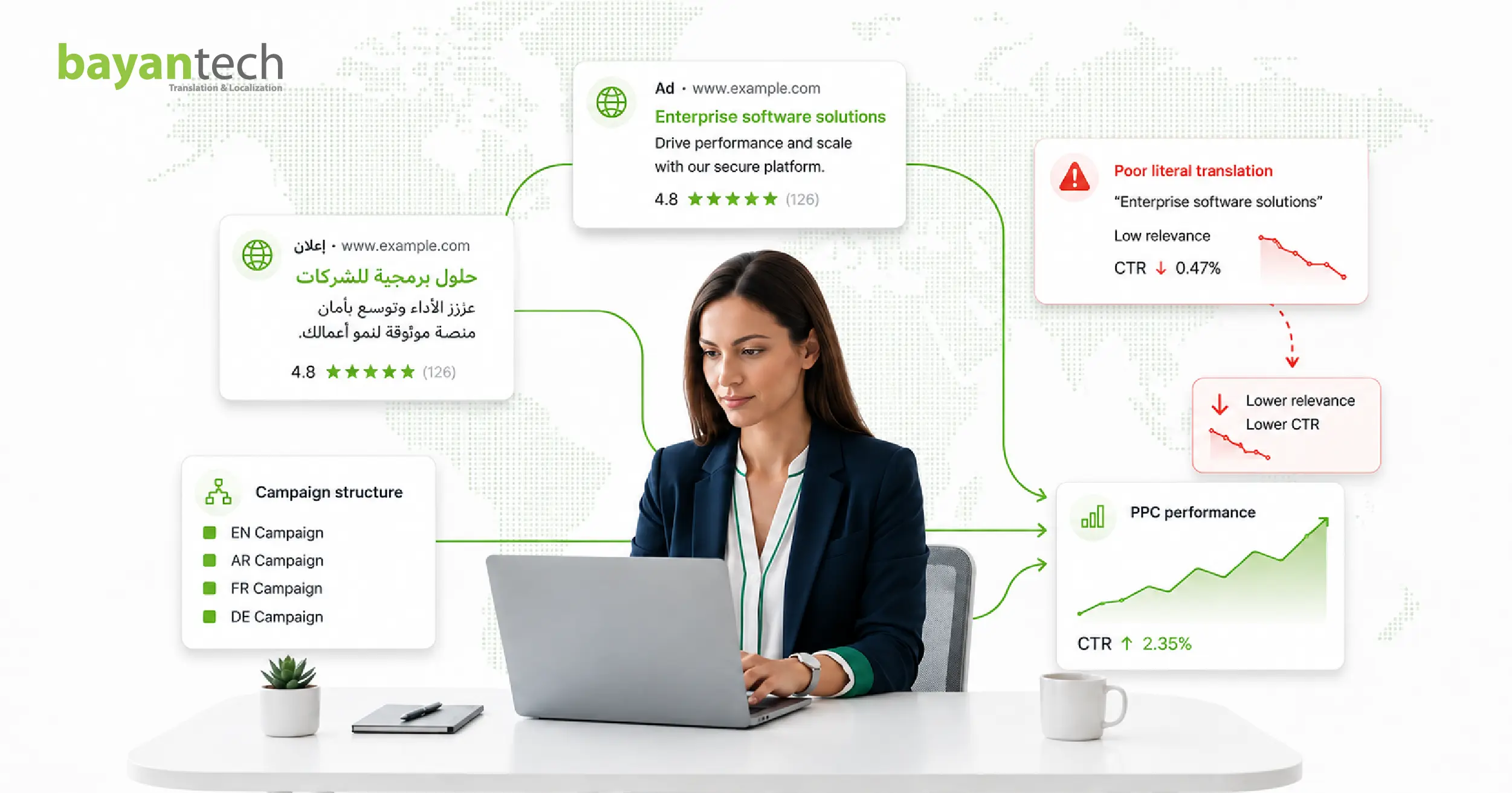
If your content must persuade, inspire, or entertain, transcreation delivers stronger results than traditional localization.
And if you’re building global campaigns and need messaging that feels original in every market, Marketing teams can explore our Marketing Transcreation Services for culturally crafted campaigns.
How Choosing between Localization & Transcreation Drives Global Success
When brands match the method to the goal, they deliver original content that feels native, trustworthy, and relatable to the target market—no matter the region. The result is higher engagement, more authentic communication aligned with language and culture, and fewer misinterpretations that can weaken trust or hurt conversions.
For localized products or services, localization improves the experience from the ground up: clearer UX, smoother usability, and stronger credibility because everything—from cultural references to formats and interface elements—works naturally for local users.
For UI, UX, and structural adaptation, explore Website Localization Services.
For transcreated content, the value shows up in how people feel: stronger emotional connection, more memorable brand experiences, and messaging that persuades instead of sounding translated.
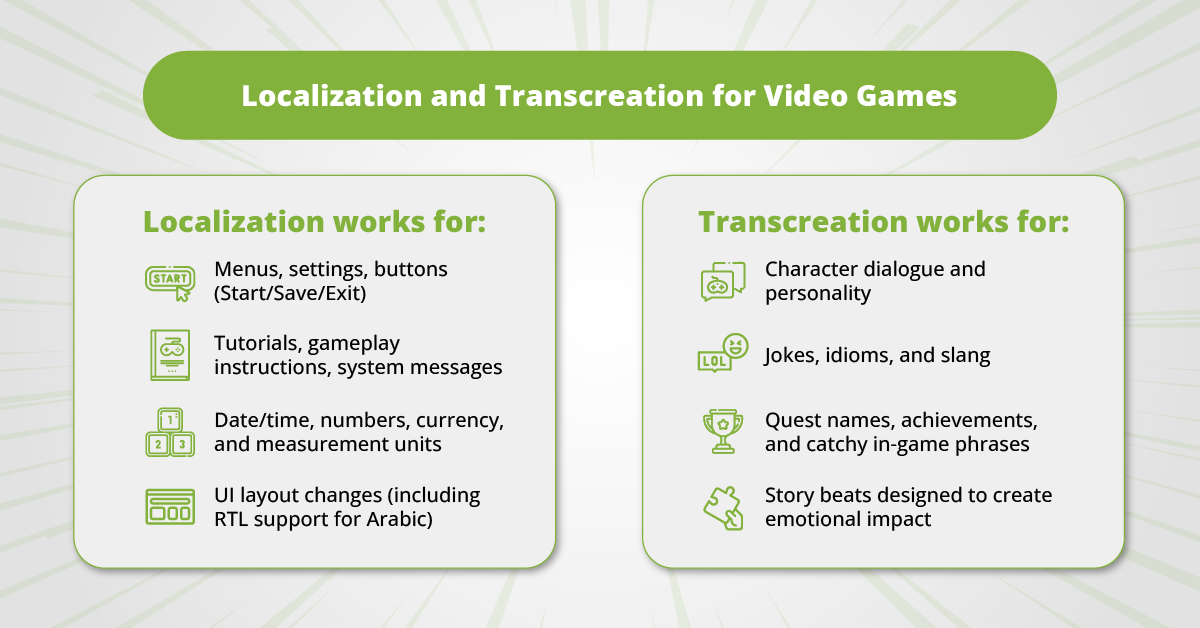
Video games are a strong example of how both methods work together—localizing UI, menus, and gameplay instructions while transcreating dialogue, humor, and character voice to land naturally in every market.
Bring Your Message to Life with Expert Localization & Transcreation
Now that you know the difference between transcreation and localization, which service does your business need?
At bayantech, we provide translation, localization, and transcreation in over 120 languages, delivered by native translators and creative writers with proven experience across industries.
We support a wide range of content types and tailor our language solutions to your business goals, ensuring your content reads naturally, resonates with your audience, and performs as needed.
To discuss the right approach for your project, book a free consultation with our experts and start with confidence.