

Social Media Localization: How to Adapt Your Content for Each Market Without Losing Your Brand

A digital illustration of professionals managing multiple social media platforms like Instagram and WhatsApp on a large tablet, representing the core of a social media localization strategy.

Social media is single-handedly doing most of the marketing work that used to be done by cable TV, newspapers, and billboards.

So, if you’re missing out on adapting your social media content for other markets, here’s the hard truth:

This mistake will cost you audience trust, damage your brand image, and cost you conversions.

Learn more about social media localization and how to use it to maximize your brand’s success internationally. 

Why “Copy-Paste” Global Marketing Fails on Social Media

Global posts don’t travel on their own. Localized social media marketing needs localized content, not recycled assets. 

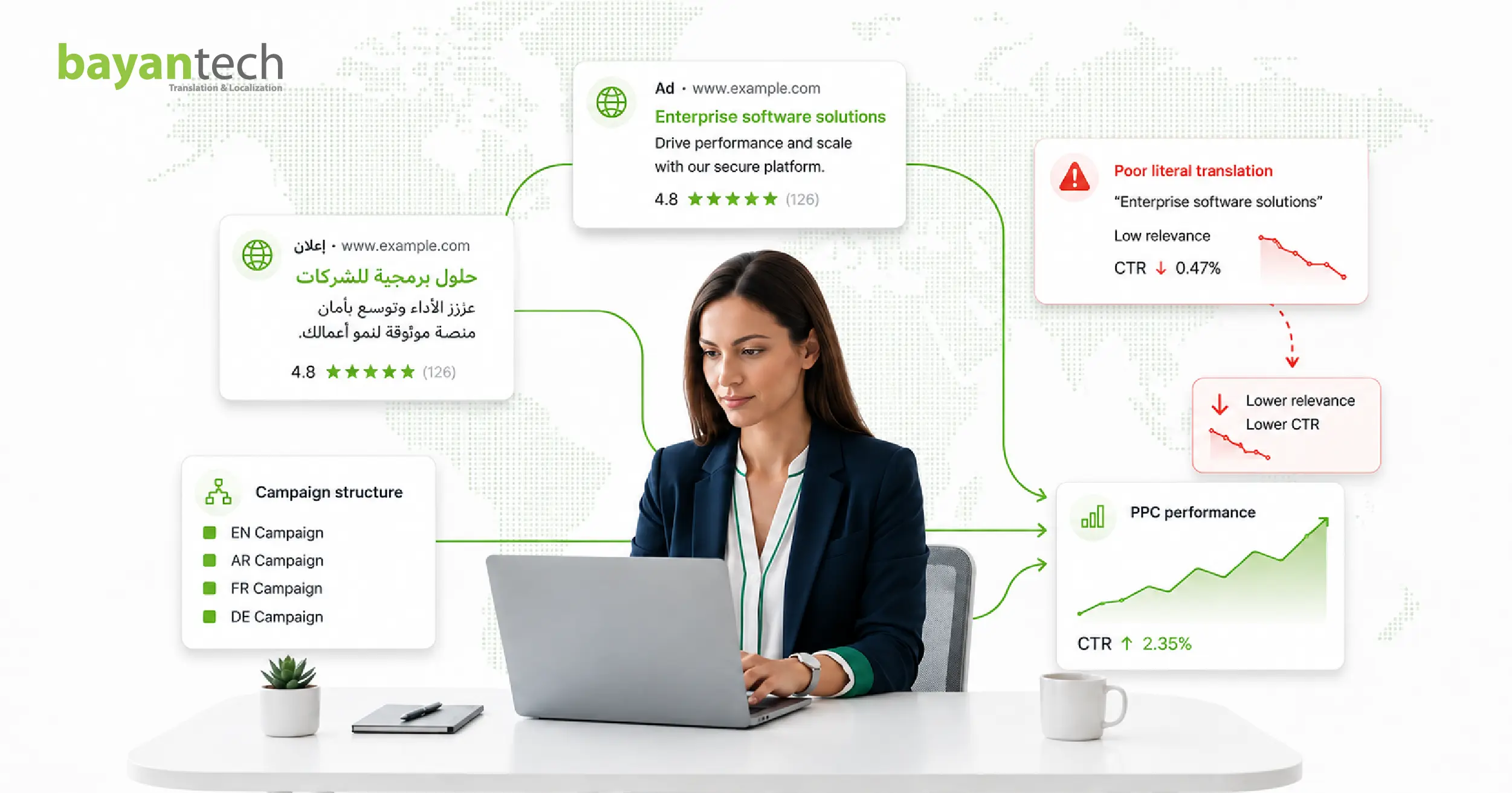
When captions, visuals, and replies ignore the target language, native language cues, and the reality of local audiences, relevance drops.

An infographic titled "Social Media Localization 101" detailing how to adapt captions, hashtags, and creators for regional social media engagement.

Target Language vs. Native Language Voice

Writing in the target language can be “correct” yet not native, and that gap shows up in engagement.

  • Correct: grammar and meaning are fine.
    Useful for clarity, but it often reads like a translation.
  • Natural: idiomatic, culturally tuned, and effortless for the local language reader.
    This feels like something a local would actually say, in the way they’d say it.

Localization Is a Series of Local Decisions

Effective localized social media marketing happens market by market. Treat these as switches you set per region—not once, but every campaign.

  • Holiday calendars: what to post, pause, or spotlight
    Align with real moments. Plan content around local holidays and shopping peaks; pause when posting would be tone-deaf.
  • Colors & symbols: meanings shift by regionValidate palettes and icons. Colors, numbers, and gestures can signal celebration in one place and caution in another.
  • Humor & references: what is funny vs. what offendsSwap jokes, idioms, and memes for native equivalents. Keep the intent; change the setup so it resonates locally.

The Cons of Untranslated Social Media: Metrics to Watch 

When social media content isn’t localized for local markets, the costs hide in plain sight. Read these signals as early warnings, not surprises.

KPIs That Signal Trouble

  • Engagement below your global averagesLikes, comments, saves, and shares trail despite similar reach
  • High tap-through to site, then quick exitsTraffic from social media platforms spikes, but bounce rises and time on page drops.
  • Negative reactionsHides, mutes, and blocks increase after specific posts or formats. That’s your audience telling you the content feels off.
  • Brand mismatch indicatorsComment sentiment shifts to “off,” “irrelevant,” or “not for us.”

Platform Nuance (Same Content, Different Behavior)

Even the best idea won’t perform the same on every channel. Treat platform mechanics as variables in your test plan.

  • Video length & pacing (short-form vs. long-form tolerance).Match the feed’s rhythm: hook in 2–3s for short-form; add context and chapters for long-form.
  • Link placement (bio, captions, stickers, cards).Optimize the click path per platform; make the “next step” obvious where links actually live.
  • Sticker/feature formats (polls, Q&A, audio, captions) vary by market usage.Use the features locals actually tap; retire features with low adoption in that market.

The Upside: Engagement, Trust, and Revenue in Local Markets

When global marketing respects cultural nuances, results show up quickly with local audiences, in the comments, in the inbox, and in revenue.

What Improves (Measurably)

  • Engagement QualityMore saves, relevant comments, and shares from local audiences. The post feels written for them, so it earns interaction, not just impressions.
  • Conversation HealthFaster DM response rates and higher satisfaction in-language. Clear, native replies reduce back-and-forth and lift CSAT.
  • Conversion ImpactStronger assisted conversions from social to localized landing pages. Message, offer, and units match end-to-end.
  • Brand LiftSentiment shifts from “generic” to “for us.” You see fewer “not relevant here” comments and more local endorsements.

Add Regional Flavor (Not Just Translation)

Regional flavor is where global intent meets cultural nuance: the imagery, timing, and feature choices that signal “this is for us.” When that signal is clear, local audiences engage more.

How it looks in practice: 

  • Gulf · Ramadan

Ramadan reshapes daily routines and intent. Lead with sunset/iftar community moments and giving-themed CTAs; keep videos shorter to match evening peaks; and prioritize Arabic-first captions that acknowledge fasting rhythms. You’re not just labeling a season—you’re matching how people live that month.

  • Mexico · Buen Fin

Buen Fin is price-driven and time-bound. Put the offer front and center in Spanish, call out local payment options, and use carousels to unpack bundles quickly. Schedule posts around payday windows so your message meets intent, not just impressions.

A graphic highlighting signs of failing social media marketing, such as using the same English caption everywhere or failing to account for local event awareness.

A 6-step Workflow for Social Media Localization You Can Reuse

A repeatable path that fits your marketing strategy and scales across social media platforms.

1) Brief by market

Your social media manager captures the business goal, the persona, seasonal triggers, and the platform mix for each country. 

2) Language & voice

Define target language tone (formal/informal), taboo list, emoji policy, and typical CTA verbs. 

3) Creative kit

Build templates sized for each social media platform, with slots for date/currency and regional visuals. 

4) Review loop

A local reviewer validates terms, holidays, and imagery before publish. Greenlight only when language, references, and visuals fit.

5) Publish windows

Time posts to local commute, lunch, and prime time. Queue reminders around local event dates so the social media campaign stays timely.

6) Tracking posts

Track saves, comment keywords, and clicks to refine the next campaign. Compare outcomes by market and platform to guide the next sprint.

Copy Checklist Per Region 

Design for local audiences and cultural nuances so every asset ships as localized content—fast, consistent, and on-brand.

Words

  • Colloquialisms and idioms that feel native
  • Number/date formats and units (e.g., 1.000,00 vs. 1,000.00; kg vs. lbs)
  • Correct holiday names and local spellings
  • Brand terms checked against your termbase and aligned with broader marketing translation services to keep messaging consistent
A screenshot of the Nike Seoul Instagram profile, showing localized social media content and Korean-language bio information tailored for the South Korean market.

Compliance

  • Required age markers, warnings, or platform labels included
  • Local ad rules (claims, pricing, currency display) confirmed

Social Media Localization Depends on the Platform

Design tactics per social media platform so your social media posts feel native to each target audience.

Short-form video

  • Localize on-screen text; avoid embedded English.
  • Add an end card with a local CTA, currency, and URL/QR that points to the right market page.

Stories/Reels/TikTok

  • Use local stickers, trending audio with proper licensing, and region-specific price displays.
  • Align promo windows with local calendars; keep captions short and idiomatic.

B2B channels

  • On LinkedIn/X, tailor thought-leadership to target audience interests in each specific region (data points, regulations, case studies).
  • Localize titles, preview text, and lead magnets; match form fields and units.

Real-Life Examples of Successful Social Media Localization 

Nike’s social media localization is clear: they run dedicated city accounts for each target market, then build for the specific region instead of repackaging a global post. 

Captions, hashtags, and stories speak the local language; creators and references come from the community. 

A screenshot of the Nike NYC Instagram profile, demonstrating how hyper-local social media marketing focuses on specific city-based communities and events.

Here’s what the brand got right: 

  • Language & voice: Korean-first captions on Nike Seoul’s account; NYC slang and venue tags on Nike NYC account; both keep brand voice, but sound native to their local audiences.
  • Formats & features: City-specific reels, highlights, and event reminders that make sense for each feed.
  • Community signals: Replies, mentions, and collabs with local athletes/creators that anchor posts in the city.

In the Middle East, Nike published Arabic-led creative featuring Arab women athletes: “What Will They Say About You?”, which sparked wide discussion and strong pickup across platforms, showing how culturally grounded storytelling earns attention locally and travels globally. 

A Nike advertisement featuring diverse female athletes with Arabic typography, illustrating the importance of cultural representation in social media localization.

This is a strong example of culturally grounded storytelling, exactly the type of adaptation powered by skilled transcreation services that protect brand voice while making content native to each audience.

Ready to Start Localizing Your Social Media? 

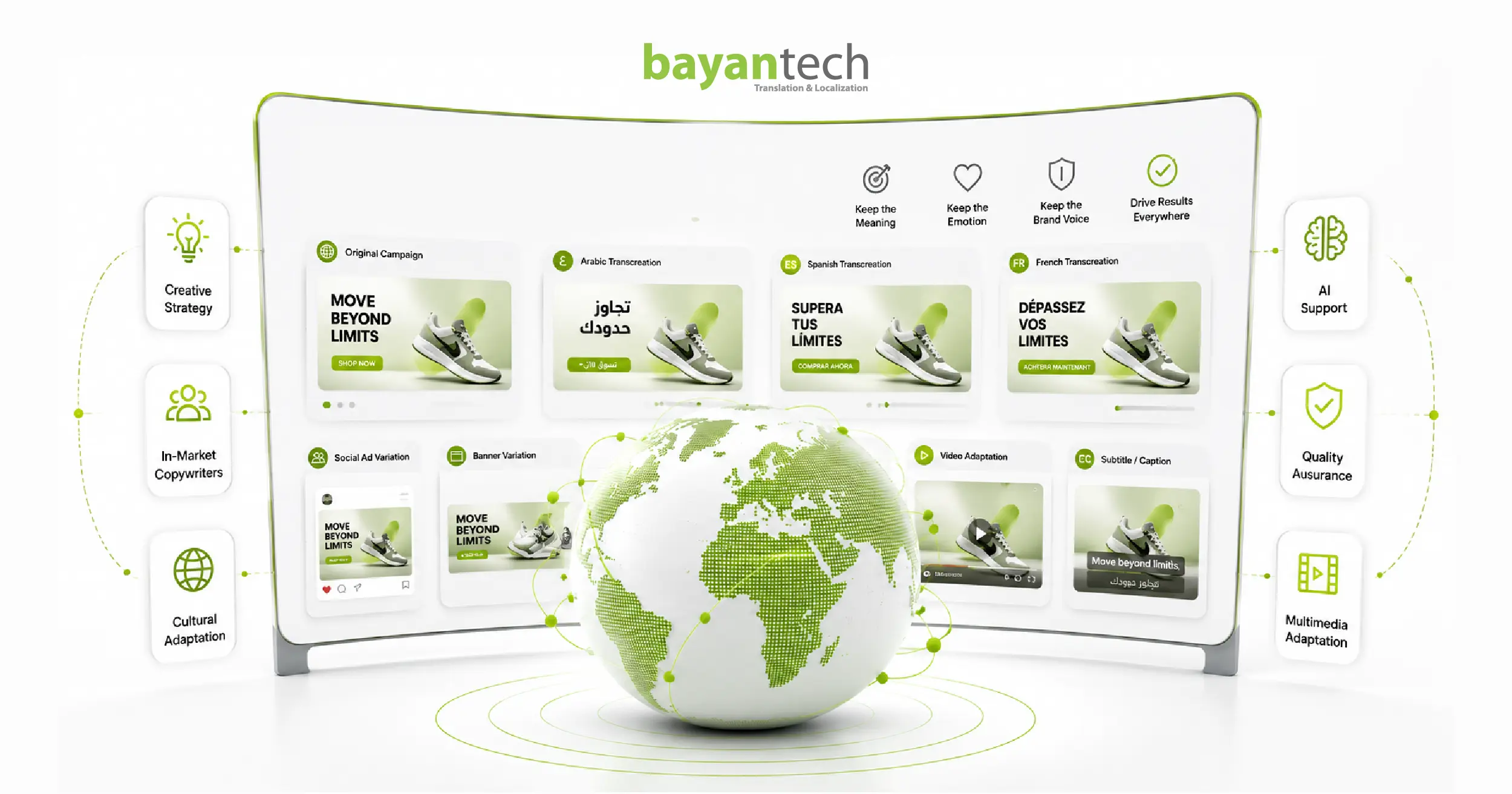
Our multimedia localization services adapt your brand’s captions, hashtags, creative assets, voiceover/subtitles, and landing pages for each market, led by native linguists and backed by ISO-certified workflows.

We also support international SEO services to help your localized social content and landing pages get discovered in each target market.

We handle the brief, transcreate, review with local experts, publish per platform, and track the metrics that matter so you can scale what works. 

Talk to our team, and we’ll map a quick pilot for your top two markets.

Share

Facebook
Twitter
LinkedIn

Let's Stay In Touch

Sign up to our newsletter and receive the latest industry news, insights, and trends straight to your inbox.