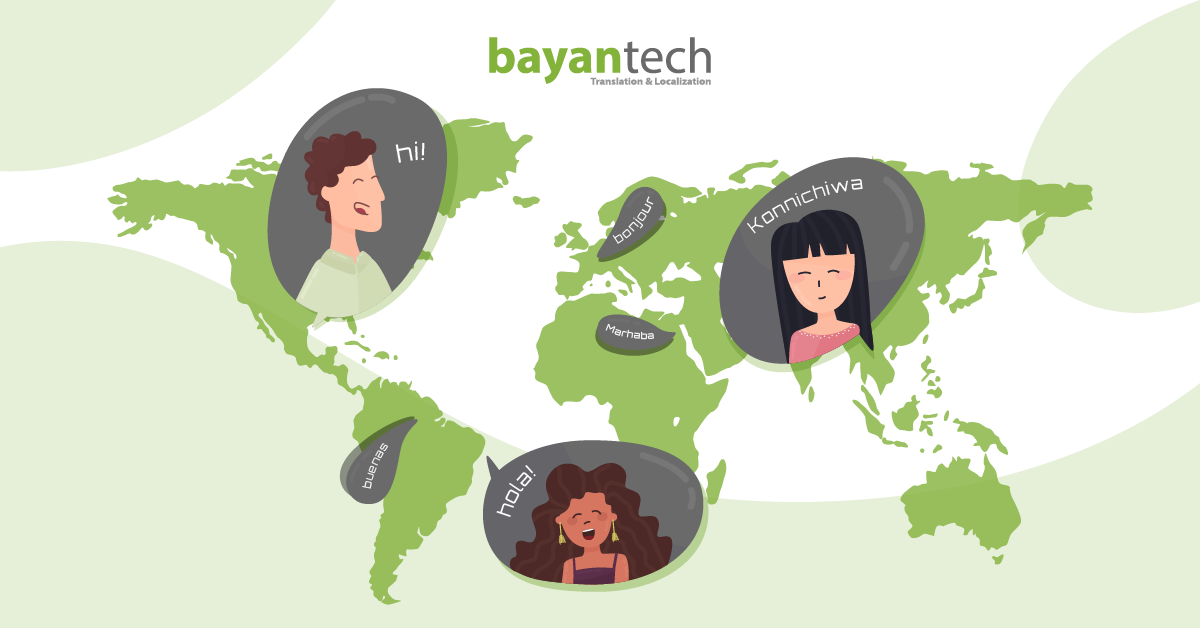

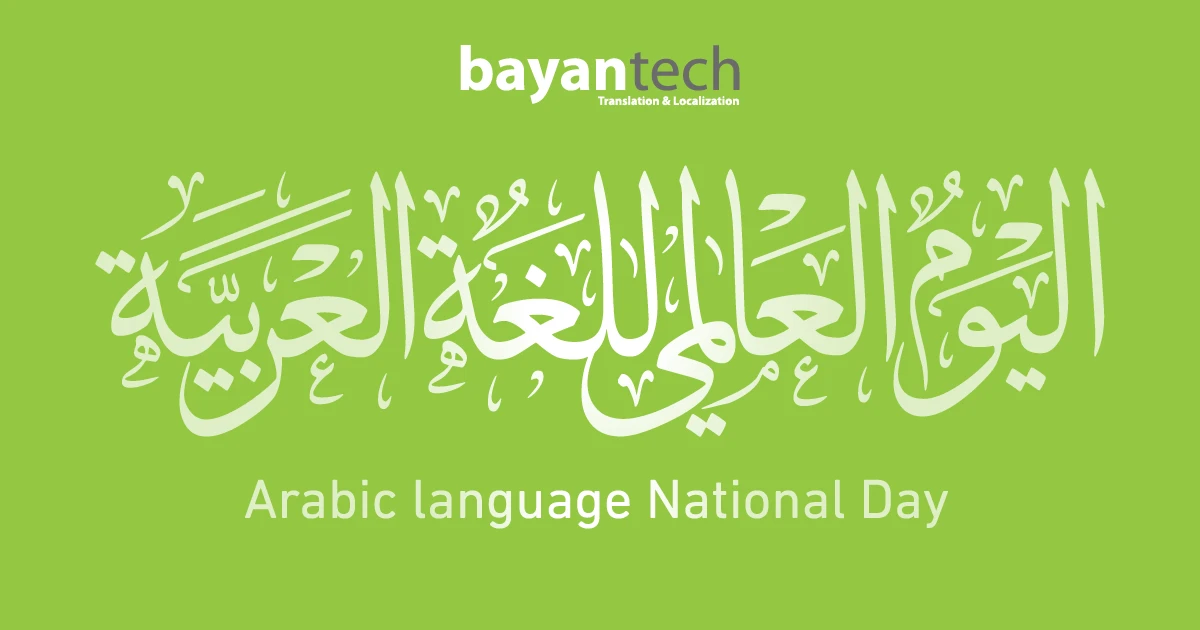
Every year on December 18, World Arabic Language Day, as designated by UNESCO, the world celebrates Arabic as one of the most influential and widely spoken languages on the planet.
Yet many global companies still miss the opportunity to adapt to the wide Arabic-speaking audience.
Despite being one of the six official UN languages and an official language across numerous regions, brands often rely on English-only content.
Unfortunately, this leads to missing out on millions of native speakers in Arabic-speaking countries, failing to connect culturally, and sometimes even harming their credibility.
On World Arabic Language Day, it’s the perfect moment for businesses to rethink how they speak to Arabic audiences.
Get the full scope on how Arabic translation and localization are the right move for your business to culturally connect with Arabic speakers.
The Gap between the Arabic Language and Global Business Presence
In global business, there’s still a noticeable gap between the Arabic language and culture and how brands show up in the region.
Many companies assume that translating a few web pages into Arabic is enough. But without understanding the depth of the Arabic language and its role in shaping identity, their message often fails to connect with their audiences.
Arabic is rich, expressive, and diverse, not a single uniform way of speaking.
While Modern Standard Arabic is used in formal writing, media, and official communication, most native Arabic speakers use regional dialects in their daily lives, like:
- Egyptian Arabic
- Gulf Arabic
- Levantine Arabic
- Maghrebi Arabic

Each dialect has its own vocabulary, expressions, and cultural references. A slogan that works in Cairo will sound distant and culturally unaware in Riyadh or Casablanca.
For native Arabic speakers, language isn’t just a channel; it’s part of who they are.
Did You Know? Arabic Language Facts
- It’s one of the oldest continuously used written languages in the world, with a long literary, scientific, and religious tradition.
- Arabic is a Semitic language, with influence over many other languages, like Spanish, as well as Persian, Turkish, and others.
- It is written from right to left, which has a direct impact on page layout, UX, and visual design.
- Its root-based structure allows many related words to be formed from the same three-letter root, adding depth and nuance to meaning.
How Embracing Arabic Strengthens Global Reach
When brands invest in Arabic localization services and take Arabic content localization seriously, they position themselves as culturally aware, trustworthy partners rather than distant global brands.
Brands that adapt content for Arabic audiences gain:
- Stronger regional trust and long-term brand affinity.
- Increased engagement with tailored Arabic social media content.
- Wider visibility through Arabic website localization for SEO.
- Better search performance with multilingual SEO for Arabic.
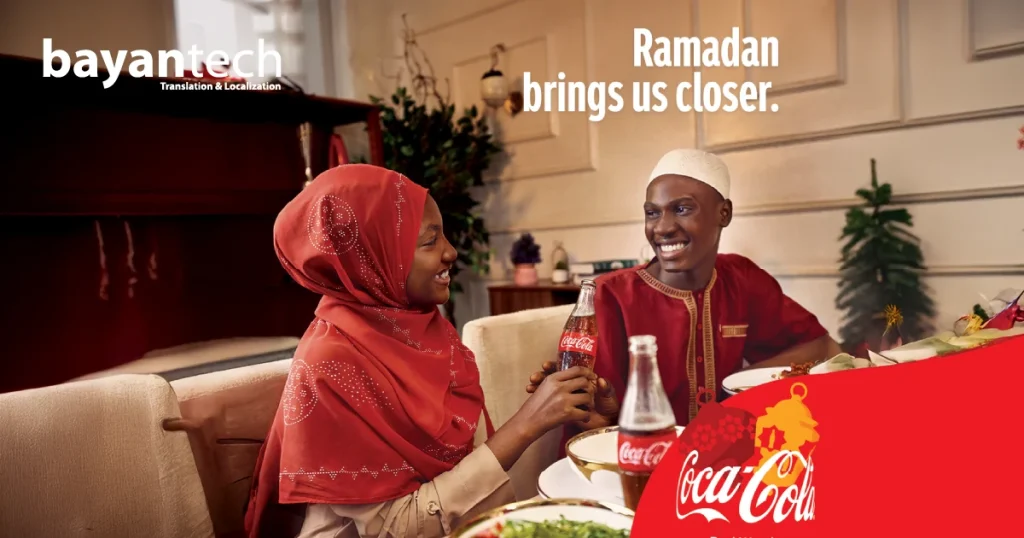
Part of localizing into Arabic is considering how language interacts with religion and cultural values. For example, most brands market their products through localized content during holidays like Ramadan, Eid al-Fitr, and Eid al-Adha as a way to connect with their audience.
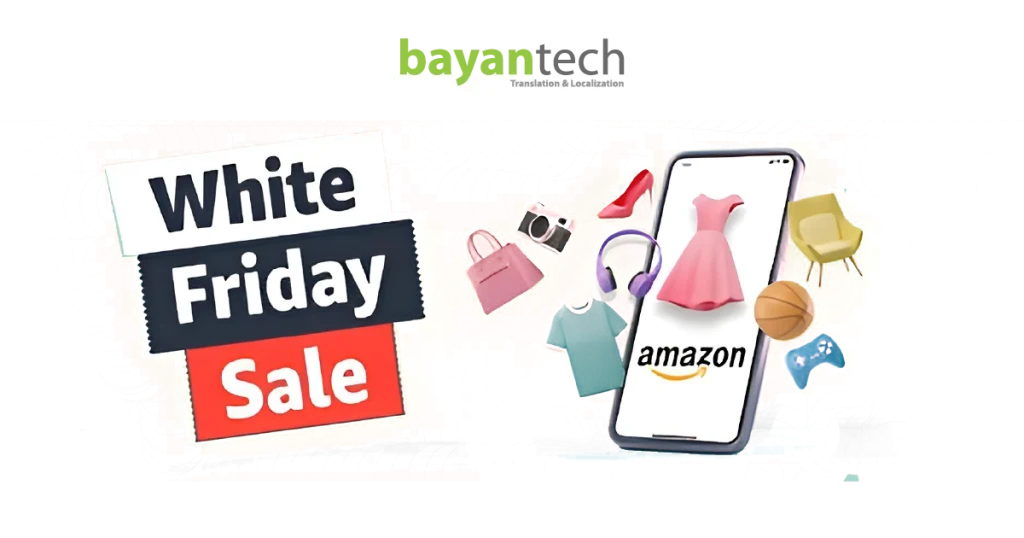
Another example of why Arabic localization is key is the term used for Black Friday sales in the Middle East.
In Islam, Friday is a holy day associated with community, prayer, and blessing, so a direct translation of “Black Friday” into Arabic can sound negative, because “black” often carries associations of grief or misfortune.
That’s why many brands and retailers in the region use the term “White Friday” instead, choosing a phrase that feels more positive, respectful, and culturally aligned with how Arabic-speaking audiences view this day.
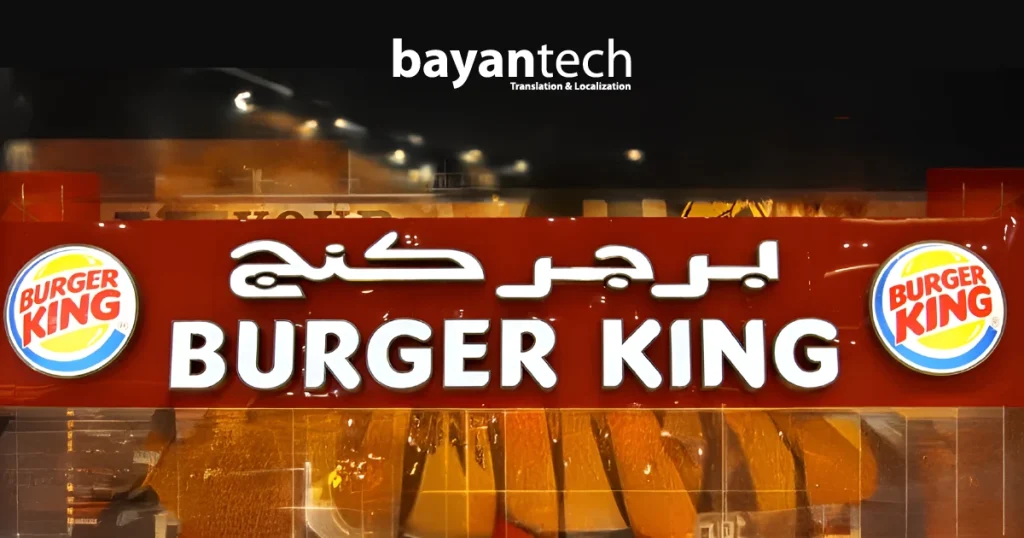
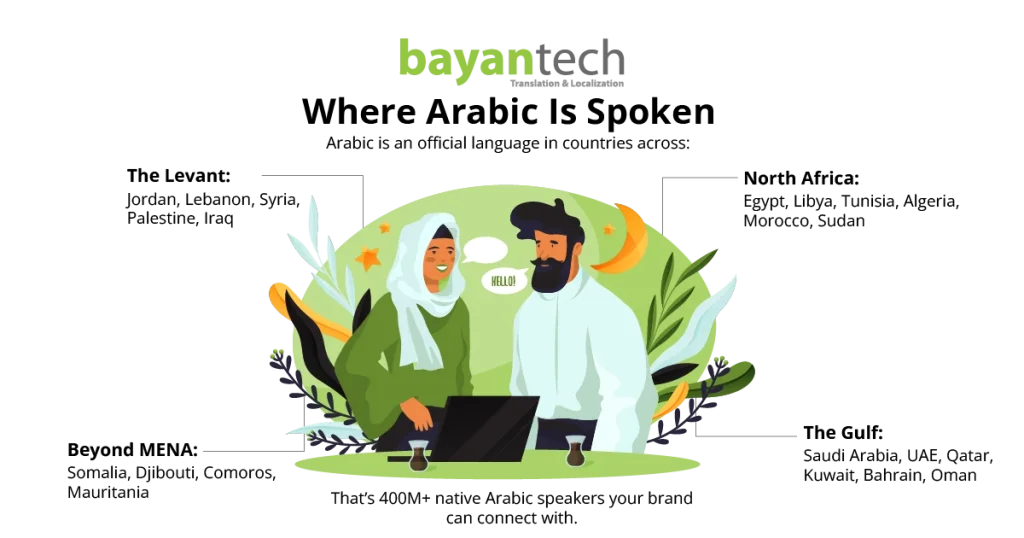
The influence of Arabic extends across key international markets and cultural hubs, not just the MENA region. That’s why organizations like the UN and UNESCO highlight its global recognition and cultural value, exactly the same principles forward-thinking businesses can align with to expand their reach and impact.
Turning Arabic Language Day Into a Global Marketing Advantage
Arabic Language Day doesn’t have to be just a one-day celebration; it can be the kickoff for a smarter, long-term localization strategy.
For global brands, it’s a perfect moment to reassess how they communicate with Arabic-speaking audiences and to move from one-off translations to ongoing Arabic content localization.
This is where professional Arabic translators and specialized Arabic translation services become a real competitive advantage. They act as the bridge between your brand and millions of native Arabic speakers, ensuring every message feels natural, local, and aligned with your values.
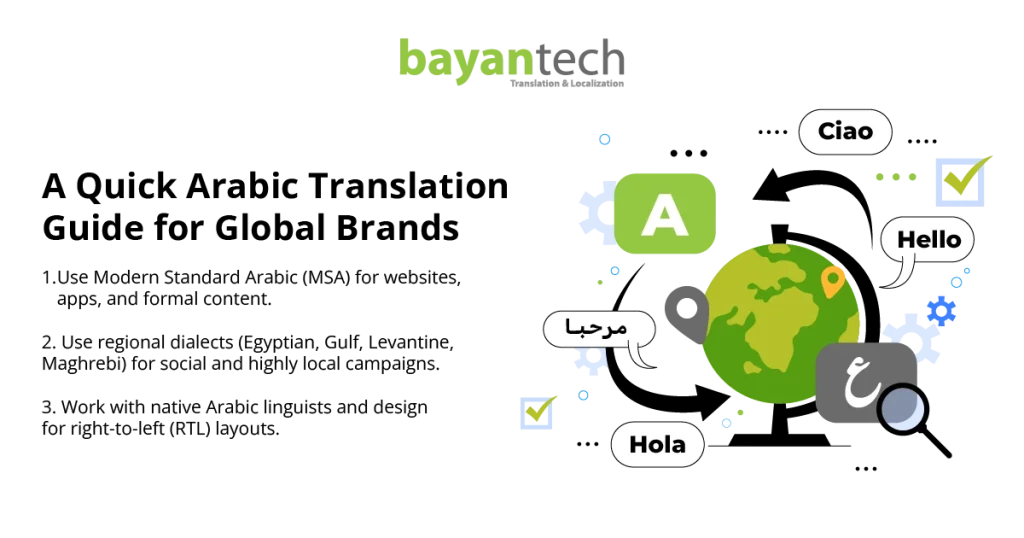
Here’s how brands can turn Arabic Language Day into a growth opportunity:
- Creating culturally aligned Arabic content for websites, apps, product pages, and marketing assets.
- Relying on native Arabic speakers to fine-tune style, tone, and dialect for each target market.
- Investing in Arabic localization services and social media localization to design campaigns that feel relevant, not translated.
- Adapting SEO strategies to local search behavior, keywords, and platforms for better visibility and performance.
Our Arabic translation services help global brands deliver culturally authentic content that resonates across Arabic-speaking markets, not just on Arabic Language Day, but all year long.
Empower Your Brand with Expert Arabic Translation & Localization
Expanding into Arabic-speaking markets doesn’t have to feel risky. With the right partner, it’s a strategic advantage. At bayantech, our Arabic translation services and Arabic localization services are designed to help you:
- Deliver culturally aligned Arabic translations that build trust.
- Launch SEO-ready Arabic website localization that drives organic traffic.
- Adapt multilingual content seamlessly across channels and markets.