

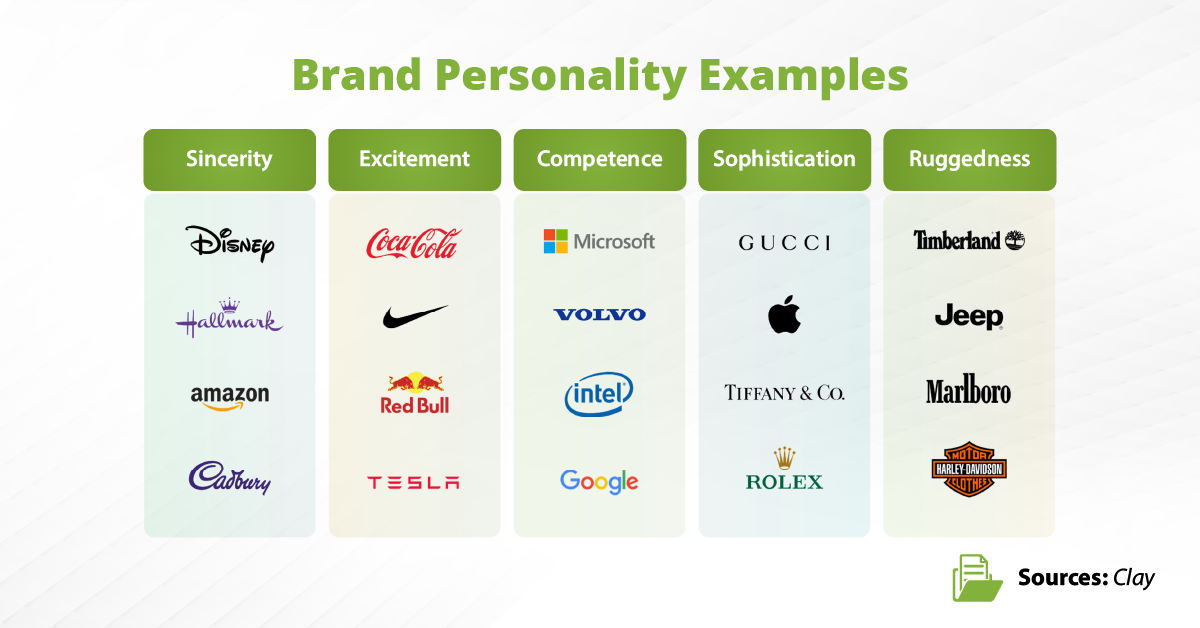
You probably recognize Apple for its minimalist, sleek design and future-forward products.
And we all associate Disney with that warm blue palette, a touch of magic, and stories that help tuck kids into bed.
Think of Nike and you hear “Just Do It”, motivation paired with high-quality sports gear that supports a healthier lifestyle.
All of these successful brand examples have one thing in common: a solid brand voice. With a clear identity, they enjoy global recognition.
Some businesses, unfortunately, struggle with inconsistent messaging when they enter new markets. They lose their tone of voice or skip a proper brand guide.
What do they get? Content that feels off and disconnected from international audiences.
Let’s break down brand voice and how translation and localization services can keep your messaging consistent across markets.
What Happens When Your Brand Voice Isn’t Defined?
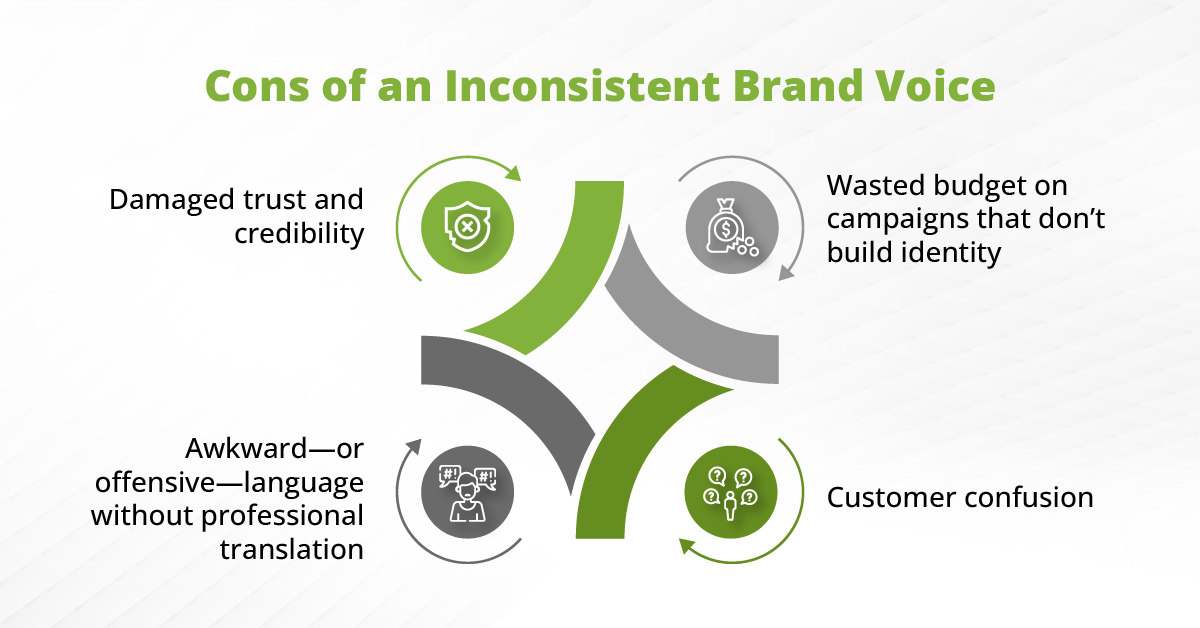
Unlike the strong brand voice examples above, here’s what happens when your tone is inconsistent across markets and channels:
- Confusion: When your voice shifts by region or platform, your audience can’t tell what you stand for. Campaigns feel stitched together, and messages contradict your original brand identity. People scroll past because nothing feels familiar or intentional.
- Weaker recognition: Inconsistent representation dilutes the cues that make you memorable—taglines and phrasing don’t line up. Over time, brand recall drops, and you end up spending more just to maintain the same visibility and engagement.
- Damaged trust: Audiences read inconsistency as instability. If you don’t adapt the brand’s personality to local preferences—word choice, formality, and cultural references—you risk sounding tone-deaf. That hurts credibility, lowers conversion, and can damage long-term loyalty.
How to Create a Strong Brand Voice That Aligns with Your Brand
To avoid these pitfalls, you need to:
- Define your company’s personality and personality traits. To do that, you need to determine your company’s purpose, how you want your customers to perceive you, your company values, and the brand experience.
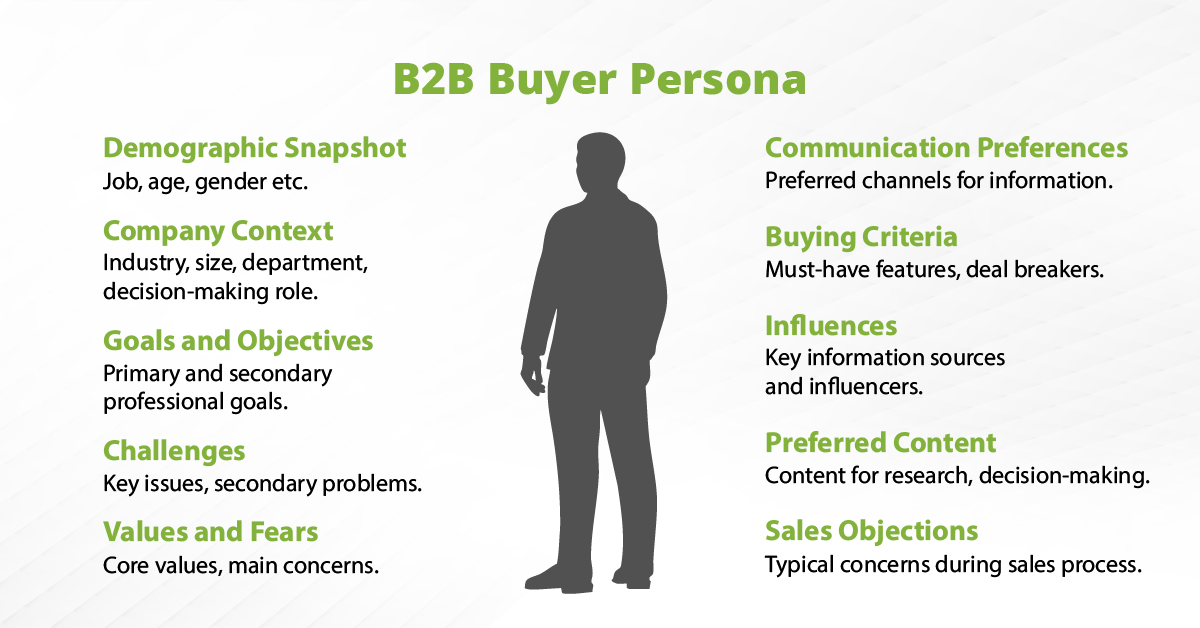
- Map buyer personas and segment your target audience. Below is an example of mapping a B2B buyer persona and businesses can also use services like Hubspot’s Make My Persona to get a clear idea of their target customer.
- Create a style guide or brand guide to document standards. Define voice pillars, tone ranges (formal↔playful), and approved terminology.
Include channel-specific examples plus multilingual rules (glossaries, transcreation and localization guidance). Assign owners, set update cadence, and require sign-off before publishing.
- Use content marketing and social media to reinforce brand identity. Build an editorial calendar mapped to brand pillars and audience needs.
Repurpose core ideas across formats (blogs, shorts, stories) with platform-fit captions. Monitor comments and trends, responding in-brand to keep the voice consistent.
- Show how creating content with a consistent tone of voice builds recognition. Repetition of a clear tone creates memory cues—readers identify you in seconds.
Consistency improves trust and engagement, lifting CTR, watch time, and shares. Track brand recall and sentiment over time to prove the impact.
Brand Voice in Global Marketing: Balancing Standardization and Localization
A strong brand voice should feel instantly recognizable everywhere but not identical. Global audiences don’t share the same references, humor, or expectations, so effective global marketing means adapting your voice to local preferences.
That’s cultural adaptation in practice: keep the brand’s core personality, then tune register, idioms, and value cues to match each local market.
What doesn’t work? Direct, word-for-word translation. Literal copy often flattens tone, misses nuance, and can even flip intent. A playful line can read flippant; a bold statement can sound rude.
That’s where transcreation services shine. Instead of translating slogans or campaign concepts, transcreation reimagines them so they evoke the same emotion and brand promise in a new language while staying true to strategy.
Beyond headlines, your digital touchpoints need the same care. Localization services adapt websites, apps, and product messaging to local norms—currency, units, reading patterns, UI text length, and SEO phrasing—so journeys feel native, not “translated.”
And because brand voice lives far beyond text, multimedia localization services carry that tone into video, audio, and social content: subtitle style that matches your wit, voice-over casting that fits your character, and on-screen text that lands with the right cultural weight.
Examples of Strong Brand Voices in Action
Apple keeps a consistent tone of voice worldwide—spare, confident, human. Product pages, keynotes, and ads use short, concrete lines. Crucially, copy is re-created, not literal, so rhythm and elegance survive in Arabic, French, or Japanese. The result: a strong brand voice that never feels foreign.
See Apple’s identity guidelines as a reference for building a clear, consistent brand identity.
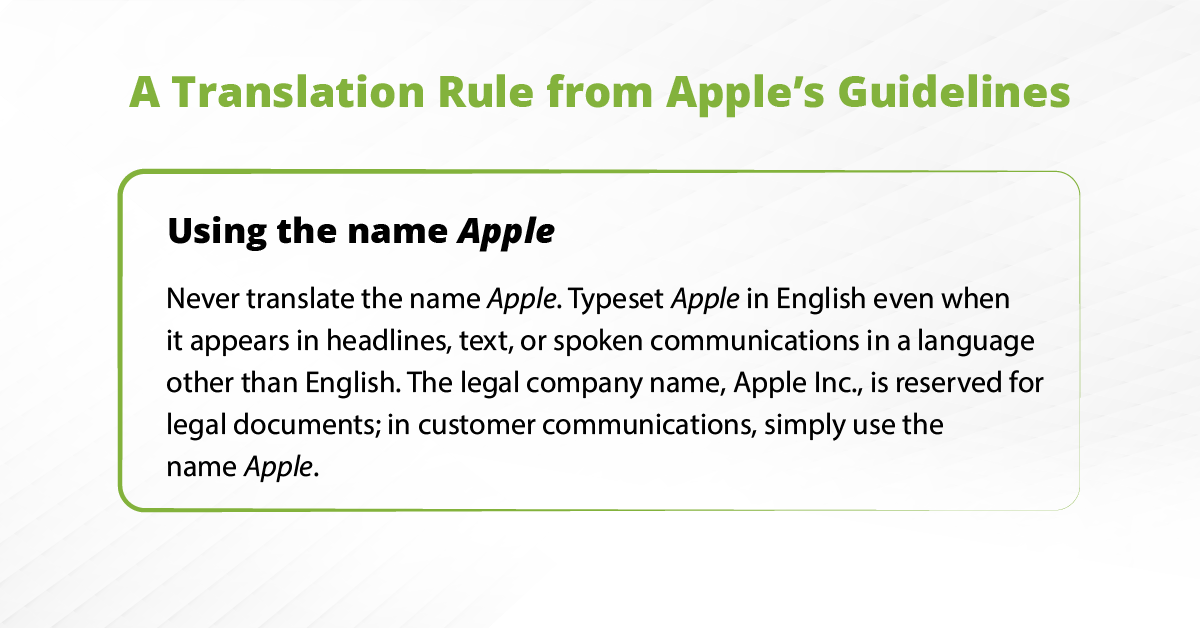
Title TOV: A Translation Rule from Apple’s Guidelines
Nike translates motivation into every channel, especially social media. “Just Do It” stays universal, while local teams spotlight regional athletes, slang, and causes. Subtitles, captions, and VO are localized so the same tempo and uplift land natively—proof that consistency and cultural relevance can coexist.
When it goes wrong: Imagine a fast-growing electronics brand where regional teams rewrite taglines and swing between playful and formal tones. Without a unified brand guide or clear standards for translation and transcreation, the voice fluctuates—ads, websites, and social posts feel like different companies, and brand recognition is lost.
Ready to Build a Strong Brand Voice Across Markets?
A consistent global voice doesn’t happen by accident; it’s powered by professional translation, localization services, and smart transcreation services.
We adapt tone, idioms, and intent for each local market, then carry that voice into video, audio, and social with multimedia localization services. Result: the same brand promise, delivered natively everywhere.
bayantech is your trusted partner for marketing translation, transcreation, and localization, so your teams launch faster, protect brand equity, and convert locally.