 Send Us an Email


Breaking into new markets? The margin for error is tiny. ISO certified translation turns quality from a promise into an actionable workflow.
With ISO 17100:2015, ISO 18587, and ISO 9001:2015 certifications, qualified native linguists, role-based reviews, and auditable checks are integral parts of the translation process.
The result for clients is accurately translated content that launches faster and protects their brand from both small and grave mistakes.
Interested in knowing more about ISO certifications in translation? Read more to understand how ISO certification translation gives real business value.
Why Businesses Can’t Afford Translation Mistakes
Inaccurate translations aren’t always forgivable mistakes. Some can trigger legal exposure, compliance failures, and stalled launches.
Global expansion demands high-quality translations anchored in a documented translation process and rigorous QA.
And without recognized international standards, errors can creep into contracts and communications, putting brand revenue and reputation at risk.
A professional translation partner proves control, not promises.
An LSP following ISO standards hires qualified native linguists, reviews translations, creates traceable change logs, and implements corrective actions when issues surface.
That’s what a quality translation service looks like in practice. By committing to quality through ISO-aligned workflows, teams ship content that’s ready.
The Hidden Costs of Skipping ISO Standards
What You Risk Without ISO Certification
- Rework and inconsistent quality
- Legal exposure and compliance risks
- Slower time-to-market, hurting ROI
How ISO-Aligned Vendors Protect Your Business
- Standardized, auditable workflows
- Corrective actions and continuous improvement
- Data-driven QA for accuracy and compliance
The Reality of Non-Certified Providers
Without ISO certification, there’s no guaranteed quality control, no documented continuous improvement, and no audit trail when things go wrong.
In legal translation, missing a regulatory nuance or cultural reference can invalidate agreements or invite fines. ISO frameworks mitigate these risks by:
- Enforcing role separation (translator → editor → reviewer)
- Establishing measurable acceptance criteria
- Ensuring traceable changes
How ISO Certified Translation Services Ensure Quality
ISO (the International Organization for Standardization) is an independent, non-governmental body that develops voluntary international standards used across industries to ensure quality and safety.
In translation, ISO frameworks, such as ISO 17100 (core translation processes), ISO 18587 (human post-editing of MT), and ISO 9001 (quality management systems), turn best practices into audited, repeatable workflows that deliver consistent results.
Here’s a breakdown of the three ISO certifications you should look for in language service providers:
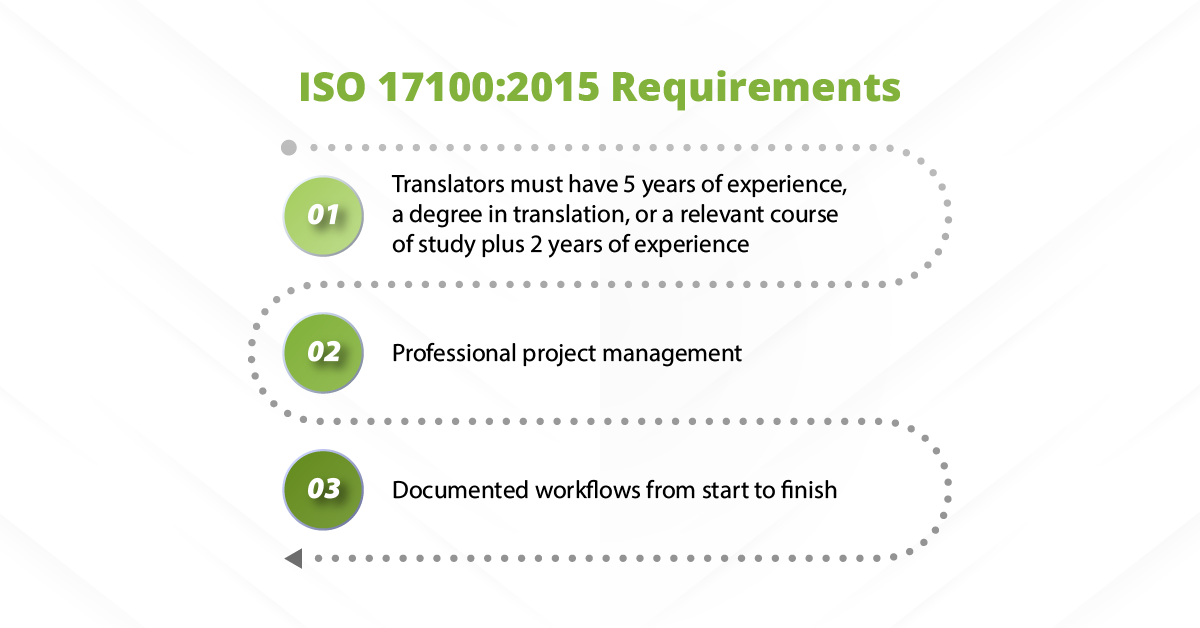
- ISO 17100:2015 certification defines the core processes, resources, and other aspects of professional translation.
With ISO 17100:2015, every translation goes through a structured workflow with native linguists, editors, and proofreaders, guaranteeing consistent, high-quality results.
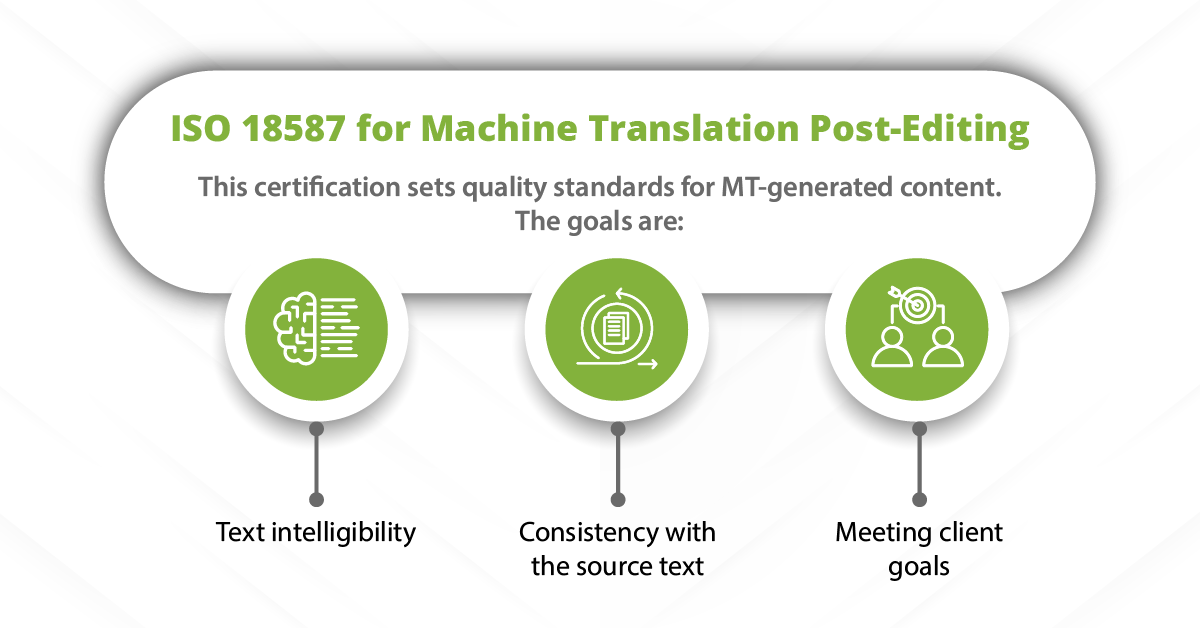
- ISO 18587 governs human post-editing of machine translation (MTPE). It sets clear requirements for reviewer competence, error categorization, and corrective actions, so “human post-editing of machine translation” delivers fit-for-purpose content, not just speed.
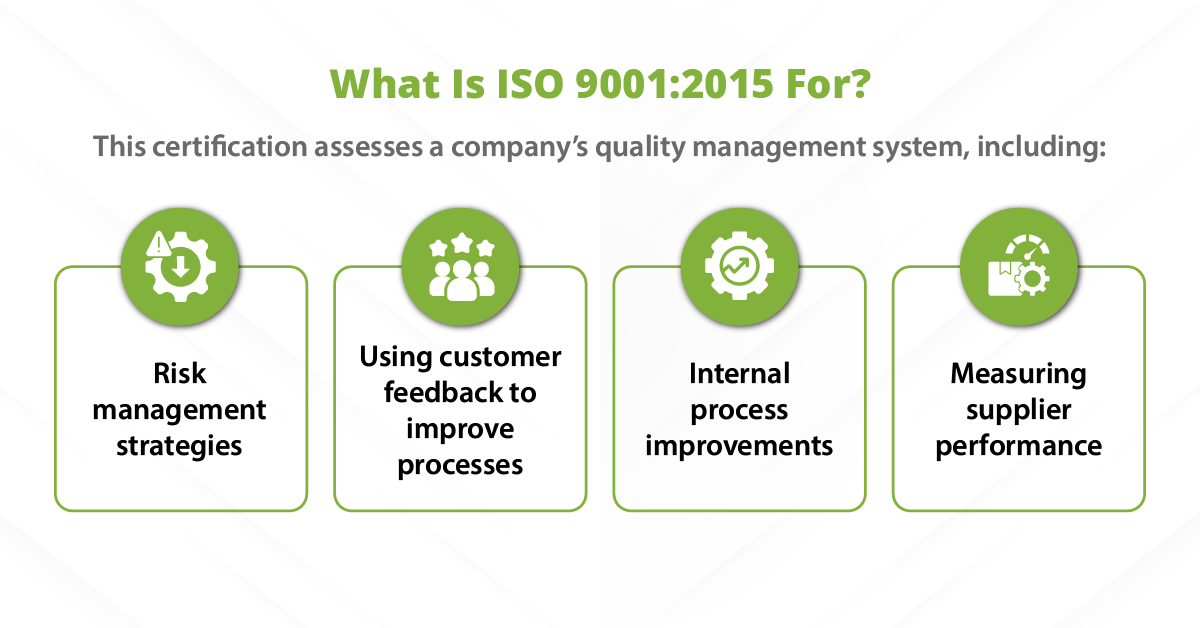
- ISO 9001:2015 certification is the global benchmark for quality management systems. It enforces documented procedures, corrective/preventive actions, and continuous improvement across the entire operation, not just linguistics.
In short, it’s best for businesses to choose providers whose ISO 17100:2015, ISO 18587, and ISO 9001:2015 certifications are active, audited, and embedded in day-to-day delivery.
That’s how certifications move from paperwork to performance.
Why ISO Matters for Your Global Success
ISO-backed workflows transform quality management systems into predictable outcomes, ensuring businesses don’t risk their time and money on poorly delivered translations.
An ISO-certified translation service provider:
- Delivers high-quality translation services through defined roles, documented workflows, and quality assurance checkpoints.
- Aligns with quality management systems (QMS), ensuring processes are auditable, repeatable, and scalable across markets.
- Guarantees translations that meet regulatory and cultural requirements in each target market.
- Drives continuous improvement through scheduled audits, corrective actions, and client feedback loops.
- Ensures end-to-end accountability with expert project managers overseeing scope, terminology, and version control.
- Supports faster approvals and lower rework, enabling teams to ship compliant, on-brand content globally.
Choose ISO-Certified Translation Services You Can Trust
Protect your brand and accelerate global growth with ISO-backed processes and proven quality assurance.
bayantech holds ISO 17100:2015 and ISO 9001:2015 certifications, delivering ISO-certified translation services that are accurate, auditable, and scalable.
From high-stakes legal translation services to technical and medical content, projects follow structured workflows with native linguists, editors, and final QA. Contact us today to get high-quality translations.