
Search for a multilingual SEO agency and you will find rankings, directories, and “top agency” lists. What you will not often find is a practical way to judge whether an agency can build sustainable visibility across languages and countries.
That distinction matters. CSA Research found that 76% of consumers prefer products with information in their own language, while Google has cited research showing that 82% of shoppers are more likely to purchase when an ad appears in their language.
Reaching these audiences, however, takes more than translating existing pages. It requires multilingual search optimization built around technical accuracy, local demand, and market-specific behavior.
Here are five capabilities to check before choosing a partner.
1. Can the Agency Implement Multilingual SEO Correctly?
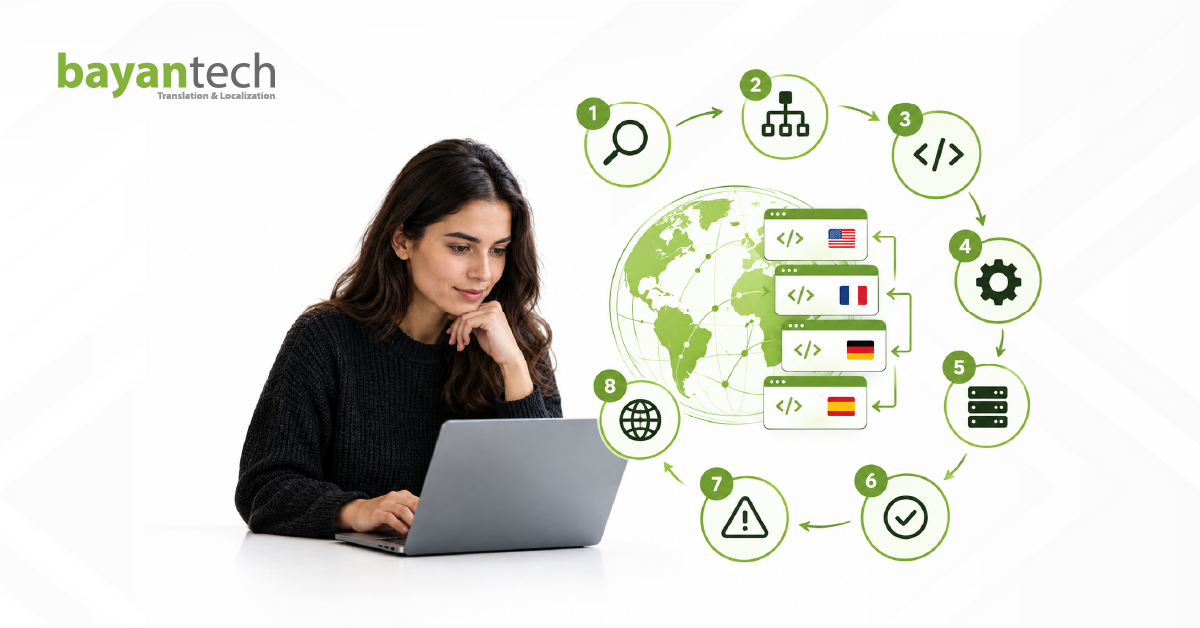
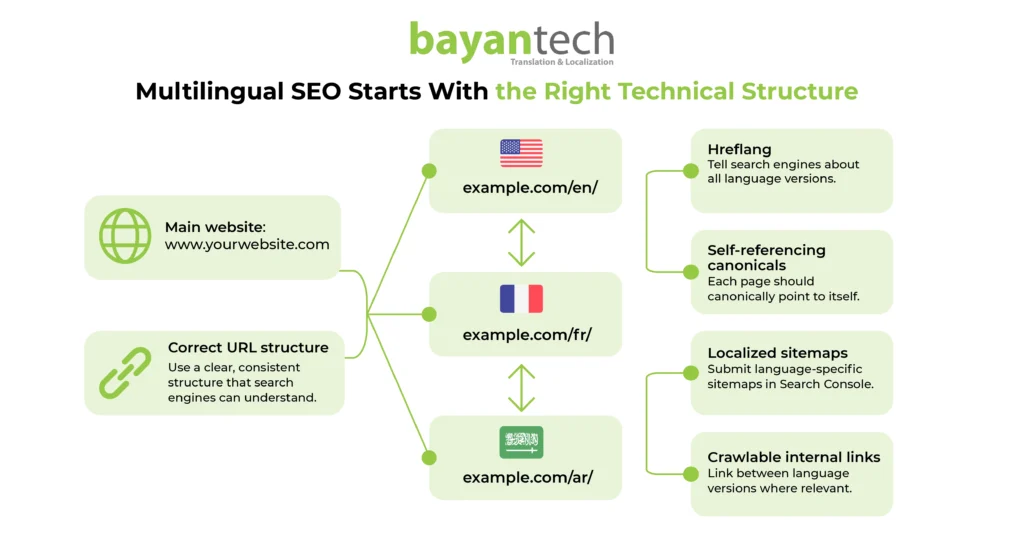
A multilingual website can look complete to users and still be technically unclear to search engines. Creating language versions is only the first step. The agency should know how to connect them through hreflang implementation, self-referencing canonicals, crawlable internal links, localized sitemaps, and a clear international URL structure.
Google recommends separate URLs for localized pages and hreflang annotations to help return the appropriate version. Each hreflang cluster should include reciprocal references, valid language or language-country codes, and a self-reference. Canonicals should point to the preferred URL in the same language, not consolidate every version into English.
The agency should also explain its recommended structure:
- example.com/fr/ lets language sections share the main domain’s authority.
- fr.example.com offers more separation but can require more technical management.
- example.fr sends a strong country signal but operates as a separate domain.
There is no universal best option. The choice depends on your markets, CMS, resources, backlink profile, and expansion plans. Google recognizes both country-specific domains and country folders as valid structures for multi-regional websites.
Ask whether the agency performs a multilingual technical SEO audit before publishing. It should examine crawlability, indexation, rendering, canonicals, hreflang return links, redirects, sitemaps, mobile parity, and cross-language duplicate content. Google does not generally penalize legitimate localized pages as duplicates, but conflicting signals can cause the wrong URL to rank or prevent the intended version from being selected.
Technical implementation is the foundation of any Multilingual SEO Services engagement. Content cannot compensate for pages search engines cannot interpret correctly.
2. Does It Research Keywords Per Market Rather Than Translate Them?
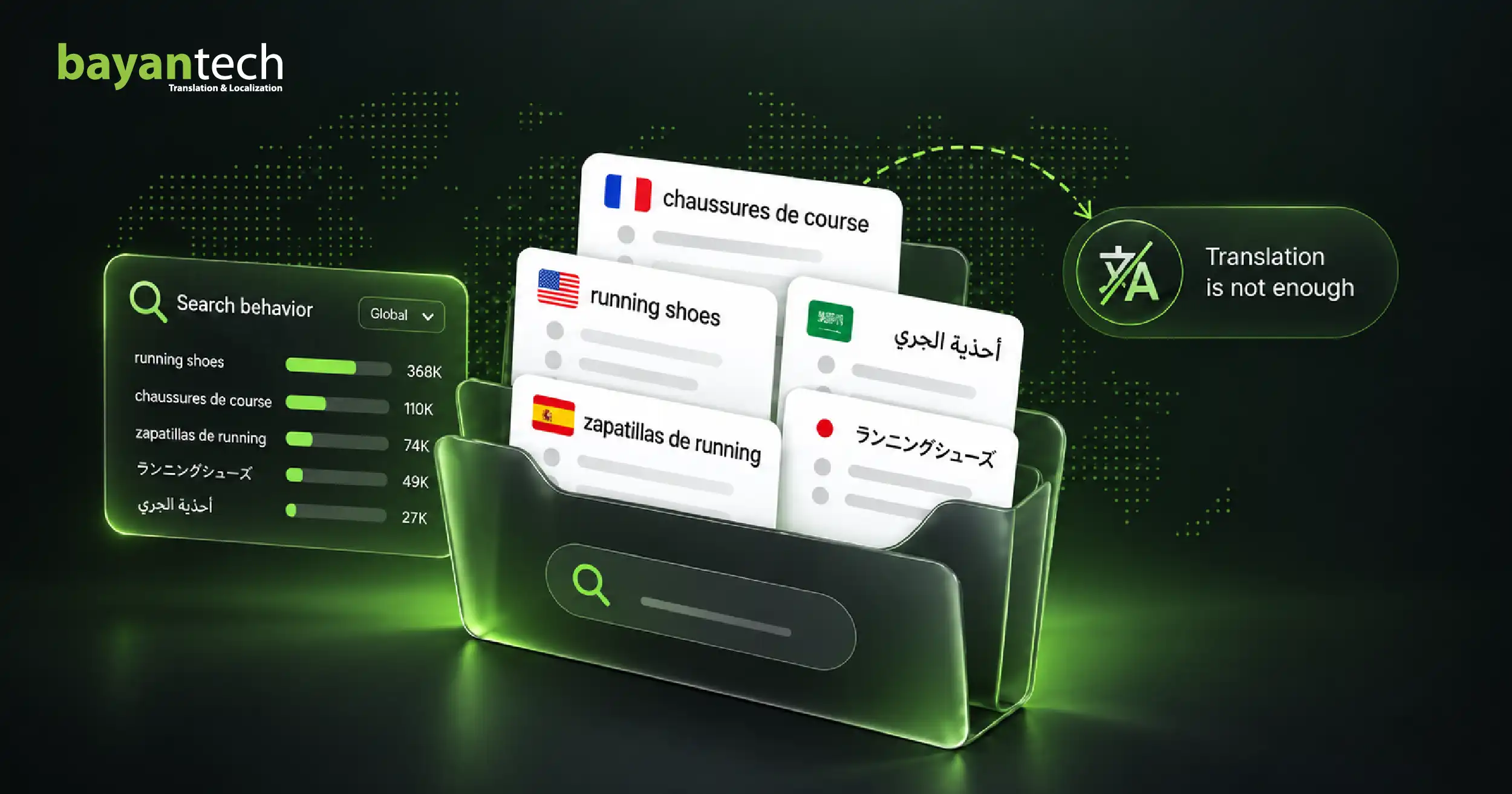
A translated keyword can be linguistically correct and commercially useless.
Native speakers may use a shorter phrase, an English loanword, a regional expression, or a different description of the same need. A translator can confirm accuracy, but that does not prove people search for the term or that it matches their intent.
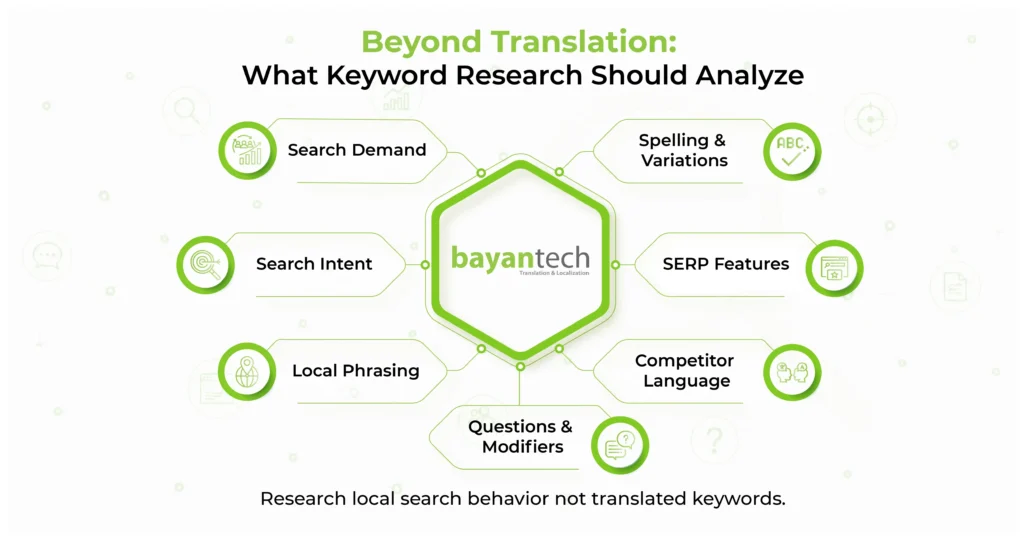
A capable multilingual SEO agency conducts multilingual keyword research independently in each market. It should compare search demand, intent, SERP features, competitor language, spelling variations, questions, and local modifiers. It should also distinguish informational, comparison, transactional, local, and branded searches.
That research should shape a localized content strategy rather than simply replace English keywords inside an existing page. Native language content creation may require changing the title, examples, structure, supporting sections, and calls to action. This is where multilingual content optimization supports broader Multilingual Marketing Services by connecting search visibility with local campaigns and conversion goals.
Ask to see a sample keyword map containing local search data and intent, not only a translated spreadsheet.
3. Can It Target Countries Separately From Languages?
Language targeting and country targeting are related, but they are not the same decision.
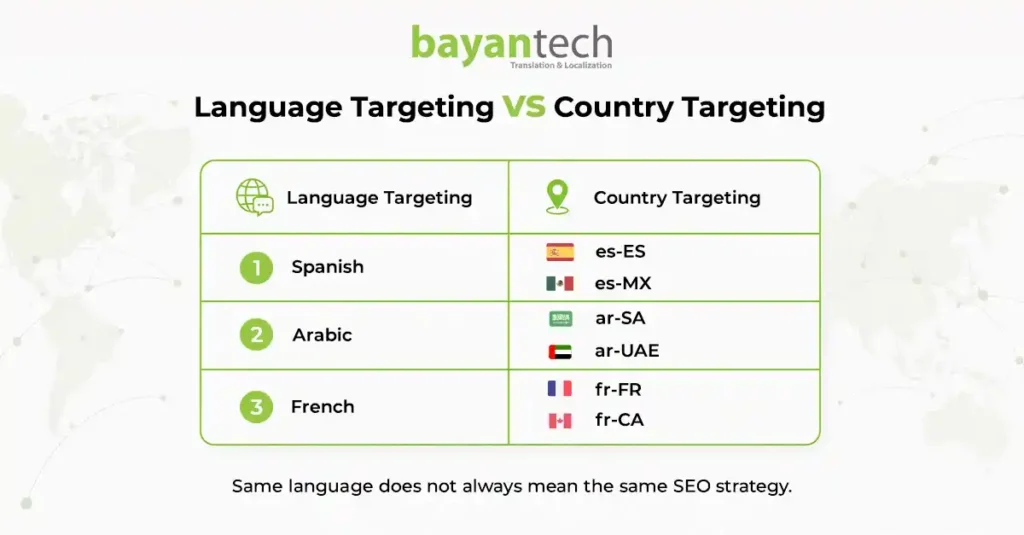
One Spanish page may not satisfy searchers in Spain, Mexico, Colombia, and Argentina. Vocabulary, currency, regulations, seasonality, product availability, and competitor strength can vary. The same applies to French in France and Canada or Arabic across the Gulf and North Africa.
A strong international SEO agency should determine when one language version is enough and when separate country experiences are justified. The decision should reflect search demand, business priorities, product differences, local SERPs, and the risk of creating thin pages.
Country-specific SEO targeting may include:
- Language-country hreflang values such as es-ES and es-MX.
- Market-specific URLs, pricing, shipping, contacts, and legal details.
- Local keyword research and regional search optimization.
- Citations, location pages, and Google Business Profile work where relevant.
- Content calendars based on local events and buying cycles.
Google also recommends explicit locale-specific URLs rather than relying on automatic IP or browser-language redirects, which can make crawling and user access less reliable.
An agency offering Arabic Localization Services should know when Modern Standard Arabic is suitable and when GCC-specific terminology, local proof points, or country-level landing pages are needed. Treating Arabic as one uniform market may be operationally simple, but it can weaken relevance and conversions.
4. Does Its Backlink Strategy Prioritize Relevance?
“Link building in multiple languages” sounds impressive until you examine the sources.
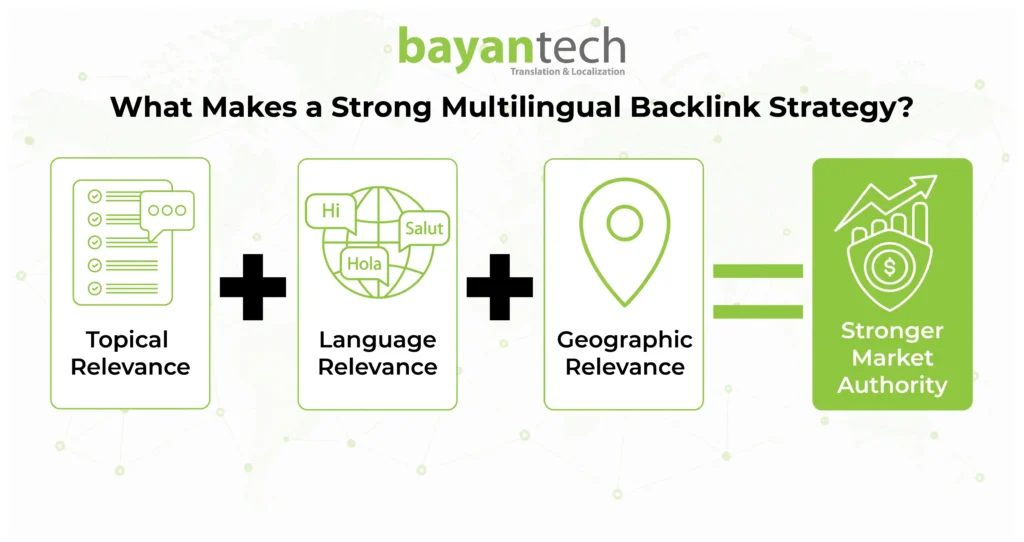
A multilingual backlink strategy should focus on topical, linguistic, and geographic relevance. An article from a respected local-language industry publisher can reinforce subject authority and market relevance. Generic multilingual directory links usually cannot.
Ask how the agency evaluates publishers, earns placements, protects brand reputation, and measures links’ effect on target pages. It should distinguish genuine editorial opportunities from paid networks, automated submissions, and sites created mainly to sell backlinks.
For technical and software companies, relevant opportunities may come from industry media, associations, partner ecosystems, or CT and SaaS Localization resources rather than general directories. The objective is not equal link volume in every language. It is stronger multilingual domain authority where it can support qualified rankings and traffic.
5. Does It Report Performance Market by Market?
Global traffic growth can hide weak performance in individual countries. One market may drive most of the increase while another earns impressions but few clicks, ranks for irrelevant terms, or sends users to the wrong page.
Reporting should separate results by country, language, directory, device, and intent. A recurring international SEO audit should track indexation, ranking coverage, non-brand clicks, conversions, and multilingual CTR optimization.
Strong impressions with a low click-through rate may mean titles and descriptions were translated accurately but not adapted to local phrasing. Falling clicks on one country folder may point to hreflang errors, stronger competitors, or content that no longer matches the SERP.
Ask what the agency reports, how often it reviews technical signals, and what actions follow. A dashboard is useful only when it leads to decisions.
A Pre-Hire Checklist for Choosing a Multilingual SEO Agency
Before signing a contract, confirm that the agency can:
- Implement hreflang, canonicals, and international URLs.
- Research keywords independently for each priority market.
- Separate language strategy from country targeting.
- Earn relevant local and industry backlinks.
- Report rankings, CTR, traffic, and conversions by market.
A weakness in any one area can force you to rebuild the work later.
Build a Global SEO Strategy Around Real Markets
bayantech combines localization expertise, technical SEO, native-language research, and market-specific content planning to help international brands grow without treating every country as a translated copy of the original site.
Tell us which markets you are targeting and how your website is structured. Our team will assess the technical setup, keyword coverage, and localization requirements needed to scope your global SEO strategy.