
Some (or honestly, most) adults are still trying to figure out what “67” means. You Google it, the screen moves, and you’re still not sure why it became popular or what the young generation even means when they use it.
Slang has come a long way from SMS abbreviations like ROFL and LOL and words like totes, cool beans, and amazeballs. Now, we’re dealing with Gen Z and Gen Alpha Internet slang, faster, more vague, and constantly changing.
And just like “67,” a lot of today’s slang takes a bit of digging to understand, let alone translate.
So, let’s break down what actually counts as slang, and why more companies are turning to professional translation to get slang translation right.
What Is Slang?
The dictionary definition of slang is: very informal language that’s usually spoken rather than written, and typically limited to a specific context or group of people.
To keep up with how quickly slang evolves, many dictionaries now include slang definitions for adults and brands trying to understand what Gen Z and Gen Alpha are using on social media (because it’s hard to keep up).
Why Do Brands Care to Translate Slang?
Social media platforms now dominate advertising and marketing. And with Gen Z making up 27% of Internet users in the US, brands need to stay up to date with slang and know how to use it naturally in social and marketing content when targeting younger audiences.
That’s why many global campaigns rely on localization and transcreation services to carry the same tone, style, and cultural “feel” across languages.
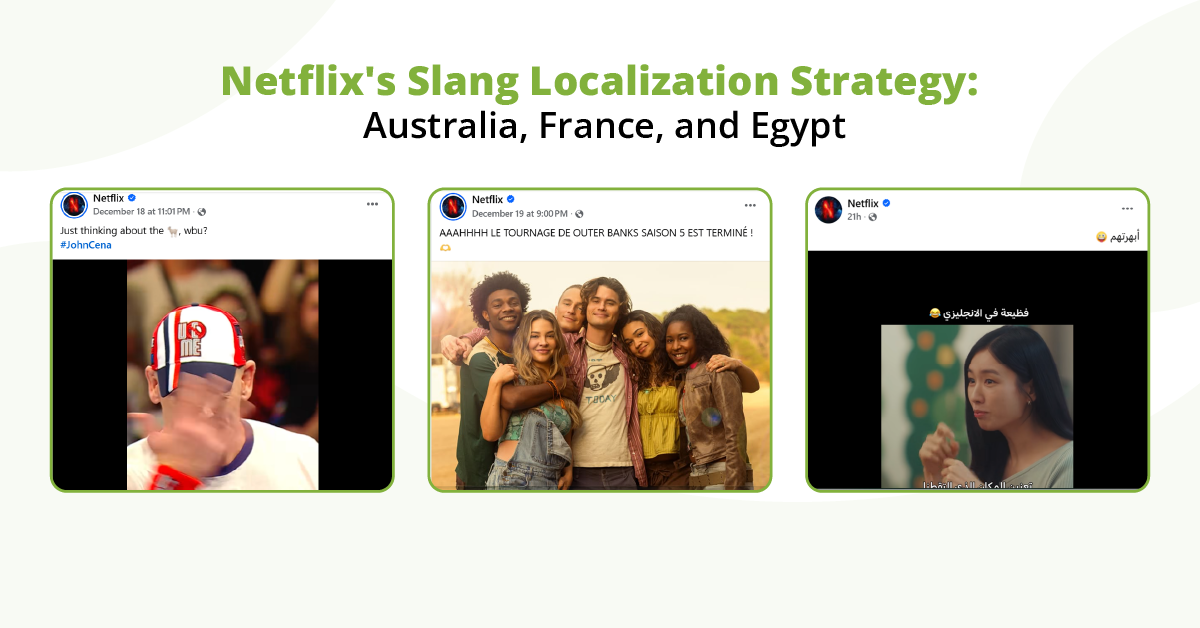
Why Is Slang Translation Challenging?
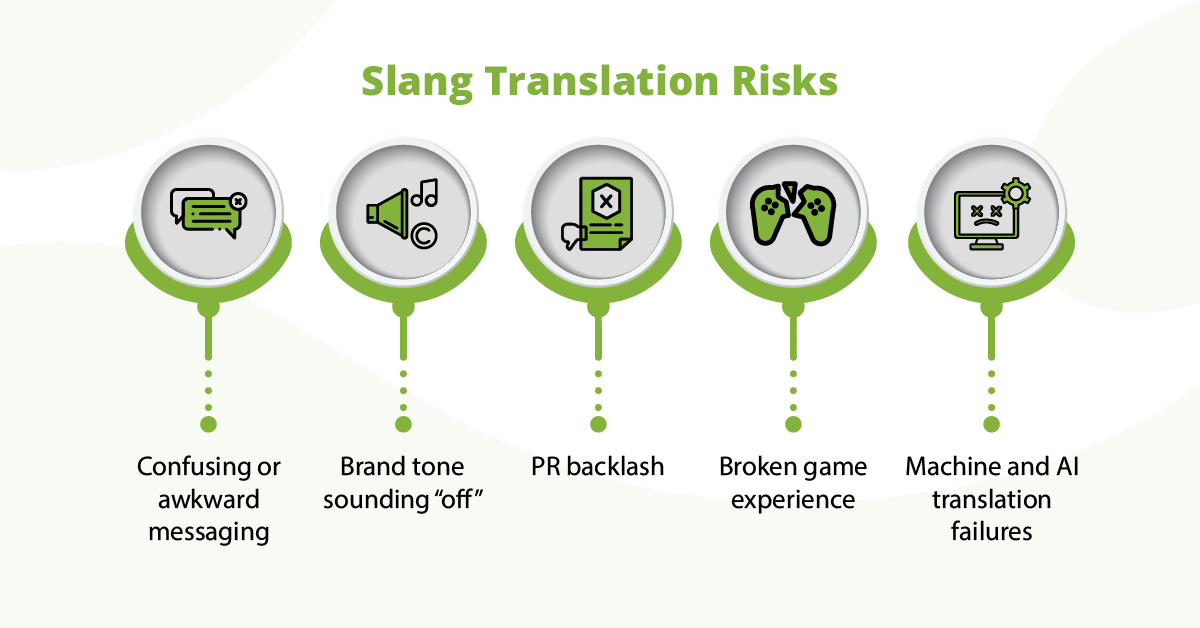
Unprofessional or inaccurate slang translation can lead to awkward, confusing content that completely misses the mark. That can mean falling short of sales goals, or worse, damaging your brand image.
We’ve all seen PR slip-ups tied to youth slang translation, and while the results can be funny online, they’re rarely funny for the brand.
The same applies to gaming slang translation, which can make or break a game’s success in global markets. Gamers take the experience seriously, and unclear character dialogue or confusing in-game directions can ruin gameplay even if the game is a hit in its home country.
Machine translation also tends to struggle with slang. Slang evolves too quickly, and NLP models often don’t have enough real-world data—especially in less common languages—to capture meaning accurately.
Even streaming platforms need chat slang translation to keep support conversations natural and engaging, helping them connect with users and build loyalty.
Another major challenge is region-specific slang, like African-American Vernacular English or Latin American slang, which requires native linguists to handle carefully and avoid translations that could sound inaccurate or offensive.
5 Ways Professional Slang Translation Fixes the Problem
- It adapts slang culturally (not just linguistically). Cultural adaptation and deep contextual understanding are the first step to translating slang successfully, and only native language experts can truly capture that nuance.
- It catches what machine translation misses. Human translators and reviewers fix the issues that MT can’t, especially when slang evolves fast or carries implied meaning.
- It uses the right service mix, not just “translation.” Translation is a broad umbrella that includes solutions like localization and transcreation, because literal slang translation often doesn’t work, especially in global campaigns that rely on Marketing Transcreation Services.
- It works across every content format and platform.
Professional translation covers everything from multimedia localization for videos and ads to social captions, websites, and app UI/UX, which is exactly why brands invest in Social Media Translation Services. - It keeps slang aligned with your brand voice.
Professionally translated content ensures slang feels natural without sounding forced, off-brand, or risky—supported by smart Translation Strategies for Multilingual Content that match audience, region, and channel.
Best Practices for Translating Slang Across Cultures & Platforms
- Build a living slang glossary
- Create a shared glossary and update it monthly using UGC trends (comments, reviews, TikTok captions, memes).
- Create a shared glossary and update it monthly using UGC trends (comments, reviews, TikTok captions, memes).
- Use specialists (not just “any translator”)
- Assign teams specializing in localization of slang content to handle tone, humor, and implied meaning.
- Assign teams specializing in localization of slang content to handle tone, humor, and implied meaning.
- Always validate with native speakers
- Get native reviewers to confirm the slang feels natural, current, and culturally authentic (not outdated, awkward, or “trying too hard”).
- Get native reviewers to confirm the slang feels natural, current, and culturally authentic (not outdated, awkward, or “trying too hard”).
- Go local, not general
- Prioritize region-specific slang translation for targeted campaigns—same language can mean totally different slang by region.
- Prioritize region-specific slang translation for targeted campaigns—same language can mean totally different slang by region.
- Translate for the platform, not just the words
- TikTok: trend-driven youth slang translation, fast, casual, and punchy
- Gaming: community jargon, abbreviations, and inside jokes
- Live chat/support: short, friendly, clear—avoid slang that could be misread
- Business casual: approachable but still professional (no forced slang)
- TikTok: trend-driven youth slang translation, fast, casual, and punchy
- Context decides meaning (and professionalism)
- A slang term that works on TikTok may sound unprofessional or confusing in email support—context decides meaning.
- A slang term that works on TikTok may sound unprofessional or confusing in email support—context decides meaning.
- Use NLP tools… with human control
- NLP can help with training language models on slang, but human reviewers should always check tone, intent, and real-world usage before anything goes live.
- NLP can help with training language models on slang, but human reviewers should always check tone, intent, and real-world usage before anything goes live.
Get Accurate Slang Translation with bayantech
Want to translate slang and localize your social media content with culturally relevant phrases in your target language?
Partner with bayantech. We deliver localized, culturally accurate content in over 120 languages, handled by experts who understand both the language and the culture.
With our services, your brand can connect with audiences of all ages while avoiding translations that might land wrong or cause offense.
Choose your target market and contact us for a free consultation on our translation and localization services
.