

Did you know that some of the world’s oldest languages are still spoken today, thousands of years after their inception?
From the ancient scripts of the Pharaohs to the vibrant tongues spoken across Asia, these languages have endured through history, offering us a direct link to our shared past.
In this article, we’ll take a deep dive into the oldest languages in the world, exploring their continued relevance in today’s global conversation and the role of translation in preserving them.
What Defines a Language as “Old”?
When we talk about the oldest languages in the world, we must first distinguish between three key types of languages:
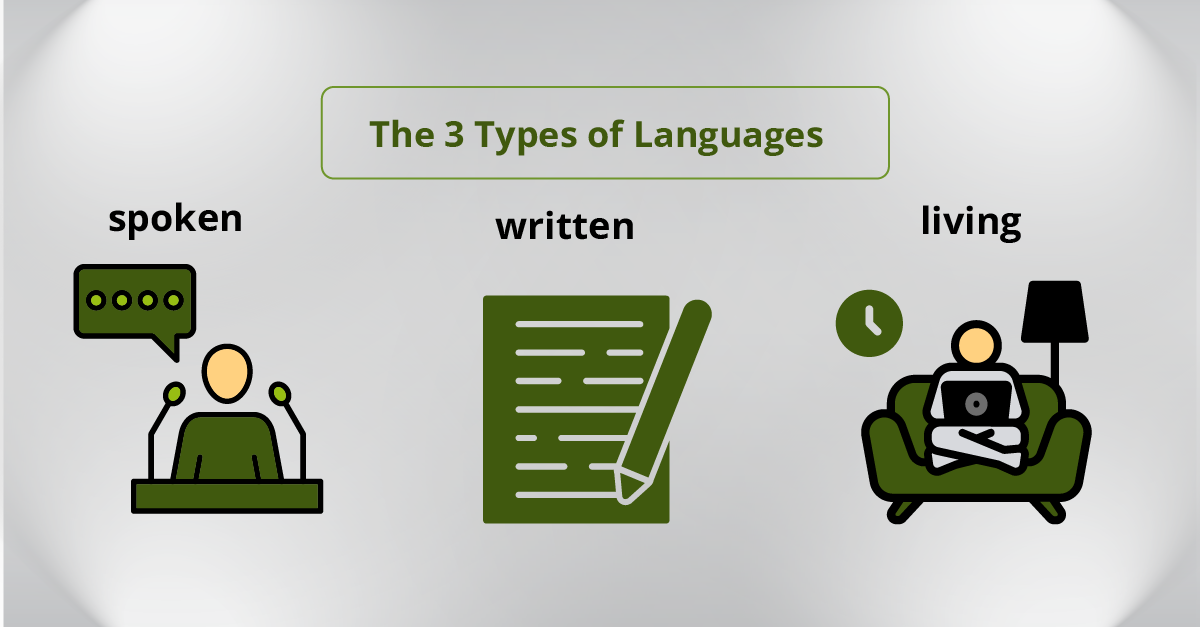
- Spoken languages are those that have been passed down orally through generations. While their written form may not exist, their longevity is demonstrated through continued use.
- Written languages are those that have been recorded in some form, whether on stone tablets or early manuscripts. Written records allow us to trace the language’s development and influence over time.
- Living languages are those that continue to be spoken today, preserving a connection to their ancient roots while adapting to modern contexts.
For a language to be truly ancient, it must demonstrate both linguistic lineage and continuity of use.
A written record helps us track its history, but it is the continued use in everyday life that keeps the language alive.
Some ancient languages, like Tamil and Hebrew, have persisted through centuries, while others, like Latin, remain influential but no longer spoken natively.
Top 10 Oldest Languages in the World Still Spoken Today
1. Tamil
Dating back to the 2nd century BC, Tamil stands as one of the world’s oldest living languages.
Spoken by over 80 million people primarily in India, Sri Lanka, and Singapore, Tamil has maintained its cultural and literary importance throughout the centuries. From ancient poetry to modern-day cinema, Tamil continues to play a pivotal role in the global cultural landscape.
2. Sanskrit
Sanskrit may not be a widely spoken language today, but it still plays a vital role in religious and philosophical contexts, particularly in Hinduism and Buddhism.
As the language of ancient scriptures like the Vedas and Upanishads, Sanskrit’s influence on other languages in the Indo-Aryan group is undeniable. Though rarely spoken conversationally, it remains a symbol of cultural continuity.
3. Arabic
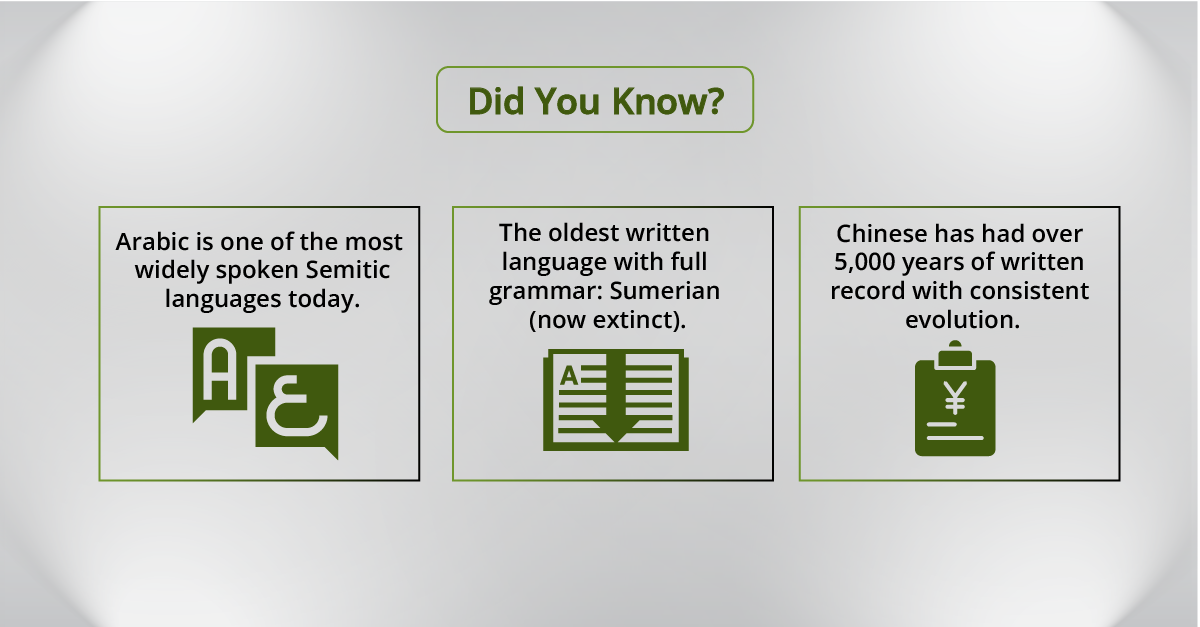
Arabic, a Semitic language, has its roots in ancient times and continues to be a major lingua franca across the Middle East and North Africa.
Its literary tradition, rooted in the Qur’an, has shaped cultures for over 1,400 years. Modern Arabic is spoken in many dialects, but Classical Arabic remains the official language in most Arab countries.
For companies expanding into MENA markets, Arabic Translation Services are essential for accurate communication and market penetration.
4. Chinese
Chinese, with its continuous writing system dating back over 3,000 years, holds the title of the world’s oldest written language still in use.
The evolution of Chinese characters has preserved its ancient roots while adapting to modern needs.
Mandarin, the most widely spoken form of Chinese, serves as a key tool for communication in China and its global diaspora. The role of Chinese as a global language has only grown with China’s economic rise.
To tap into Chinese markets, Chinese Translation Services are indispensable for businesses looking to establish a strong presence.
5. Greek
From the grandeur of Classical Greek literature to modern-day Greece, the Greek language spans thousands of years of development.
The Greek language has profoundly influenced Western philosophy, science, and literature, with the works of Aristotle, Plato, and Homer remaining central to education.
Today, Modern Greek continues to be spoken by millions and serves as a living bridge between the past and the present.
6. Farsi (Persian)
Farsi, the official language of Iran, has held a vital literary and cultural role since ancient Persia.
Its roots trace back to Old Persian, the language of the Achaemenid Empire, and has continued to evolve while preserving its rich heritage.
Farsi has deeply influenced the literature of the region, particularly in poetry, with greats like Hafez and Rumi.
For businesses targeting Persian-speaking communities, Farsi Translation Services are essential for navigating both cultural and linguistic nuances.
7. Latin
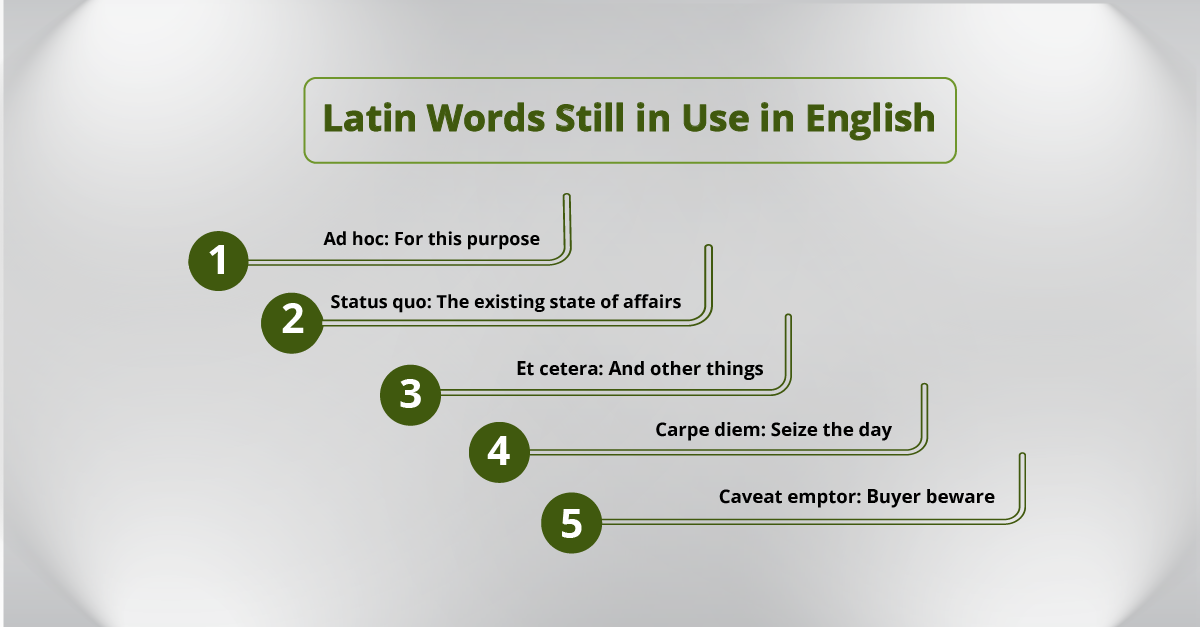
Once the official language of the Roman Empire, Latin’s influence on modern languages is immense, especially in the Romance language family.
Though no longer spoken as a native language, Latin is still studied in academic, religious, and legal contexts.
Its legacy lives on in the vocabulary of many modern European languages, as well as in scientific and medical terminology.
8. Aramaic
Aramaic, once a dominant lingua franca across the Near East, is still spoken by small communities, particularly among Assyrian and Chaldean populations in Iraq, Syria, and other parts of the Middle East.
It remains an essential part of the region’s linguistic history and a crucial part of religious texts for Christians and Jews.
9. Egyptian (Coptic)
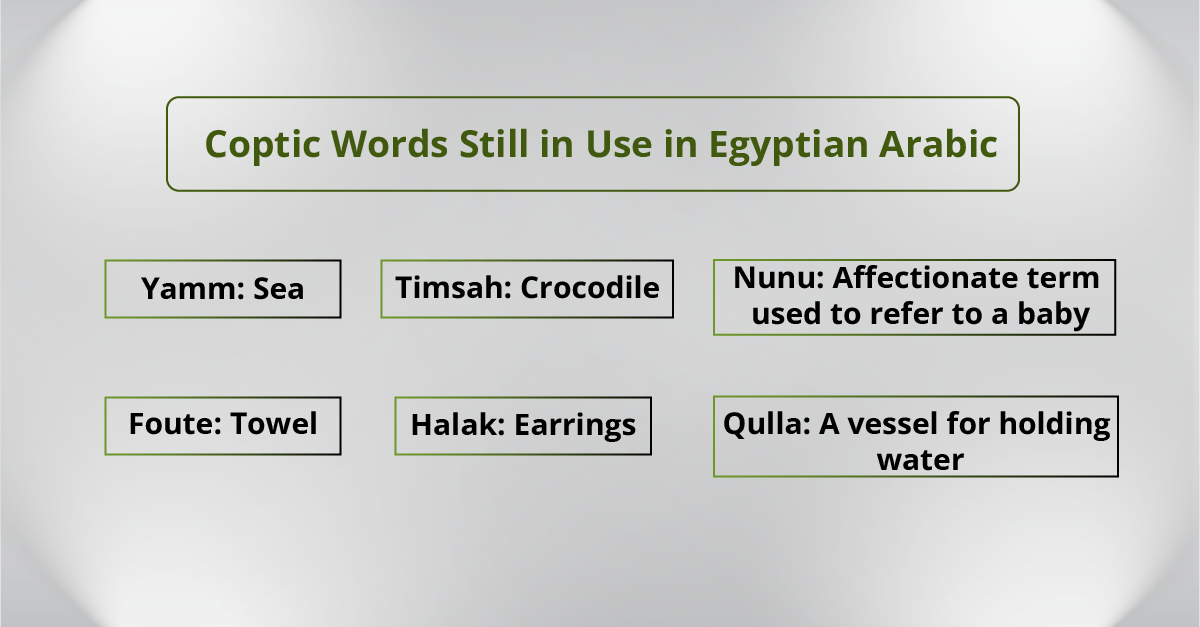
The modern Coptic language is the last phase of ancient Egyptian, which has been spoken in Egypt for over 5,000 years.
While the ancient Egyptian language has largely faded, Coptic remains in use as the ceremonial language of the Coptic Orthodox Church.
10. Hebrew
Hebrew is one of the few languages to have experienced a full revival. Once considered a “dead” language, it was resurrected in the 19th and 20th centuries. Hebrew is part of the Semitic language family and holds significance in Jewish religious texts.
Hebrew Translation Services are crucial for ensuring accurate communication.
Why These Languages Matter Today
These ancient languages continue to shape modern languages, vocabulary, and syntax. Even today, we use words and expressions rooted in these ancient tongues.
For businesses, embracing language diversity is not just a cultural consideration—it’s a competitive advantage.
Understanding and engaging with these ancient languages in the context of modern markets allows companies to reach wider audiences and build stronger connections.Moreover, many of these languages are still spoken by millions of people across regions, particularly in India, the Middle East, and East Asia. Their continued use and translation add value to global dialogue.
Why Accurate Translation of Ancient and Living Languages Matters
Translating languages with such rich cultural backgrounds presents unique challenges.
For instance, many ancient languages, like Hebrew or Sanskrit, are intertwined with religious, philosophical, or literary traditions. Translating these texts isn’t just about finding equivalent words; it’s about preserving the cultural references and understanding their impact on modern audiences.
Translation services are key in ensuring linguistic integrity. Professional linguists not only work to preserve the exact meaning but also adapt the text for modern readers.
This is especially important for religious documents, historical archives, or academic texts, where accuracy is paramount.
For modern businesses, accurate translation isn’t just reserved for ancient texts—it’s essential for market expansion.
Languages like Arabic, Chinese, and Farsi are still deeply rooted in culture and have millions of speakers worldwide.
To successfully engage with these markets, companies need expert translation services that respect both the linguistic and cultural intricacies.
bayantech: Bridging the Old and the New
At bayantech, we understand the value of linguistic heritage. Whether it’s translating into global languages like Arabic and Chinese or providing precise localization for niche communities, we combine cultural expertise with advanced technology to deliver accuracy, consistency, and impact.Our team of native linguists covers over 120 languages, ensuring that your message resonates—whether you’re engaging with modern audiences or connecting through some of the oldest languages in the world.