Many teams enter Arabic-speaking markets thinking the hard part is translation. Usually, it is not. The bigger problem is missing the Arabic language facts that affect how content performs after launch.
A page can be translated correctly and still feel off. A product interface can look readable and still create friction. A campaign can sound polished and still miss the audience. That is why a useful Arabic language overview has to go beyond trivia. It has to answer the real business question: what changes decisions in product, SEO, UX, support, and content production?
Let’s know more about the Arabic language.
Why “Arabic = One Language” Creates Expensive Mistakes
One of the most common localization mistakes is assuming Arabic works as one uniform language in every market and every channel.
That usually leads to three bad assumptions: one Arabic version fits all countries, one tone works for every touchpoint, and layout changes stop at text direction. In practice, Arabic localization decisions affect conversion, trust, clarity, and even how easy content is to maintain.
A simple translation approach may work for one policy page, but it often breaks down when the same brand needs product UI, support flows, paid campaigns, and multilingual SEO pages.
How Many People Speak Arabic—and Where Is Arabic Spoken?
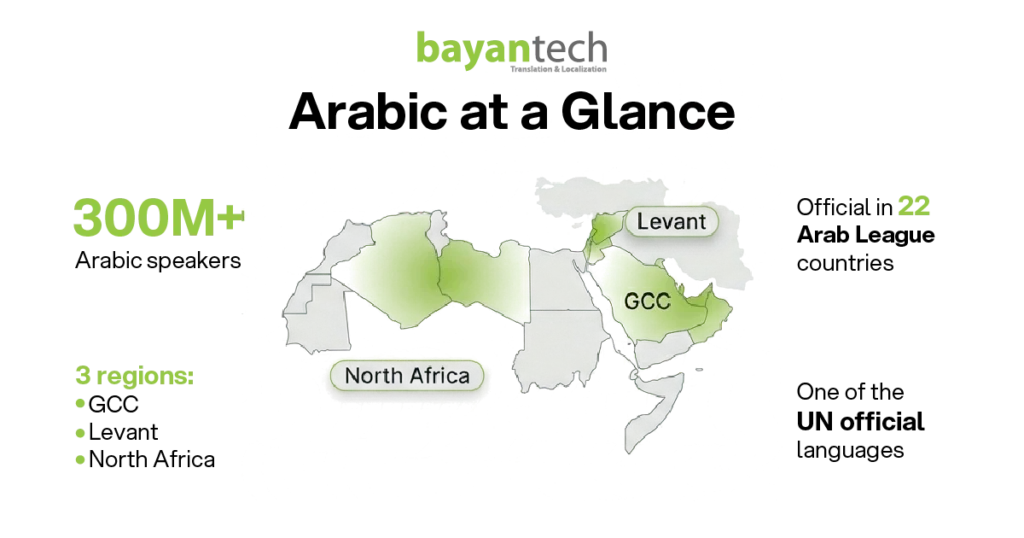
If you are asking how many people speak Arabic, the safe answer is that Arabic has more than 300 million speakers, with some broader counts going higher when second-language speakers are included. It is spoken across the Middle East and North Africa and is an official language in the 22 Arab League countries. Arabic is also one of the official languages of the United Nations.
For business, that matters because Arabic-speaking countries do not behave like one market. A rollout for Saudi Arabia, the UAE, and Qatar is not the same as one for Morocco, Algeria, and Tunisia.
So when someone asks, “Is Arabic an official language?” the more useful follow-up is: in which markets, for which audience, and with what regional variation? That is why Arabic translation services are important due to the widespread use of the Arabic language.
Modern Standard Arabic (MSA) vs Classical Arabic
A lot of content teams hear “formal Arabic” and stop there. But formal Arabic still has an important split.
Classical Arabic is the form associated with older literary and religious texts. Modern Standard Arabic (MSA) is the modern formal standard used in publications, education, formal media, and most broad business communication. Modern Standard Arabic differs from Classical Arabic mainly in style and vocabulary, and MSA is used in most publications and formal broadcasts.
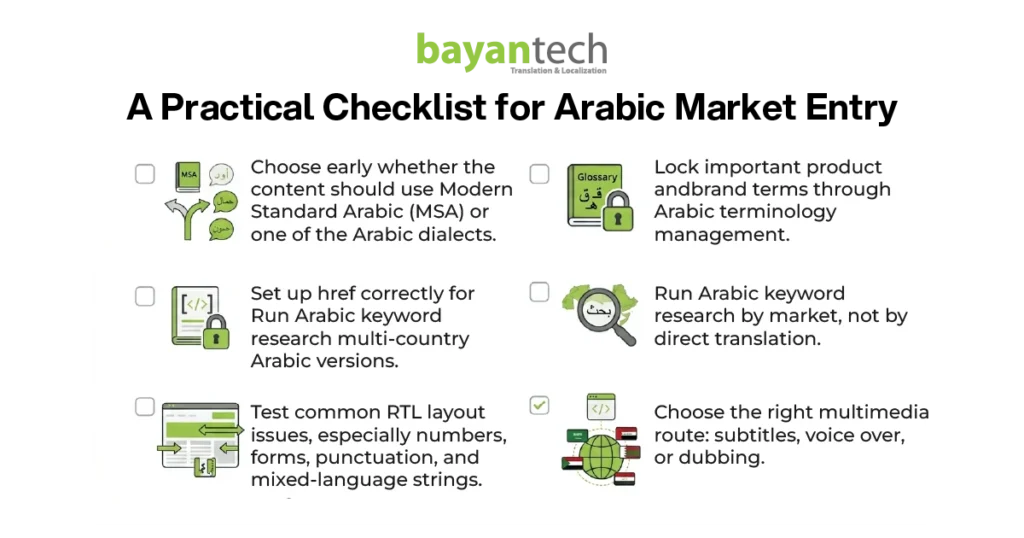
For most companies, the decision is practical. Use Modern Standard Arabic (MSA) for websites, official messaging, product documentation, policies, and broad regional communication. Use dialect only when the goal is a more local tone, faster familiarity, or stronger audience closeness.
Arabic Dialects and Arabic Diglossia
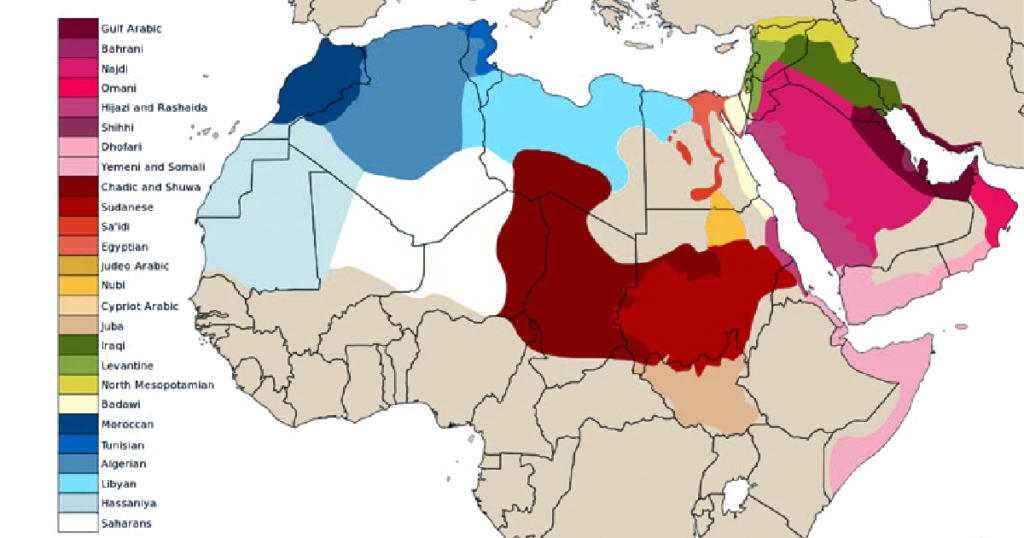
Arabic diglossia is one of the most important facts about the Arabic language for business teams. In simple terms, it means formal Arabic and everyday spoken Arabic coexist in the same language environment.
That is why Arabic dialects matter. A landing page in MSA may feel clear and credible across markets, while a support script or social ad may need a more local tone to feel natural. The point is not that one is better than the other. The point is that context decides.
In marketing, dialect can improve relatability. In legal or regulated content, MSA usually gives more consistency and clarity.
Arabic Alphabet, Script, and Diacritics
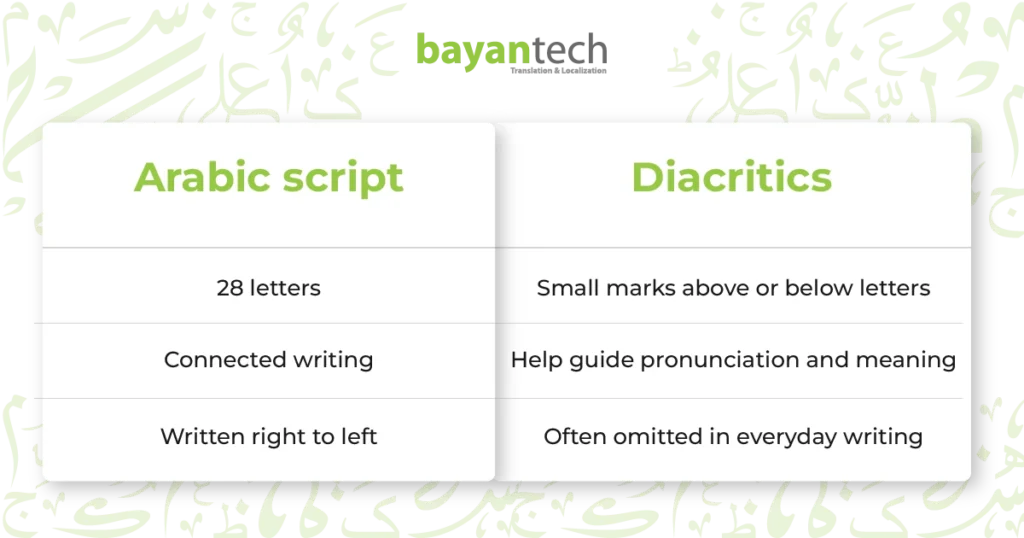
The Arabic alphabet is written in a connected Arabic script from right to left. It is generally counted as 28 letters. Short vowels are not part of the core alphabet and are instead shown through marks placed above or below letters.
Those marks are what people usually mean by Arabic diacritics. They help guide pronunciation and meaning, but they are often omitted in everyday writing.

For business, that has a direct impact on readability, search behavior, and naming. If a brand name, heading, or product term depends on perfect pronunciation support, the content may become less intuitive in normal real-world use.
So when asking how many letters are in the Arabic alphabet, the useful business takeaway is not the number alone. It is understanding how Arabic script behaves in actual interfaces and search contexts.
Arabic Is a Right-to-Left Language (RTL)
Arabic is a right-to-left language (RTL), but the impact goes far beyond flipping text direction.
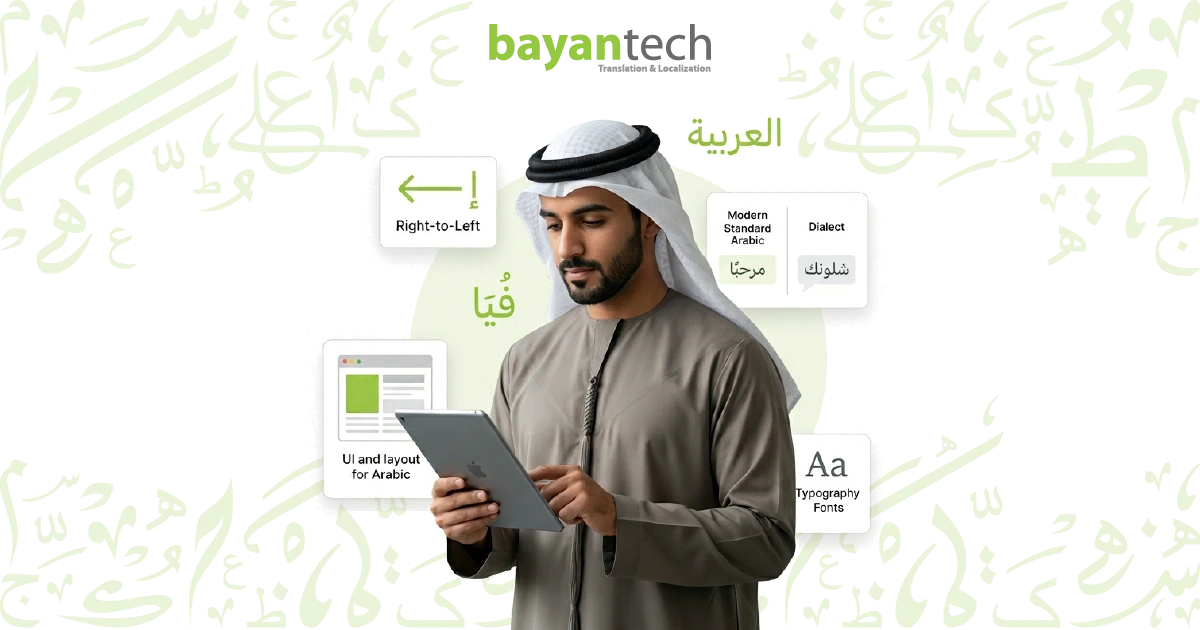
Real RTL layout issues often show up in navigation, punctuation, numbers, forms, and mixed Arabic-English strings. A common mistake is translating the text but leaving the interaction pattern partly left-to-right. That is when checkout fields, promo codes, phone numbers, or account dashboards start to feel awkward, even if the wording itself is correct.
A simple definition helps here: RTL means the main reading flow starts from the right. A common mistake is incomplete mirroring. A real example is an Arabic checkout where labels are translated, but number alignment, form flow, and punctuation still behave like English. That is why Arabic localization needs real RTL testing, not just translated copy.
Arabic SEO, Arabic Keyword Research, and Hreflang Arabic
Arabic SEO works best when it starts with the market, not with direct translation from English keywords.
Arabic keyword research needs to reflect how users in each target country actually search. The same concept may be phrased differently across regions, and copying English keyword logic into Arabic can weaken relevance.
Then the technical layer matters. Google Search Central recommends using different URLs for different language versions and using hreflang annotations to help Google serve the correct localized page. Google also highlights a common hreflang Arabic mistake: missing return links between alternate pages.
So the business point is simple: Arabic SEO is not just translated metadata. It is keyword intent plus correct localization signals.
Arabic Subtitles, Arabic Voice Over, and Arabic Dubbing
In multimedia, format choice matters as much as translation quality.
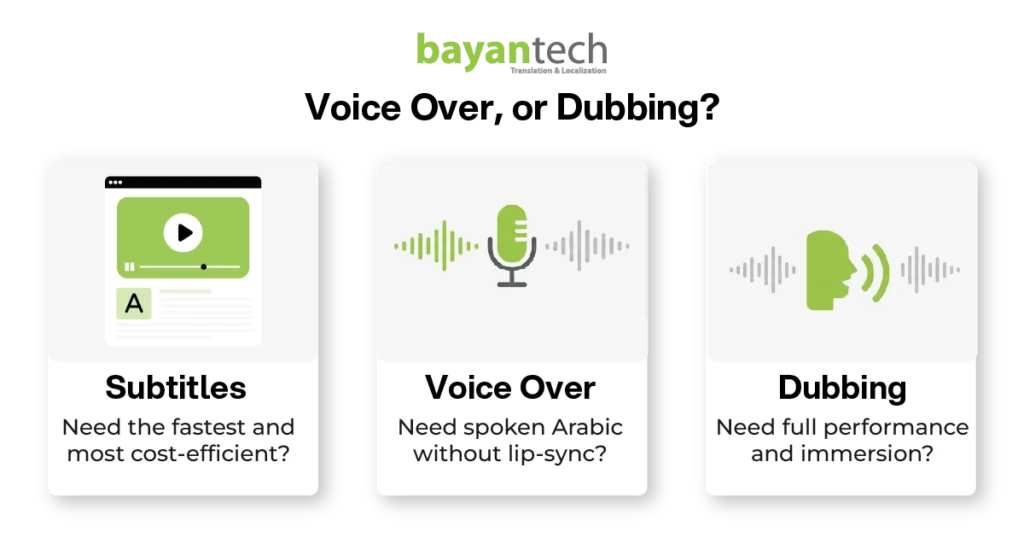
Arabic subtitles need to stay readable at speed. Arabic voice over is often a good fit for explainers, eLearning, and corporate content where lip-sync is not essential.
Arabic dubbing is a better fit for high-production assets where timing, performance, and audience immersion matter more.
That choice affects cost, tone, and viewer experience, especially in ads, learning content, and product videos.
Arabic Machine Translation and Arabic Terminology Management
Arabic machine translation can support speed, but it needs structure around it.
Because Arabic moves between formal MSA and spoken variation, raw output can easily sound unnatural or inconsistent. That is why Arabic terminology management matters.
A shared glossary for product names, UI labels, legal wording, and brand phrases reduces confusion, speeds review, and keeps content stable across channels. Good guardrails are simple: define preferred terms, review for tone and context, and run QA before release.
What Good Arabic Localization Looks Like
When these basics are handled early, Arabic localization becomes much easier to scale. The UI feels stable, the tone fits the channel, terminology stays consistent, Arabic SEO aligns with search behavior, and content is easier to maintain across markets.
That is the real value behind these Arabic language facts. They do not just make the content more accurate. They help teams make better launch decisions, reduce rework, and build content that works in the market it was made for.
For campaigns, this is also where Cultural Localization becomes the natural next step. And for broader regional planning, Languages Spoken in the Middle East helps connect language choices to expansion strategy.
Your Arabic Content Deserves the Right Partner
Arabic localization works best when it is treated as part of a bigger growth strategy, not as a one-off translation task. bayantech helps businesses manage Arabic content with the linguistic, technical, and cultural expertise needed to launch with confidence across the Middle East and North Africa.
From Arabic language services to multilingual localization in 120+ languages, bayantech supports brands that need accuracy, consistency, and market-ready communication at scale.
Contact us at bayantech to discuss your Arabic and multilingual localization goals.