
Multilingual PPC campaigns often fail on ROI before generating any leads due to ineffective spending of money. The issue doesn’t lie with targeting or budgeting but rather in the use of translation instead of localization of the ad copy.
If you’re running or plan to run multilingual PPC campaigns in other countries, then this guide is just what you need to do. We’ll demonstrate how to set up campaigns that resonate with your target audience using keywords, structure, ad copy, and landing pages. In addition, you will learn about errors that diminish the efficiency of international PPC campaigns.
Why Most Multilingual PPC Campaigns Underperform Before the First Click
The successful implementation of a multilingual PPC campaign involves more than just translating a single campaign into different languages. Different markets have their unique patterns of searching, culture, buying behaviors, and advertising expectations.
This calls for having different keywords, ad copy, targeting, and multi-language campaign setups rather than using a single campaign and translating its text into different languages.
Every market has different search behavior, so each campaign should be built for the local audience rather than copied across languages.
Companies that view multilingual PPC campaigns as mere translations without taking into account multilingual marketing services usually face problems of poor Quality Scores, low audience engagement, and ineffective ads, among other challenges.
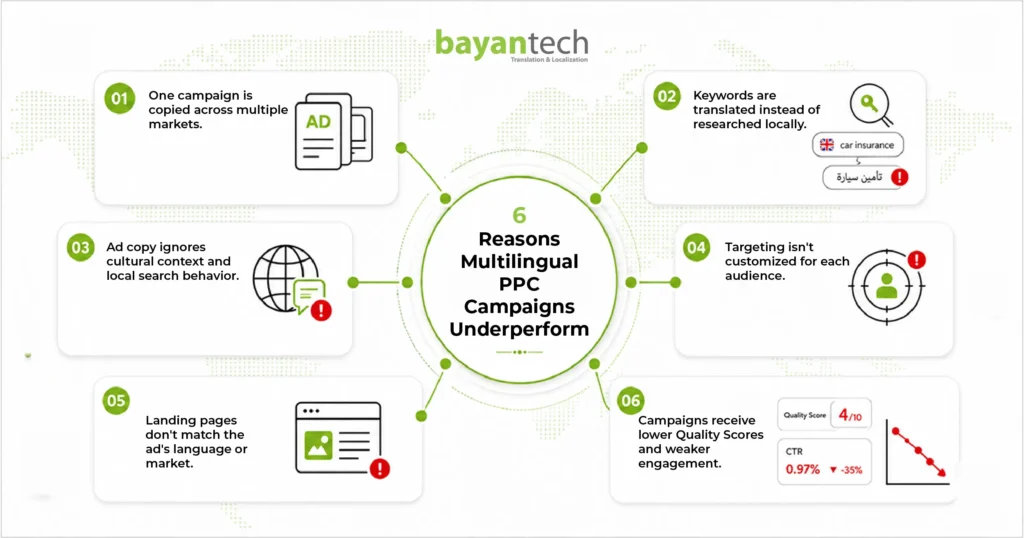
The Real Cost of Direct-Translated Ad Copy: CTR, Quality Score, and CPC
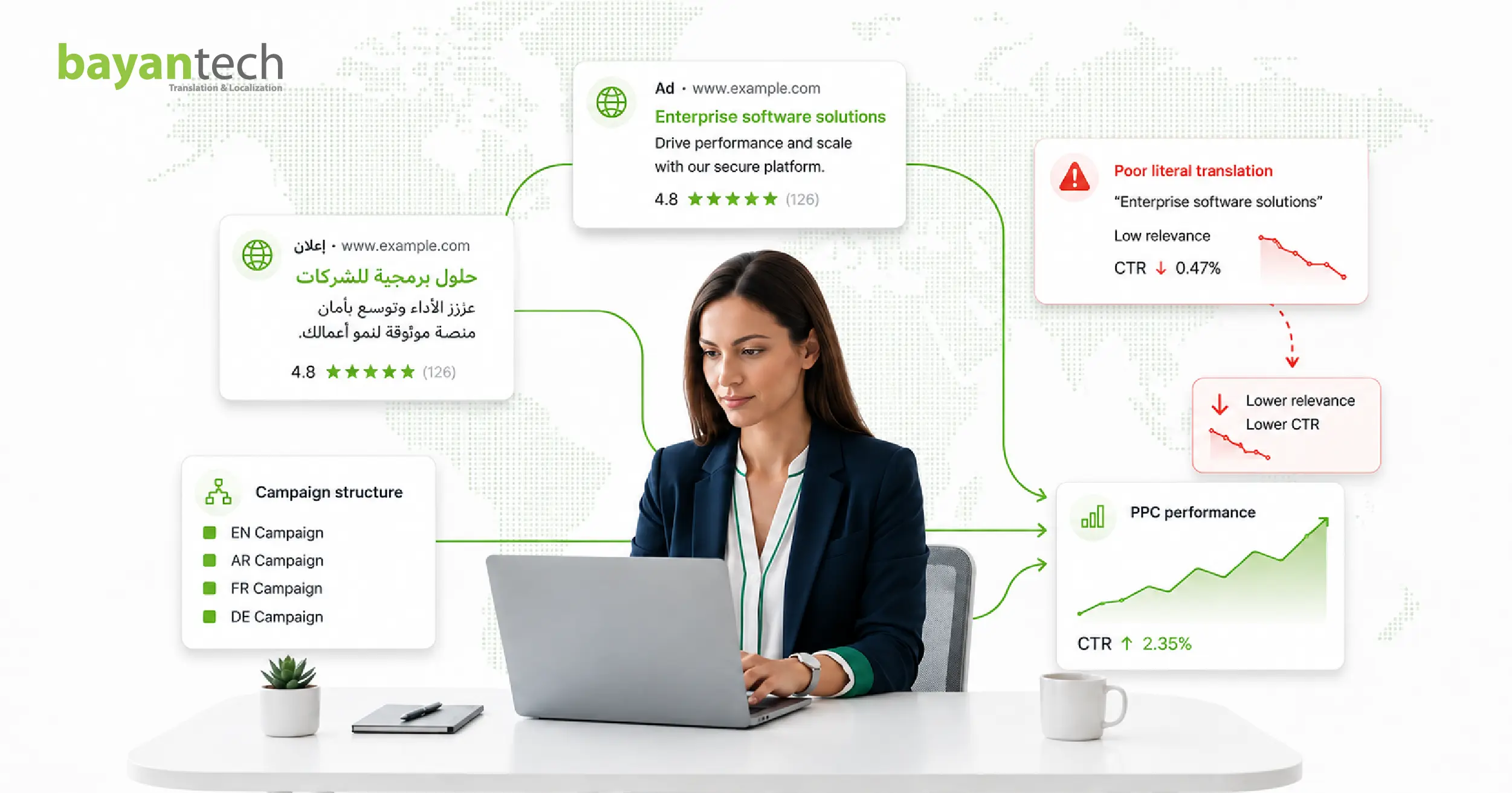
Using the right language for your ads is only one of many aspects. What truly counts is if the words fit natural human behavior in search and speech patterns and in purchasing behavior. Google Ads measures ad quality using local search behavior metrics, and if your ad appears artificial, you can receive a poor Quality Score. As a result, your CPC will increase and you will receive fewer clicks.
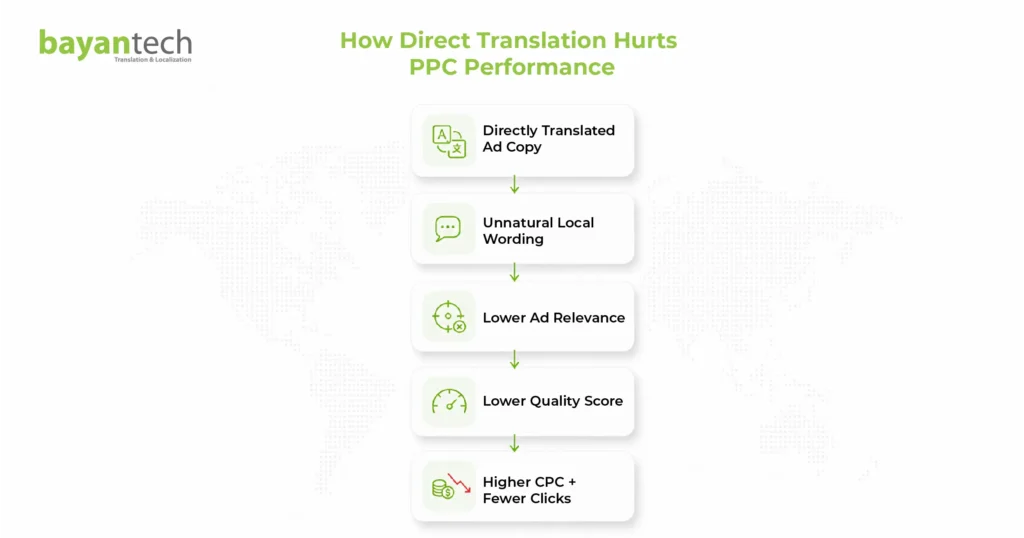
According to Google, ads shown in a user’s preferred language can increase click-through rates (CTR) by up to 30% compared to non-localized alternatives. This improved relevance often leads to higher engagement and better campaign performance.
Some teams are afraid that making ads in local languages will increase the expenses for translation. But high-quality ads usually bring better click-through rates and less money wasted, and thus it is a good idea to invest in them.
One of the most useful approaches to determine the effect would be testing it in a two-week period. The results could be gathered through comparing ads that have been translated or transcreated, and analyzing their Quality Score, CTR, and CPC. With such an easy test, useful conclusions could be drawn about CTR multilingual PPC optimization.
Why Multilingual PPC Isn’t “One Campaign in Five Languages”
Many businesses build one campaign in English, translate it into several languages, and expect similar results everywhere. In reality, each market has different search habits, customer expectations, and buying behaviors.
Let us consider Spanish as an example. Citizens of Spain and Mexico speak the same language. However, they use different keywords, react differently to advertisements, and expect different prices and currencies. Having one campaign for all Spanish-speaking countries will be less relevant, even if translations are made precisely.
This principle is applicable to other cross-border PPC campaigns as well. The creation of separate ad groups per each country will give you more opportunities to manage your budgets, reports, bids, and messages. Although running several campaigns looks more time-consuming, it usually brings much better performance metrics and budget management.
Multilingual Keyword Research: Why Direct Translation Fails
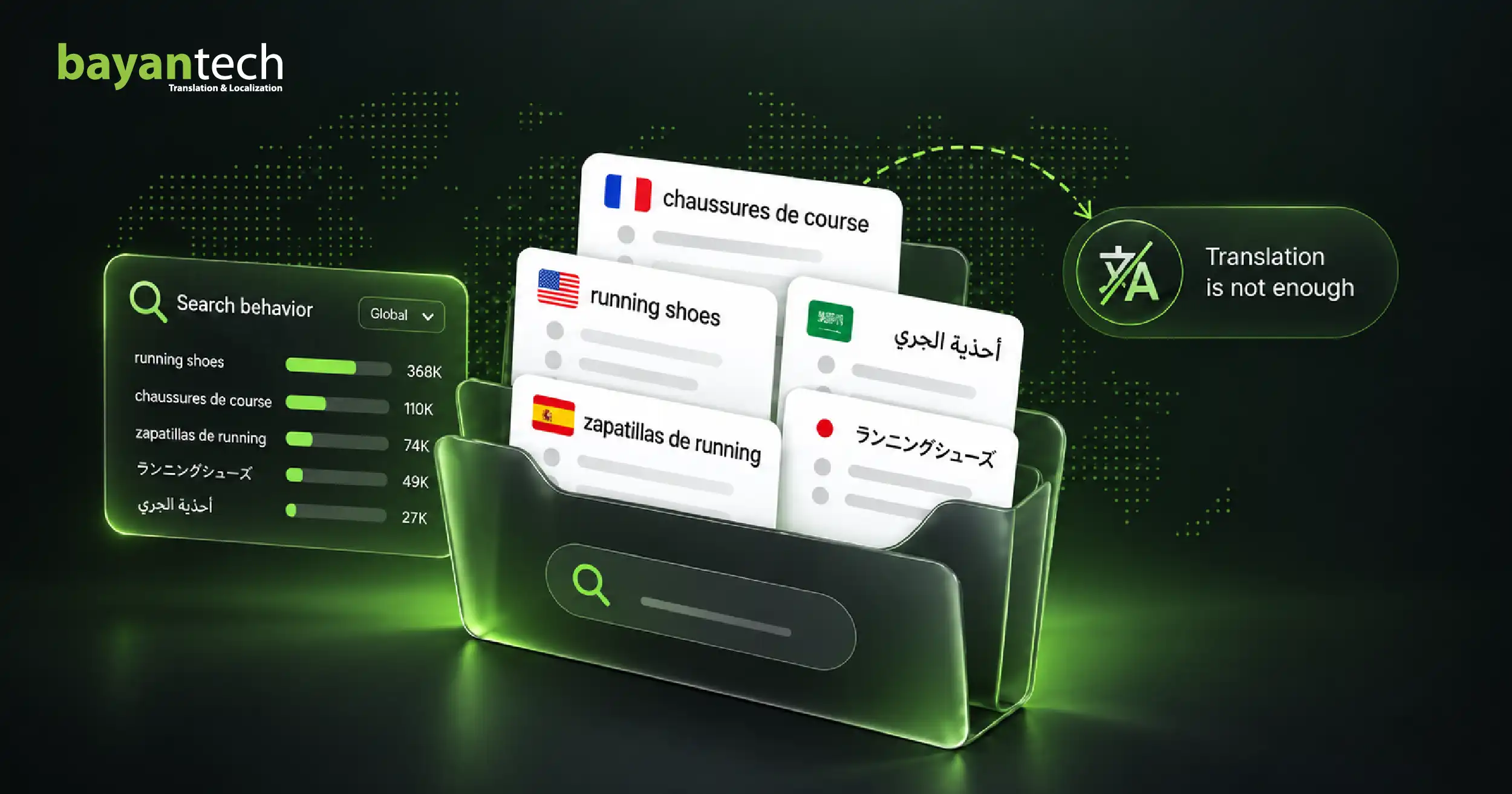
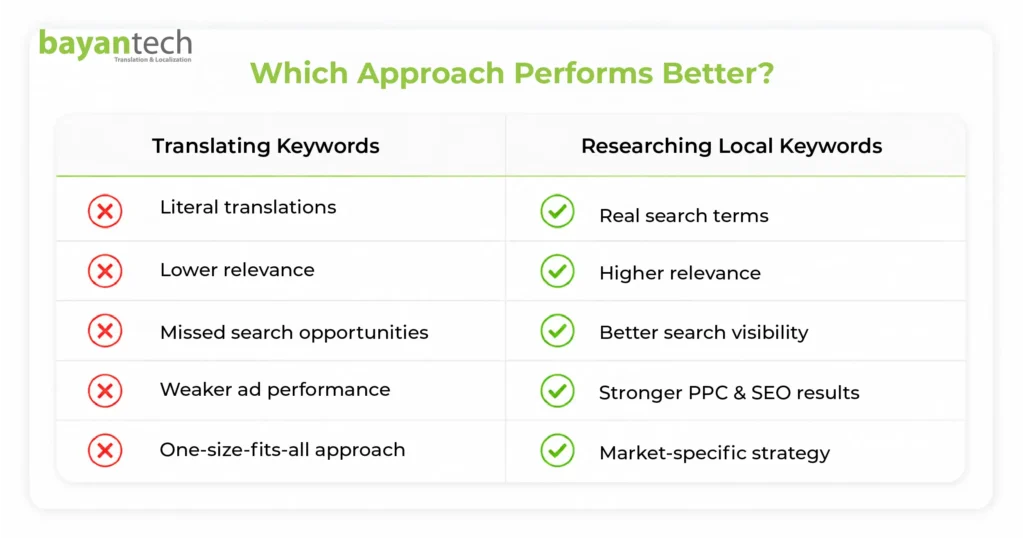
One of the most common blunders in multilingual PPC campaigns consists of translating your English keywords rather than doing proper research into how your potential customers are searching in other languages. A keyword that works perfectly fine in English could be translated very differently in another language, or the potential customer might be using a completely different term.
Start with local search behavior instead of translating your English keyword list. Use search autocomplete, competitor ads, and native-language experts to identify the terms your audience actually uses.
These keywords could also be used in your Multilingual SEO Services campaign. There is no need to create different keyword lists for paid and organic search campaigns. Use one common locally researched keyword basis for both campaigns.
Country-Specific Ad Group Structure: Build Campaigns by Market, Not Language
A well-organized multilingual campaign segments markets rather than grouping all languages in one campaign. Every market must run its own campaign, ad group, keywords, bids, and reports. This makes it simpler to track what works and what does not need any adjustments.
Remember your negative keywords. What may be an unprofitable search term for one market could turn out to be an important term for a different market. Make sure to review and adjust your negative keyword list for each separate market rather than applying one universal negative keyword list across all your campaigns.
As companies enter multiple markets, many discover that multilingual PPC management services are a better solution for campaign structure management and optimization.
Transcreation vs. Translation for Ad Copy: Choosing the Right Approach
Translation reveals the message in your advertisement. When it comes to transcreation in PPC advertising, it is all about the feelings that your advertisement invokes and whether it prompts the person to click on it.
For instance, if you have a slogan such as “Don’t Miss Out” in English, there will always be some kind of urgency felt in it. Translating it directly in some other language could appear strange and awkward, but the transcreated version would use the local phrase that would invoke the same feeling of urgency. The words used might be different but not the intent behind them.
In general, factual information can be always translated without any problems, such as the product features, price, or anything else. Persuasive content such as headlines or calls to action can be better written with the culturally adapted advertisement by the natives.
Localized Landing Pages and Platform-Specific Requirements
Even the best ad can struggle if the landing page doesn’t match the user’s expectations. Someone who clicks on a localized ad expects to arrive on a page in the same language, with the correct currency, contact details, and messaging. Sending visitors to an English page after clicking a localized ad often increases bounce rates and can reduce Quality Score.
Research has shown that localized landing pages can increase conversions by up to 70%, making them just as important as the ad itself. A consistent experience from the ad to the landing page helps build trust and encourages users to take the next step.
Once your landing pages are localized, make sure you’re using the right advertising platform for each market. Google Ads remains the leading paid search platform for international campaigns, but it isn’t the best choice everywhere. Businesses targeting China, Russia, or South Korea should also consider Baidu, Yandex, and Naver, where local audiences are more active.
What a Properly Localized Multilingual PPC Program Delivers
When multilingual PPC campaigns are built around local search behavior instead of direct translations, the results often improve across every stage of the customer journey. Ads become more relevant to local audiences, helping increase engagement while making better use of your advertising budget.
A well-planned global PPC strategy can lead to higher Quality Scores, lower cost-per-click (CPC), and stronger performance in markets where there is less competition for local-language keywords. Instead of measuring success across all markets together, you can track multilingual campaign ROI for each country and clearly identify which campaigns deliver the greatest return.
Localization also supports multilingual conversion rate optimization. When keywords, ads, and landing pages work together in the same language and match local expectations, visitors are more likely to complete the action you want, whether that’s submitting a form, requesting a quote, or making a purchase.
Multilingual PPC Audit: Is Your Current Campaign Losing Budget to Poor Localization?
Before increasing your budget or expanding into new markets, review your campaigns using this quick multilingual PPC audit:
- Is your ad copy transcreated where needed, or simply translated?
- Are campaigns and ad groups organized by market instead of by language alone?
- Does every ad lead to a landing page in the same language, currency, and local context?
- Have you created separate negative keyword lists for each market?
- Do some markets have much lower Quality Scores or weaker CTR than others without a clear reason?
If you answered “no” to any of these questions, your campaign may be losing performance because of localization issues rather than bidding or budget. Addressing these areas can significantly improve multilingual PPC CTR optimization and help you get more value from your existing ad spend before investing more.
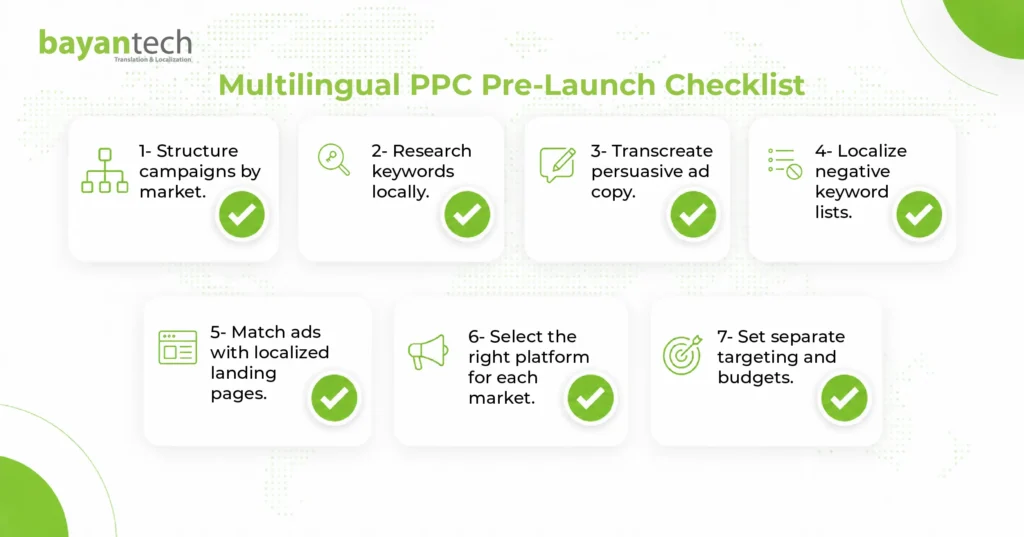
Pre-Launch Checklist for Multilingual PPC Campaigns
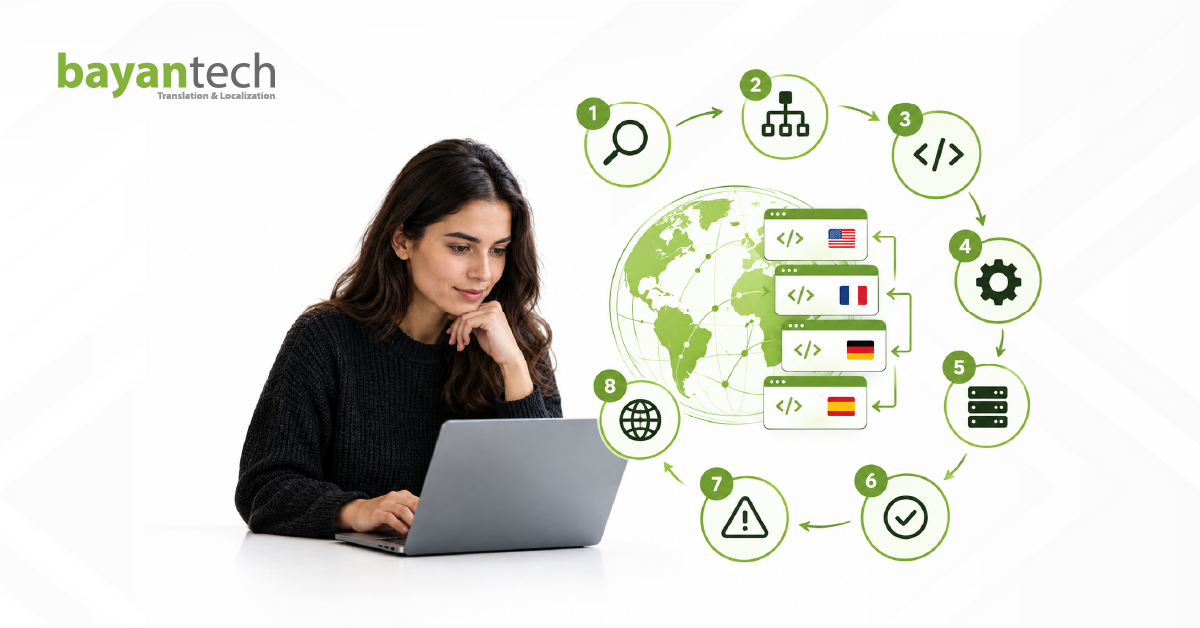
Before launching, use this checklist to confirm that every market has the right keywords, campaign structure, ad copy, targeting, and landing page experience.
Get Your Multilingual PPC Campaigns Ready for Global Success
Successful multilingual PPC is built on more than translation. It requires local keyword research, culturally relevant messaging, and a campaign structure designed for each market. At bayantech, we help businesses launch multilingual PPC campaigns that connect with local audiences and support stronger multilingual campaign ROI.
Whether you’re expanding into one new market or managing campaigns across multiple regions, our specialists can help you build the right localization strategy.
Get a Quote in 24 Hour and receive a tailored localization plan.