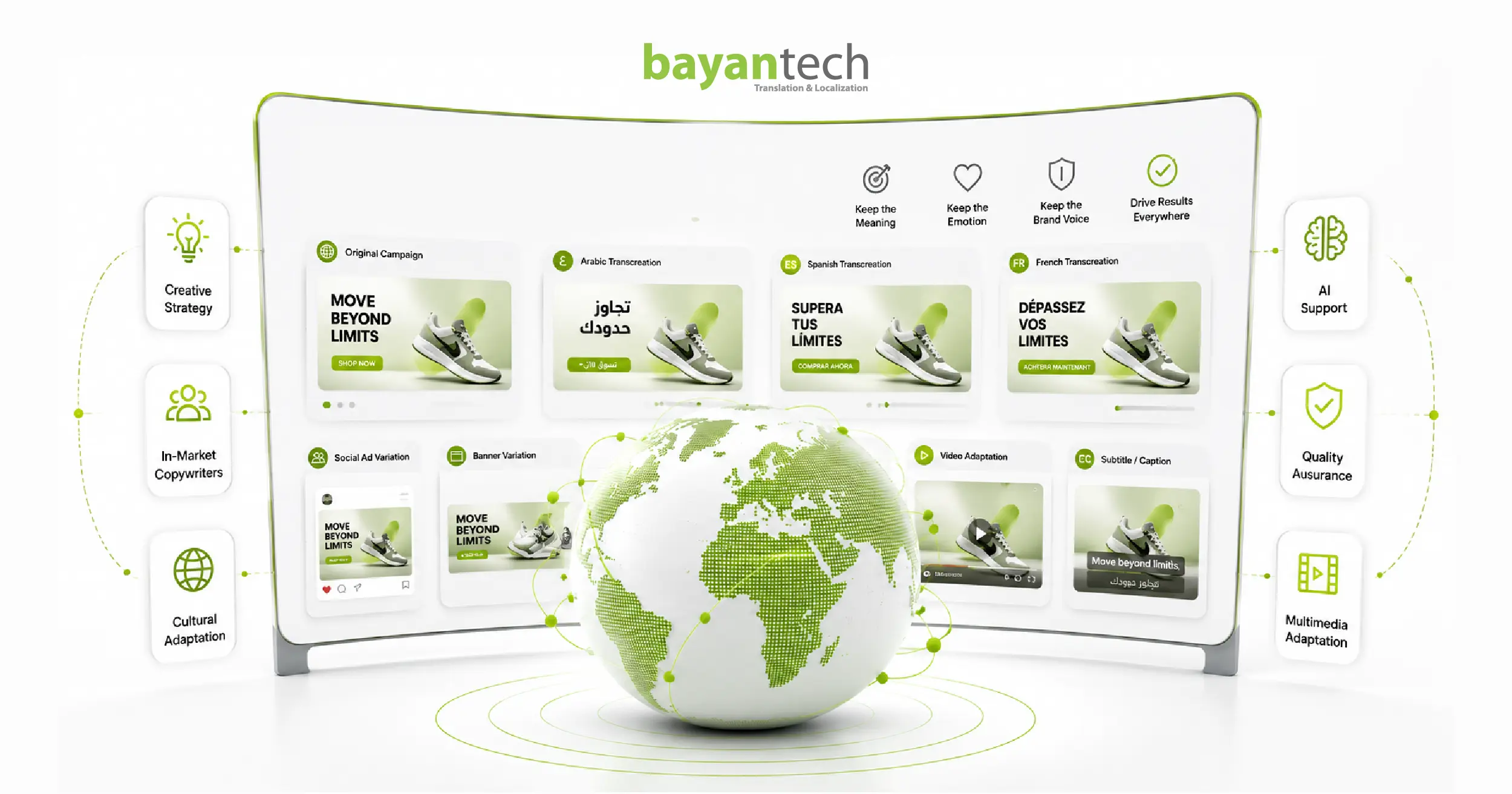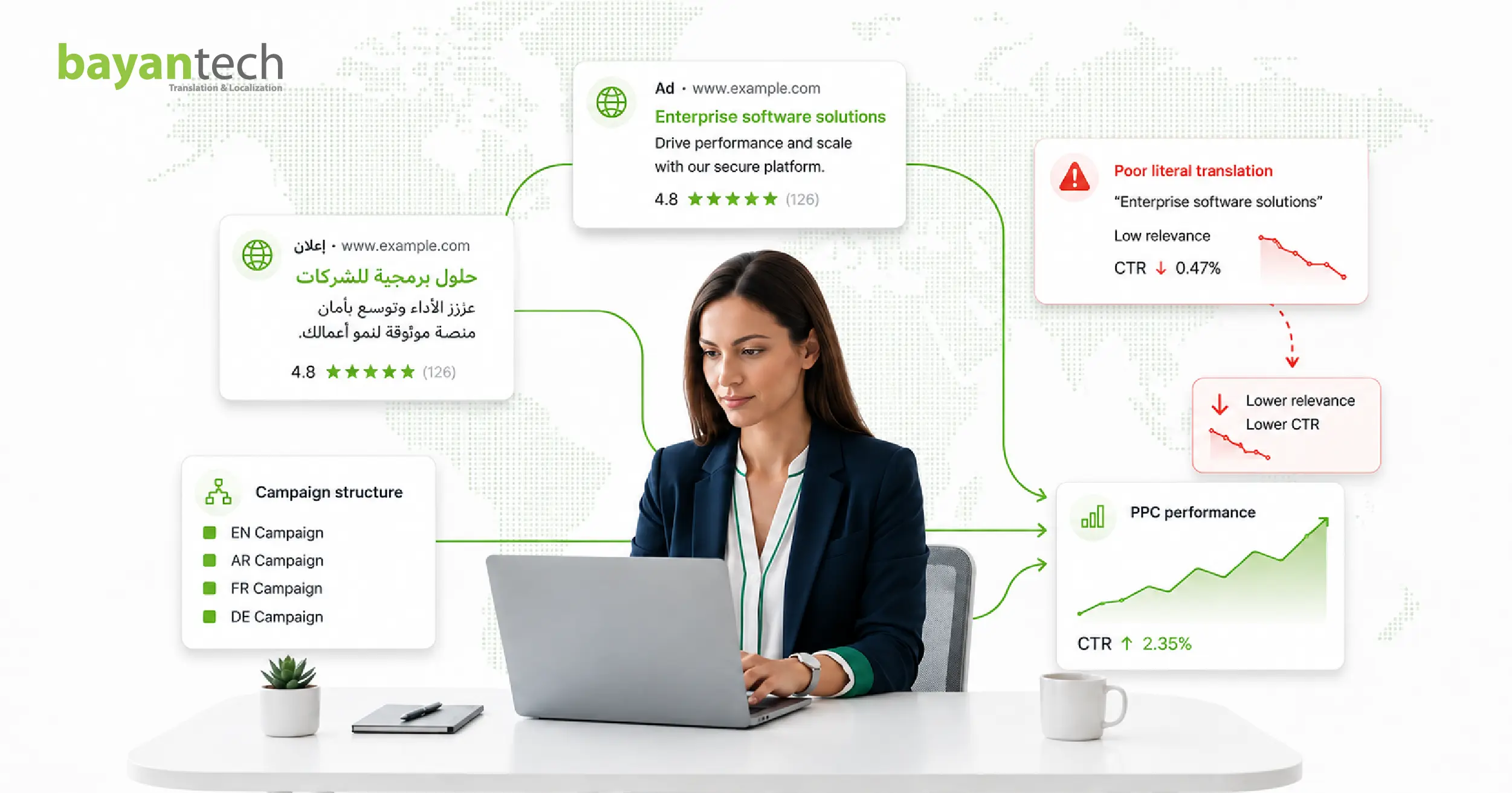


What sets you apart from competitors in global markets is not a huge budget or having 100 teams working on marketing strategies.
It’s having a well-planned localization strategy that focuses on connecting with your target audience to build loyalty.
This guide is for you if your team is adapting its product or service to meet the unique needs of different local markets.
Learn what a localization strategy is, the main aspects of building it, and a real-world example of successful localization.
What Is a Localization Strategy?
A localization strategy is a step-by-step plan for adapting your product and content for new regions so launches feel relevant to customers.
It covers content localization priorities, like language and dialects spoken in the target region, terminology, tone, numeral formats, dates, visuals, and more.
The key is alignment: products, services, and marketing move together, using the same messaging and approved terms, so customers get one clear story from the first ad to onboarding and support.
How a Lack of Localization Strategy Hurts CX and Business Growth
Without a clear plan, content localization turns into a series of urgent fixes. Teams translate what gets requested today, not what actually shapes the overall customer experience.
That’s how brands end up with “accurate” messaging that still doesn’t convert, because the cultural nuances are off, the promise feels generic, or the local customer hears phrasing that wouldn’t be used in their local language.
The impact shows up fast in day-to-day user experiences. Your UI says one thing, your help center says another, and support macros don’t match either.
Customers then feel like they’re dealing with an imported product, not a local one. This makes trust drop and conversions stall.

The Difference between Translation and Localization Strategies
Translation is converting text into another language.
A localization strategy is the plan that decides what matters most in your content to translate first and culturally adapts it, so your localized product actually works in your target markets.
It helps you meet the specific customer base by choosing what to localize now, how deep to go in each market, and how to measure outcomes like conversion, retention, and support load.
In practice, a localized product is the full user journey—UI, onboarding, help content, and tone—built to earn trust.
The 7 Key Components of a Strong Localization Strategy
1) Market selection & sequencing:
Start with 1–3 target markets, not “everywhere.”
2) Customer and language decisions:
Define the local customer profiles, then map their preferred local language (and any regional variants).
3) Localization depth (light vs deep):
Light localization may work for early validation, but regulated or high-trust categories often need deeper adaptation to fit cultural nuances and local expectations.
4) Content localization plan
Prioritize what drives revenue and trust first, such as pricing pages, onboarding flows, top conversion pages, and key legal/help content.
5) Localized product experience
Localize the full journey: UI text, in-app messages, emails, help articles, and error states, so users don’t hit language gaps that create friction.
6) Marketing materials localization
Identify which marketing materials must be localized before launch: ads, landing pages, nurture emails, sales decks, and key announcements.
7) Support readiness
Retention depends on customer support being ready: hours, language coverage, macros/scripts, and escalation paths. If support isn’t localized, you’ll see more tickets and lower satisfaction.

The Role of a Translation Management System
A Translation Management System is the coordination layer that keeps content localization organized as you scale.
Instead of chasing files and approvals across email threads, it supports project management by routing work to the right people—who translates, who reviews, and who approves—using one shared workflow.
It also helps with version control, so you always know what changed, what’s approved, and what needs updating when product or marketing content shifts.
Benefits: What Improves When Your Localization Strategy Is Applied
When localization is strategic—not just translation—you improve both revenue and trust. The benefits of localization include:
- Higher conversion rates in local markets (clearer value props, pricing, and CTAs)
- Smoother onboarding and fewer post-purchase friction points
- Fewer support issues, as help content matches how customers actually use the product
- Faster releases (less rework, fewer approval bottlenecks, more predictable launches)
- Stronger brand credibility and consistent messaging across product, marketing, and support)
- Better retention and referrals
Real-World Example: Nintendo’s Localization Strategy
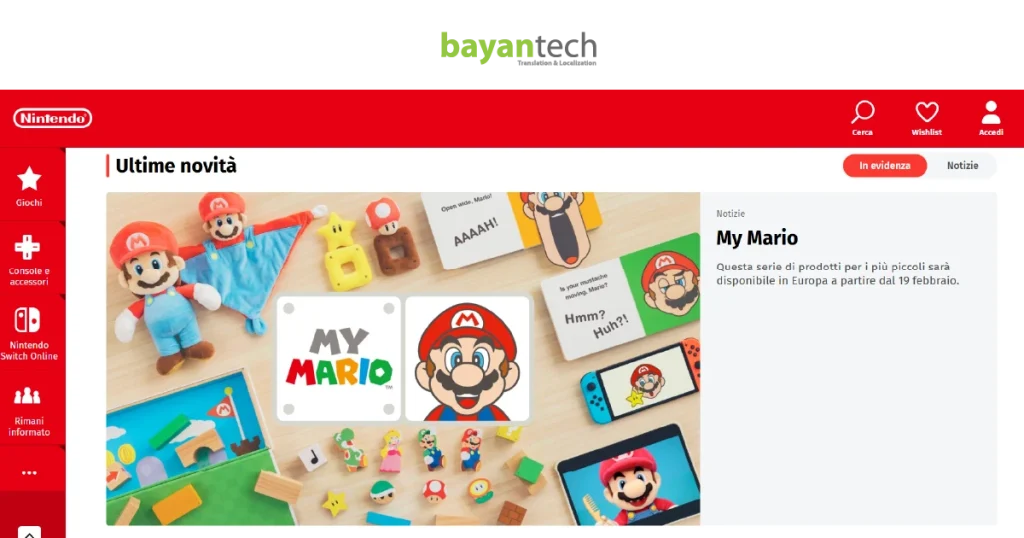
Nintendo is one perfect example of a brand that turns localization into a business growth tactic.
From their culturally adapted website to their localized games, Nintendo has successfully implemented a strong localization strategy, which is one of the main reasons behind their global success.
One example of product localization is when Nintendo localized their game Mother 2 for Western release; a location labeled a “bar” in the original was changed to a “café.” This is one among many adaptations made to suit the Western market.
It sounds minor, but it’s a clean example of strategy: the localized product was adapted to fit the expectations and content rules of the target markets, not just translated word-for-word.
Common Mistakes in Localization (and How to Avoid Them)
- Choosing target markets without research → Start with realistic capacity (support coverage, internal reviewers, budget) and validate demand before you expand.
- Translating content but not the experience → Treat content localization as part of the full journey: UI text, onboarding emails, help center, and in-app prompts—not just web pages.
- Ignoring cultural nuances → Add local review steps and require examples that reflect real local context, not literal translations.
- One tone → Define market voice rules per region so the local language feels natural and consistent across product, marketing, and support.
- Launching without support readiness → Plan customer support coverage (hours, languages, macros, escalation) before launch so growth doesn’t create ticket spikes.
Most failures come from treating content localization like a one-time task. Strategy is what turns localization into a repeatable growth system.
Want a Localization Strategy You Can Execute in 30 Days?
Get a practical localization plan with clear priorities, owners, and a launch-ready workflow with bayantech.
If you need delivery across different markets, start with our Localization Services to build a strategy you can execute.
For launch-critical pages and journeys, explore Website Localization to improve conversion in local markets.
And if organic growth is part of your plan, pair localization with International SEO Services to target the right intent in each region.
Contact us to start today!