
A translation style guide is the map that helps translators and LSPs reach a target audience in a way that aligns with your brand’s tone of voice, identity, and goals.
It contains glossaries, target markets, formatting guidelines, and dos and don’ts.
Without it, businesses, and especially the ones that scale globally in different markets, suffer inconsistencies and poor quality translation because of misalignment.
In this guide, you’ll learn what a translation style guide is, what it consists of, and its benefits for businesses.
What Is a Translation Style Guide?
A translation style guide is a practical guide for translation teams that explains how your brand should sound and which rules linguists must follow during translation and review.
When creating a style guide, the goal is to protect brand identity across every market, so tone, wording, and formatting stay consistent.
This reduces back-and-forth in review and produces higher quality outcomes with fewer revisions.
Why Are Translation Style Guides Important?
You can assign a translation project and receive a high-quality translation; however, it may not match your brand voice or brand identity, and each market you operate in could end up presenting a different version of your brand.
A translation style guide solves that problem by clearly defining consistent brand terminology, target audience, and target markets.
That way, when multiple translators or different teams localize your content for international markets, your brand message stays consistent.
What It Costs When You Don’t Have a Style Guide

Here are the risks that you subject your business to when you expand globally and launch translations without a style guide:
- Rewrites happen because the translation is “correct,” but it doesn’t fit your writing style or rules.
- Sales pages and support content sound different across target languages, hurting trust.
- In regulated or technical niches, missing industry-specific terminology creates risk.
- Slower approvals and inconsistent customer experience, which is exactly what global expansion can’t afford.
Consistency Is Achieved through Style Guides, Not Teams
Even if you have a go-to translation team for global launches, business always evolves, introducing new features, terminology, and content guidelines.
Another point to consider is the fact that people change and vendors rotate.
Even one translator can drift without clear rules across languages and cultures.
That’s why a style guide is your ticket to consistent, predictable results that meet quality standards.
Translation Style Guides vs Glossaries (Why You Need Both)
| Translation Style Guide | Translation Glossary |
| How translations should sound and read (brand voice + tone). | What terms should be used consistently (approved terminology). |
| Rules for grammar, punctuation, capitalization, and formatting. | Approved product names, features, UI strings, and industry terms. |
| Answers: “How should we write?” | Answers: “What do we call this?” |
| Prevents off-brand or inconsistent writing across markets. | Prevents term drift and multiple translations for the same concept. |
| Best for: consistency in style across translators and teams. | Best for: consistency in naming across all content types. |
When you combine both, you stop avoidable inconsistencies and get more reliable quality translations.
What Do Translation Style Guides Include?
1) Brand Voice and Tone
The brand voice is described using 3–5 adjectives to keep brand messaging consistent across target languages. Tone guidance is usually provided by content type (e.g., sales pages vs. support content vs. UI), often with short do/don’t examples to show the intended feel.
2) Audience and Context
The target audience is outlined, including what they care about and what they expect to hear, so translations feel relevant—not just accurate. Market notes commonly clarify formality levels and cultural preferences across languages and cultures.
3) Writing Rules
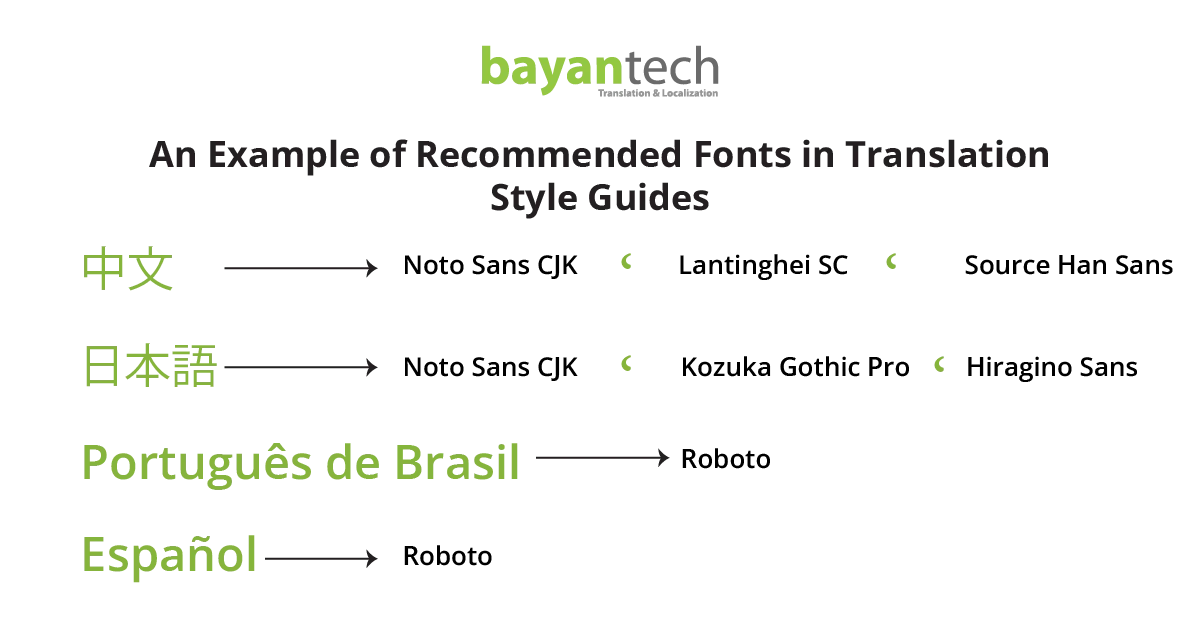
Preferred writing style is defined (e.g., short sentences, active voice, plain language) to keep content easy to read in every market. Core rules typically cover capitalization, punctuation, numbers, dates, units, headings, bullets, and formatting for UI strings and filenames.
4) Terminology Rules
Approved terminology is listed for product names, features, slogans, and industry terms to prevent inconsistent wording. Guidance also covers “do not translate” items and how brand terms should appear across languages.
5) Meaning Boundaries (What Can Change vs. Must Stay)
Boundaries explain what must remain literal (e.g., legal disclaimers, safety text, product specifications) versus what can be adapted for impact (e.g., headlines, CTA phrasing).
How to Create a Translation Style Guide?
To create a translation style guide that actually improves quality translations, build it from what already works in your brand—then apply it consistently across your target markets.
- Collect your “source of truth” assets (brand book, top-performing copy, product naming, and any approved terminology).
- Define the scope by choosing the first target markets and target languages you’ll support.
- Start with 1–3 markets so you don’t overbuild a guide nobody uses.
- Extract repeatable rules from your best brand messages (tone, phrasing, preferred terms, and “always/never” choices).
- Draft a one-page minimum guide covering voice, core terminology, and basic formatting.
- Add “Do/Don’t” examples for tone, CTAs, and common tricky phrases translators tend to interpret differently.
- Pilot the guide on one real project and capture reviewer comments as evidence, not opinions.
- Revise, label it version 1.0, and make it mandatory for every new project to protect consistency and quality.
Important Tips for Translation Style Guides
A style guide only works if it stays practical and current—otherwise, your consistent brand slips, brand identity gets diluted, and high quality becomes a coin flip across vendors and teams.
- Assign a clear owner: Make marketing + a localization lead responsible for decisions and updates.
- Define update triggers: Refresh it when you launch new features, enter new markets, or change core messaging.
- Keep maintenance light: Do a quick quarterly review, and run major updates whenever brand identity shifts.
Treat it as a living reference that protects consistency, especially when people, vendors, and markets change.
Real-Life Use Case of Translation Style Guides
When you launch in three target markets, a style guide keeps the same promise, product naming, and CTA intent so quality translations feel like one brand, not three versions.
An example of a CTA used for a SaaS company that operates in 3 different markets is shown below:
- EN: “Start your free trial in 2 minutes with QuickSync.”
- FR: “Commencez votre essai gratuit en 2 minutes avec QuickSync.”
- JA: 「QuickSyncで2分で無料トライアルを開始。」
With a style guide, “QuickSync” stays unchanged, “free trial” stays the correct local equivalent, and the tone stays clear and confident across every page.
Get a Ready-to-Use Translation Style Guide with bayantech
Order bayantech’s language services to get the best translation quality, delivered by native experts.
We run translation quality assurance processes to evaluate consistency and quality. Our professional translation services include terminology management for the consistent use of product names and approved wording.
For brands that want to scale their workflows, we employ translation technology that helps make this transition smooth, with translation in 120+ languages.
Get industry-specific translation services today to operate in international markets confidently, meeting regulatory requirements.