

An ambiguous term within a fintech app not only makes people feel frustrated but also stops them from proceeding further with the transaction, thus losing their trust in your fintech app.
In case customers find that your fintech app looks confusing and unfamiliar or not translated properly, they simply won’t use it.
Thus, while localizing your fintech application, you should focus on creating an excellent user experience by providing native terms within your fintech app.
As important as it is to provide an outstanding user experience through your app, it’s also crucial to ensure that the checkout process is smooth like the entire experience.
Baymard Institute found that 10% of shoppers abandoned checkout because there were not enough payment methods, and 19% left because they did not trust the site with their credit card information. For fintech apps, this reinforces why localization must cover payment methods, trust signals, fee wording, and the full user flow—not just translated text.
Now let’s dig a bit deeper into fintech localization.
Fintech Localization Fails When It Is Treated as Simple Translation
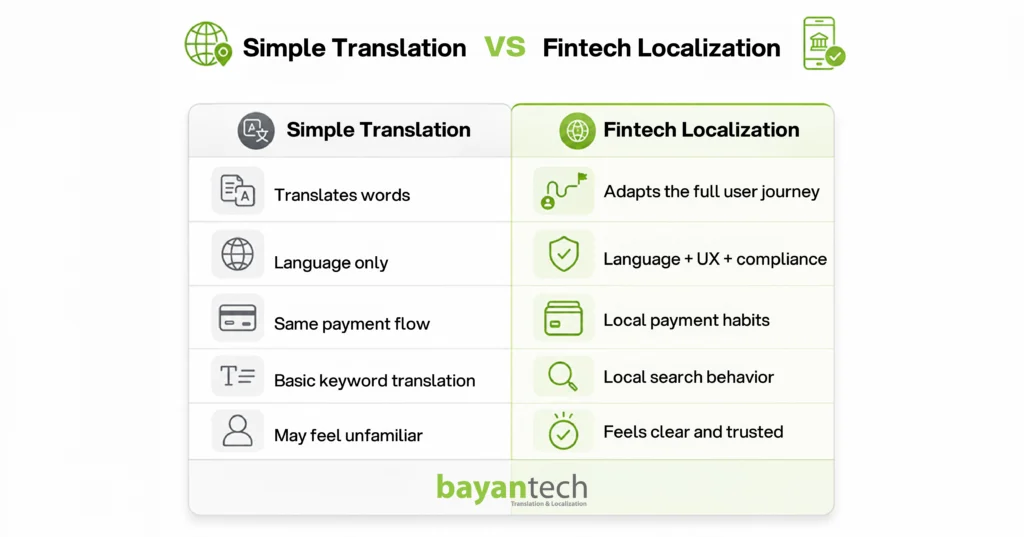
Many fintech brands start with financial translation services, but translation alone does not make a product ready for a new market.
Fintech localization has to consider how users bank, pay, verify their identity, read fees, understand risk, and search for financial products online. A button on the website might have been translated appropriately, but if the payment method, currency type, or next step is not familiar, the user will still hesitate.
Effective financial localization is linked to language localization, UX, compliance issues, local behavior, and search engine optimization. That is why localization platforms define fintech localization as adapting financial products in terms of language, culture, regulations, and user expectations, rather than mere translation.
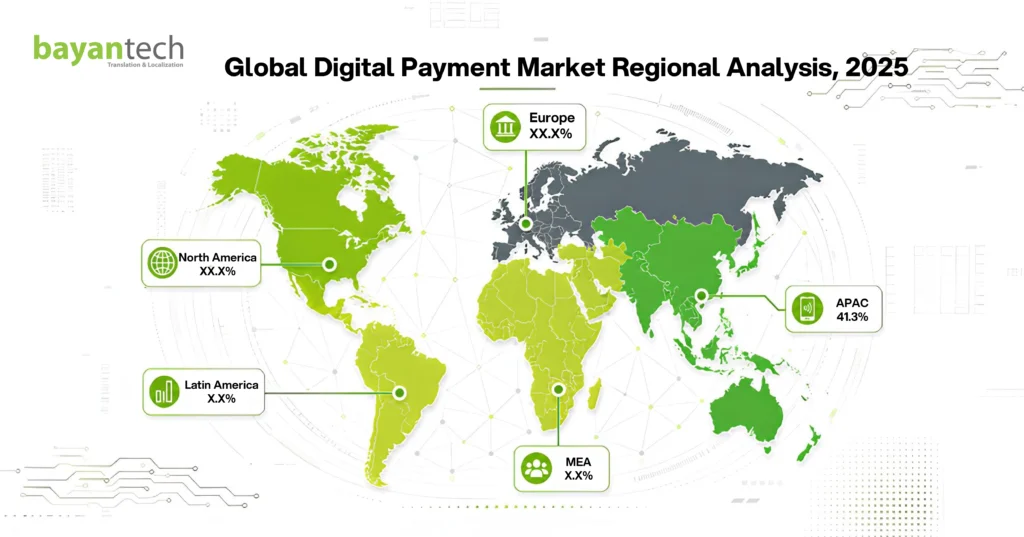
Why Money Habits and Digital Banking Content Change by Market
Money is personal. So when users open a banking app, make a payment, check fees, or review account details, they are not just reading content; they are deciding whether they trust the platform.
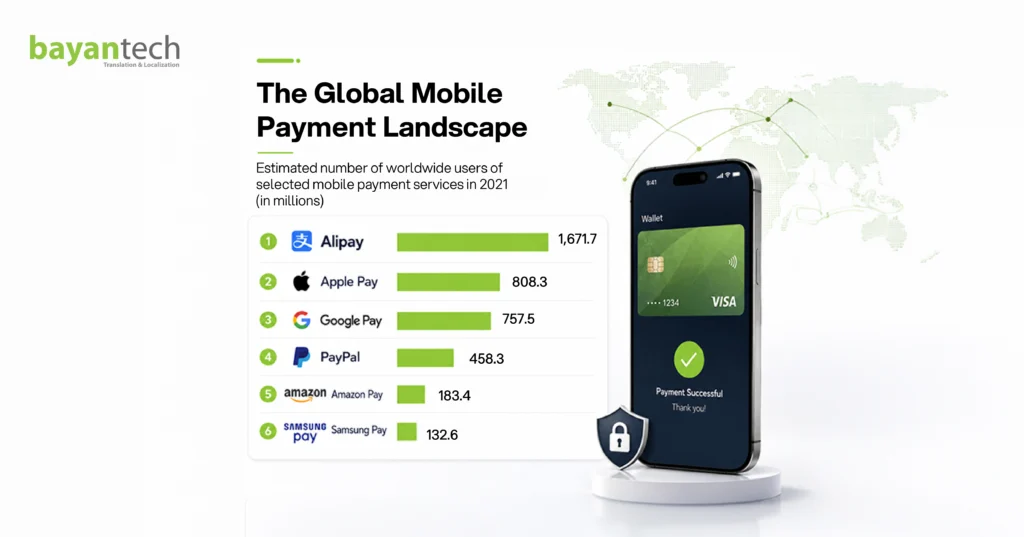
This is why banking localization, payment app localization, and digital banking translation require more attention than other types of localization. In one region, your target audience might favor bank transfers. In others, they might use debit/credit cards, wallets, QR codes, or specific payment methods.
Here are some factors that can influence user confidence:
- Currency display and formatting
- Fee and repayment language
- Date and number formatting
- Transaction confirmation phrases
- Account opening instructions
- Savings, loan, or credit terms
- Account statements and fee notices
This also applies to legal or compliance-related content. One poorly worded phrase can make your audience doubt what they’re agreeing to. Which is why companies active in the Fintech industry require financial compliance translation, not just financial translation or even localization.
Good fintech localization makes for an informative, consistent, and trustworthy experience.
What Goes Wrong Without Financial Compliance Translation
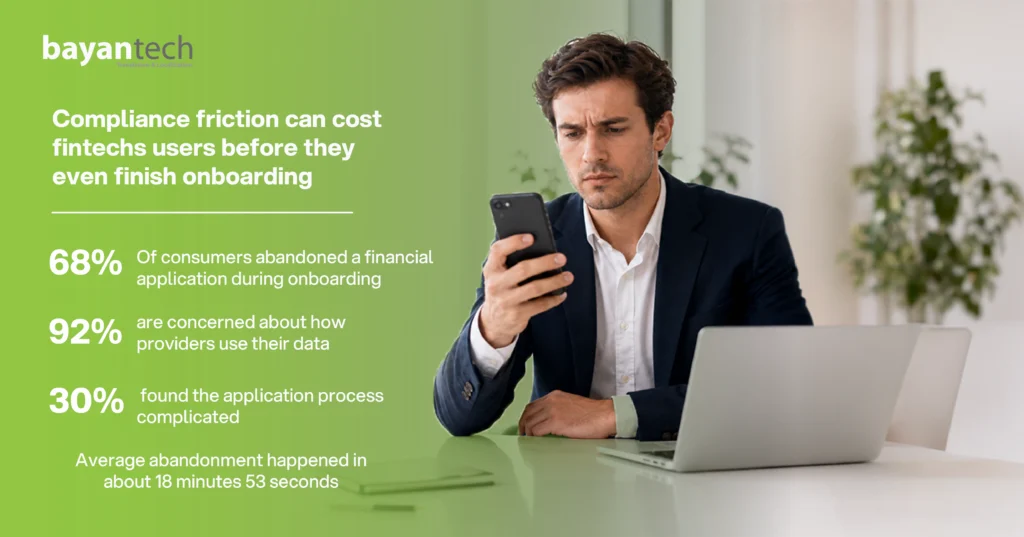
In fintech, compliance language is part of the user experience. It is not hidden in legal files only. Users see it when they open an account, verify their identity, accept terms, or respond to a security request.
That is why financial compliance translation has to be clear, consistent, and accurate. KYC translations should help users know what kind of documentation they are supposed to present and what it will be used for. AML translations must ensure consistency in risk warning and notifications.
A lack of clarity in the above content will result in:
- User dropping out of onboarding processes due to verification procedures.
- Vague language in consent agreements.
- Discrepancies in risk disclosures on different pages.
- More customer queries that would otherwise not arise.
- Exposure to compliance risks.
Financial Terminology Management Prevents Risky Inconsistency
Fintech users need the same term to mean the same thing everywhere. That sounds obvious, but it is easy to lose control when content is spread across the app, website, help center, legal pages, support replies, and marketing campaigns.
This makes financial terminology management crucial for fintechs. If the application uses “wallet”, the help center calls it an “account,” and the compliance section describes it as “stored balance,” there’s no way to guarantee that these terms are used interchangeably. This also goes for such pairs as transfer/remittance, fee/charge, checking/current account, and many others, based on the target audience.
Consistent terminology leads to a better user experience and increased credibility of the brand. Besides, it becomes much easier to perform translation QA since the reviewers can compare all approved terms against each other and not treat the content separately.
Machine Translation Post-Editing in Fintech: Useful, But Not for Everything
Automation can support fintech localization, but it should not be treated as a replacement for expert review.
Translation memory is beneficial in situations with repetitive content, such as pre-approved language, help center phrases, disclaimer phrases, and helpdesk content. Machine translation post-editing may also be effective with large volumes of lower-stakes content.
However, it is important to note that sensitive content requires a more rigorous process. AI-powered translation of fintech materials should not be performed without expert oversight in cases of regulatory disclosure, legal clauses, customer-facing financial statements, and high-stakes compliance content. It requires financial expertise, human oversight, and quality assurance.
The practical approach is simple: use technology where it improves consistency and speed, but keep expert translators and reviewers in control of content that affects trust, compliance, or user decisions.
The 6-Step Fintech Localization Workflow
Step 1 – Prioritize Content by Risk
The first priority should be the high-risk content, such as pages related to laws and regulations, privacy policies, know-your-customer information, terms of service, and other compliance documentation.
This way, fintech development teams can allocate resources wisely and provide Financial Translation Services and Regulatory Translation Services only when needed, avoiding additional delays for other projects.
Fintech app localization services will become much simpler as the team knows which content requires careful attention and expert translation and which can be handled faster.
Step 2 – Localize the User Experience Instead of the Words Only
For mobile banking localization and payment apps localization, the user experience is vital, not just the words used in the application.
A good software localization test includes the following points:
- Local currency and date format
- Numeric separator
- Names of payment methods
- Error messages
- Transaction status
- Button length and screen design
It is essential to make sure that the translation fits the fintech product correctly, which means UI localization will play an important role here.
Step 3 – Integrate Terminology, Translation Memory, and QA into the Process
Fintech texts must have consistent wording within the app, the website, the help center, legal pages, and customer support communications. Financial terminology management allows companies to agree on terminology that will be used before any translations begin.
A glossary or termbase ensures consistent use of key terms. Translation memory facilitates the repetition of approved sentences. Translation quality assurance ensures that terminology is consistently used throughout all content types.
This streamlines the process and avoids any mistakes in terminology.
Step 4 – Ensure the Quality of KYC, AML, and Customer Support Translations
Customers often start building trust during onboarding. When translating KYC documentation, you must inform users about the required documents, explain why they are needed, and detail what steps will be taken after submitting the data.
The same is true when translating AML policies. In addition to that, your texts must not cause any misunderstandings or ambiguity. The same applies to digital banking translation. The consequences of a blocked account, failed payment, or transaction delay might turn into a serious problem for the user if your wording is not clear enough.
Step 5 – Use Multimedia to Clarify Complicated Financial Products
Some financial products will benefit from being explained using short video guides, tutorial videos, or onboarding videos. Fintech video localization services provide users with the opportunity to better understand how to go through verification, send money, check fees, and use different credit and investment options.
Subtitling the financial content will make it much simpler for users who learn how to perform new transactions or processes.
Step 6 – Integrate Fintech Content Translation and Multilingual SEO
Fintech users have specific language patterns in each of the target markets. A literal translation of keywords would fail to address local search intent regarding apps, banking, transfers, wallet services, loans, and investments.
For this reason, multilingual SEO, international SEO, and localized keyword research must be integrated into the process. Market-specific terms must be used on localized landing pages rather than translated keywords through Website Localization Services.
Request a Fintech Localization Readiness Audit
Thinking of bringing your fintech application to new regions or markets? You should begin with a localization readiness assessment prior to starting any translation work. Our localization services for fintech apps will assist you in analyzing your app UI, KYC/AML policies, financial terms, compliance sections, multilingual SEO, and localization testing.
Get a fintech localization readiness audit.