
People often think of one tool doing one job when they hear the word “translation technology.” But that’s not how localization works when content starts moving between teams, markets, and release cycles.
In practice, translation technology is a connected system. It helps teams manage multilingual content from source to final delivery without losing consistency, speed, or control. And that’s important because global content doesn’t usually fail in a big way. It usually breaks in small, annoying, and costly ways at first.
Feature names may change in the product but not in the help center. Translated pages can target incorrect search terms, placeholders may break, and a release can cause localized interfaces to misfit the layout.
That is why the real question is not “Which tool should we buy?” It is “What stack do we need to keep quality, speed, and consistency under control?”
What Translation Technology Actually Includes
Translation technology is the set of tools and workflows used to create, manage, check, and publish multilingual content.
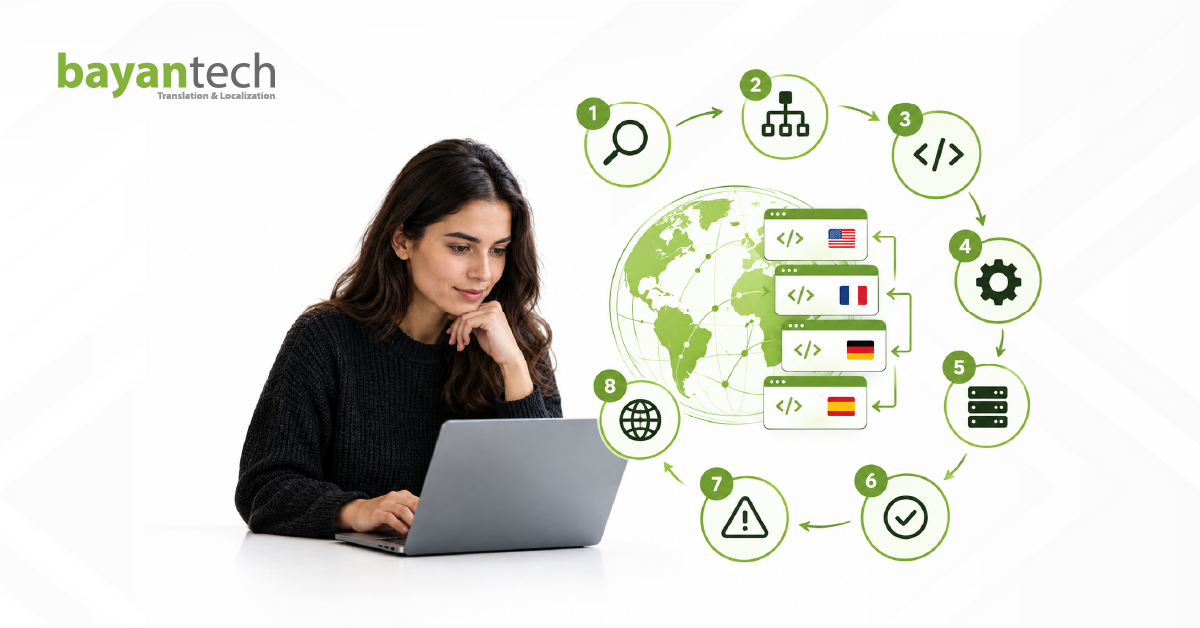
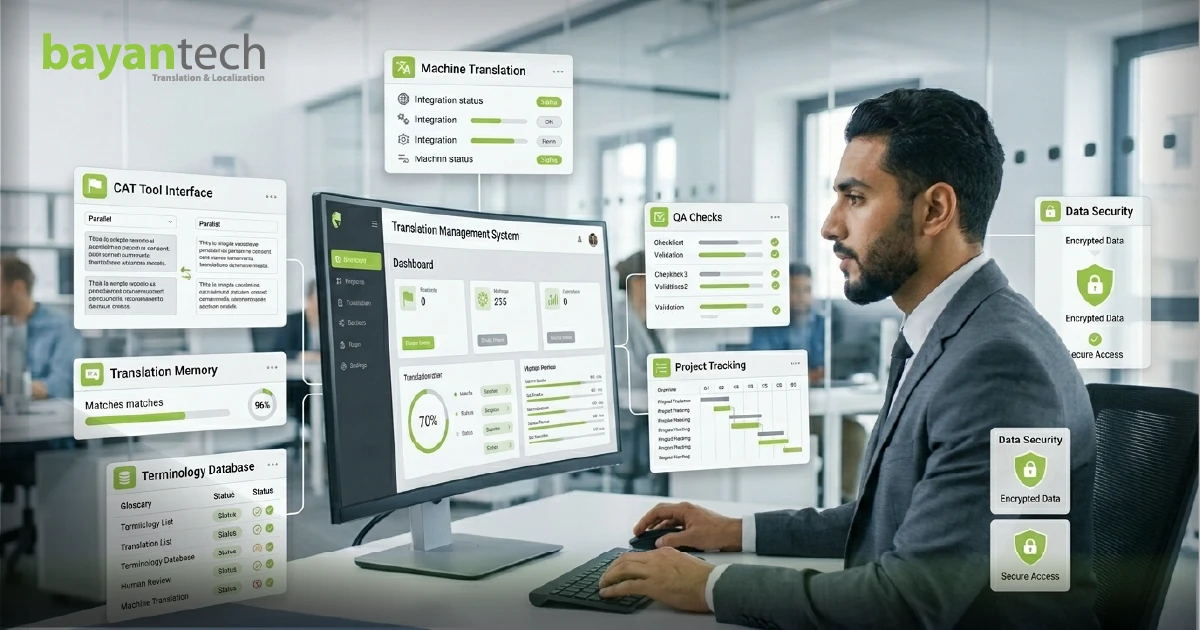
In practice, most teams need a few connected layers:
- a translation management system (TMS) to organize work
- CAT Tools to support translators during production
- a termbase to keep approved terminology consistent
- machine translation (MT) with a review path where it makes sense
- automated QA and linguistic review
- file preparation and localization testing
- an SEO workflow for multilingual pages
Each layer solves a different problem. That is why buying one tool rarely fixes the whole process.
Why Translation Problems Become Workflow Problems
Translation challenges often look linguistic on the surface, but the real problem is usually workflow.
At first, many teams manage with spreadsheets, email threads, and shared folders. That can work for a while. Then the business grows. Product ships more often. Marketing needs regional landing pages. Support content keeps changing. More languages are added. And the same message starts living in several systems at once.
This is where things drift.
Reuse may exist in theory, but it diminishes when source content changes unpredictably or is split inconsistently across projects. Good reviewers can help, but late reviews won’t catch broken tags, incorrect numbers, or layout issues. Clear brand language in English doesn’t guarantee clarity in other languages without proper control.
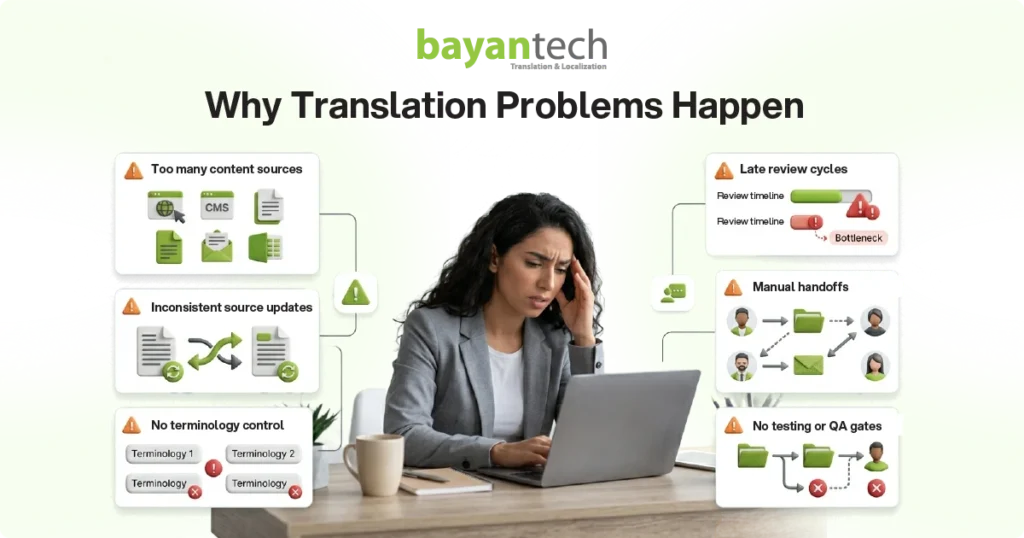
So the issue is no longer “translation quality” alone. It becomes release quality, content governance, and market readiness.
The Translation Management System (TMS): The Control Center
A translation management system (TMS) is the central hub that routes work, stores assets, tracks progress, and applies workflow rules.
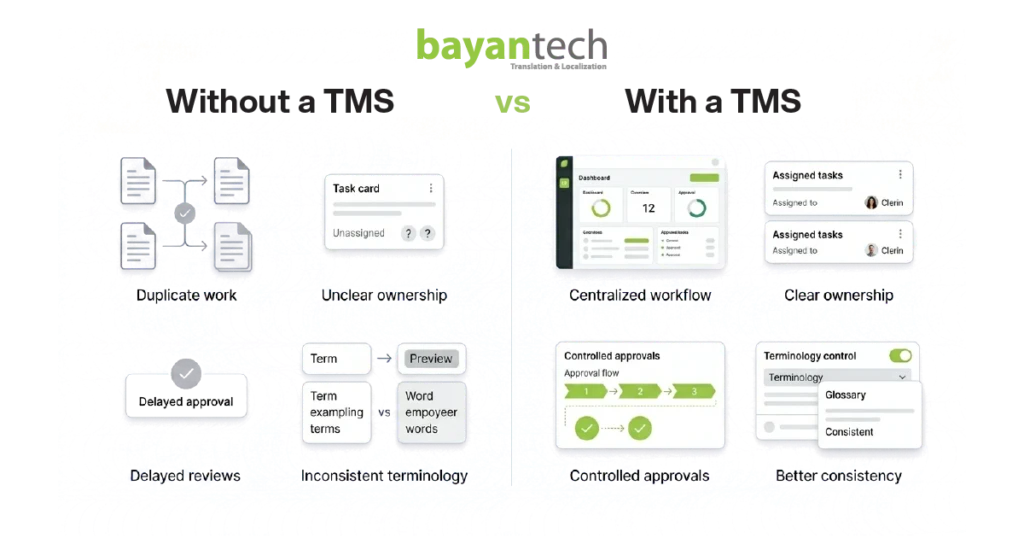
Why does that matter? Because without one system of record, every project starts inventing its own process. That leads to duplicated work, unclear ownership, and inconsistent review.
A strong TMS helps teams:
- connect content sources such as a CMS, app strings, or documentation
- assign jobs to the right people automatically
- keep glossaries, style guides, and past decisions in one place
- apply approval steps before delivery
- track versions, permissions, and reporting more clearly
In simple terms, a TMS prevents localization from becoming a chain of disconnected tasks.
Where Productivity Really Comes From
A lot of teams assume speed comes from machine translation first. Usually, it starts earlier than that.
The biggest productivity gains often come from structured reuse. That is where Translation Memory becomes valuable. It stores approved translations and suggests them again when the same or similar content appears.
But reuse only works when the source is stable. If identical content is split differently, renamed without reason, or rewritten inconsistently, reuse drops and cost goes up.
This is exactly why CAT Tools matter. They give translators a structured environment where segmentation, terminology, QA prompts, and translation memory all work together.
That prevents a common failure: content that looks similar to people, but not to the system. And when the system cannot recognize reuse, your team ends up paying twice for the same idea.

Terminology Control Stops Avoidable Confusion
Terminology management often sounds like a small detail. It is not.
A termbase keeps approved terms, forbidden variants, short definitions, and usage context in one controlled place. That matters because terminology drift spreads quickly. A product label appears one way in the UI, another way in support content, and a third way in marketing copy. The words may sound close, but the experience feels less reliable.
A strong terminology process should define:
- the approved term
- variants to avoid
- a short definition
- example context
- who owns the final decision
This prevents repeated corrections, protects brand clarity, and reduces the back-and-forth that slows down every release.
Where Machine Translation Helps — and Where it Does Not
Machine translation (MT) is useful, but only when teams are honest about what it can and cannot do.
It helps with high-volume, repetitive, lower-risk content. It is far less reliable for nuanced brand messaging, legal language, medical content, or anything where tone and precision carry serious risk.
That is why Machine Translation Post-Editing matters. It gives MT a controlled review path instead of treating raw output as publish-ready.
A grounded MT workflow should answer three questions:
- which content types are safe for MT
- which content types require human-first translation
- how quality will be evaluated before publishing
Some teams also use quality estimation or structured evaluation models like MQM to make review decisions more consistent rather than relying on “this seems fine.” MQM describes itself as a framework for analytic translation quality evaluation, and it is widely used to classify and measure errors in a more structured way.
The point is not to automate everything. The point is to decide where automation helps, where human review is required, and how quality will be checked before release.
QA, Engineering, and Testing: The Layers That Prevent Release Bugs
This is the layer many teams notice only after something goes wrong.
Automated QA checks catch preventable issues such as inconsistent terms, broken tags, and incorrect numbers before customers ever see them. That removes basic defects early.
Localization engineering handles file preparation, string handling, and format safety. This is where standards like XLIFF matter. OASIS defines XLIFF as a format used to store localizable data and carry it between steps in the localization process while supporting interoperability between tools.
Then comes testing.
Localization testing confirms that translated content actually works inside the final product or website. It catches layout overflow, broken flows, missing text, and right-to-left interface issues that are invisible in spreadsheets.
Each layer prevents a different kind of failure:
- QA prevents tag, number, and consistency defects
- engineering prevents broken builds and damaged file structure
- testing prevents UI regressions and release-time surprises
Translation Technology Also Affects SEO
Many teams still treat multilingual SEO as something that happens after translation. That is a mistake.
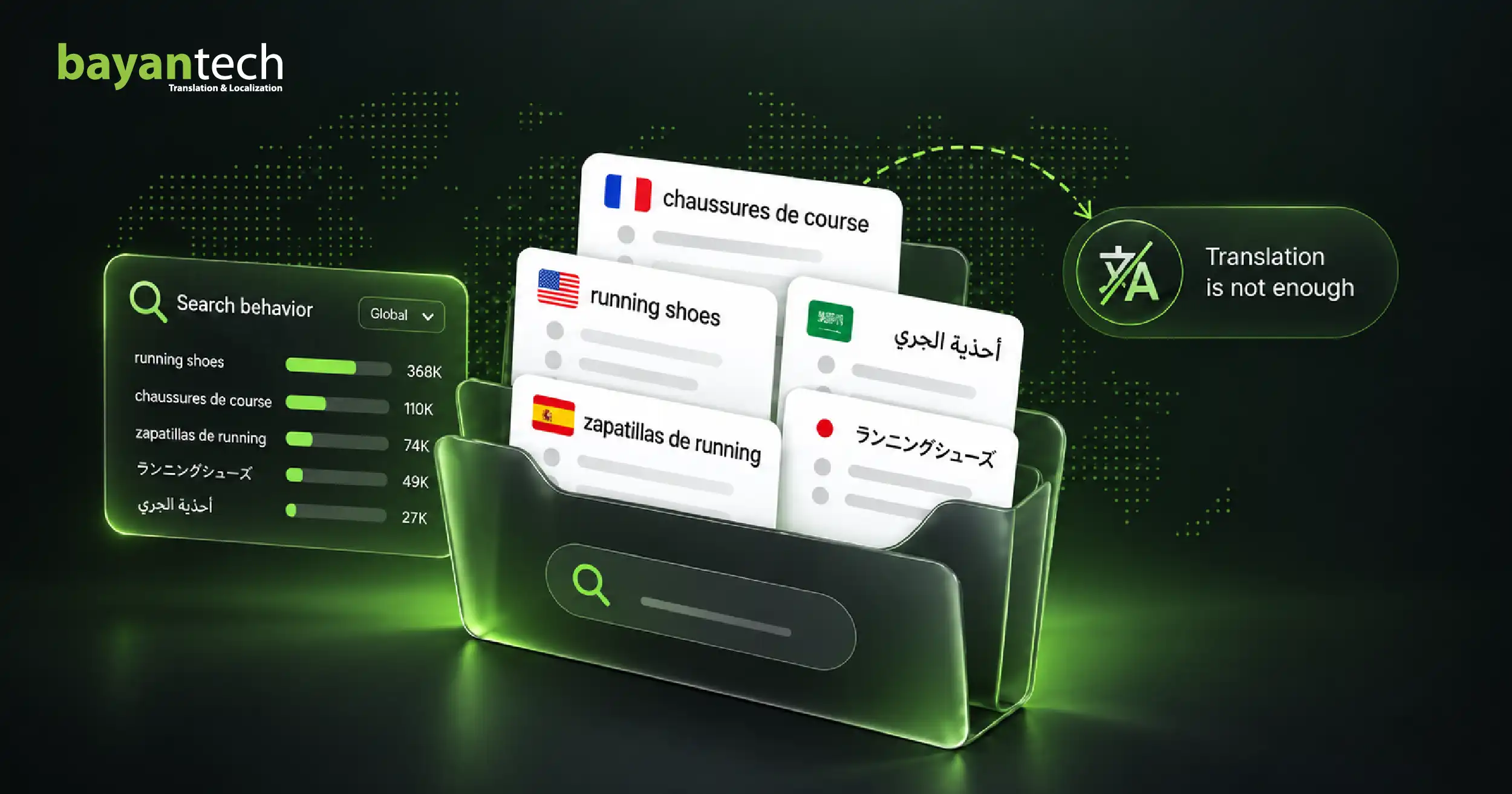
SEO localization works best when localized keyword choices, metadata, page structure, and regional targeting are built into the workflow early. Otherwise, pages may be translated correctly but aimed at the wrong search behavior.
Google’s Search Central documentation says hreflang helps Google understand localized variations of content, while Google does not use hreflang itself to detect page language. That distinction matters because many teams assume technical tagging alone solves multilingual targeting. It does not.
SEO localization works best when language decisions, regional targeting, and content structure are planned before translation starts, not after pages are already live.
What a Practical Stack Should Do
The best translation stack is not the one with the most tools. It is the one that removes the most failure points.
At minimum, most growing teams need:
- a translation management system (TMS)
- reuse through translation memory and CAT Tools
- terminology control
- a review path for MT
- automated QA
- engineering support for file handling
- testing for release-critical content
- Localization Tools that support multilingual SEO and publishing workflows
That is what turns localization from a manual effort into a controlled system.
And that is the real value of translation technology. It is not just faster translation. It is safer scaling.
Turn Translation Technology Into a Working Localization System
Choosing translation technology is only part of the equation. The real value comes from building a workflow that fits your content, your release pace, and your quality requirements.
At bayantech, translation technology is applied as part of a managed localization process that helps global teams reduce rework, improve consistency, and move faster across languages and markets.
From translation memory and terminology control to QA, multilingual SEO, and release-ready workflows, the focus stays on building a system that works in practice, not just on paper.
Get in touch with bayantech to explore a translation technology approach that fits your content and growth goals.