

Have you ever typed “translator vs interpreter” into a Google search box just to check if there’s a real difference between the two? Yes, the confusion is real.
The terms “translator” and “interpreter” have become synonyms, although they serve totally different purposes. Get this wrong, and you might end up requesting the wrong service for your project.
Let’s clear up the confusion to avoid this mistake.
Translator vs Interpreter: The Core Difference
The key translator and interpreter difference lies in two aspects.
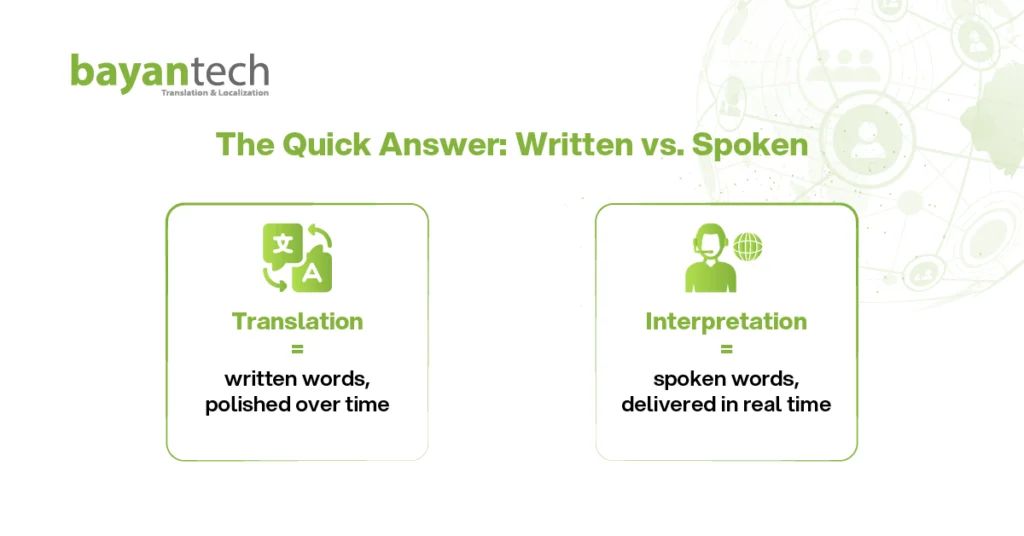
First, the format. Translation involves written texts such as contracts, websites, reports, certifications, and marketing copies. And since this text appears on paper (or screen), there is enough time for the translator to do their research and produce flawless translation.
Second, the timing. An interpreter translates oral or signed language, such as conversations, speeches, negotiations, and medical consultations. And all this is done without a single pause or second thoughts.
This is why the question translation vs interpreting implies a much larger difference than just the use of different words.
When to Choose Translation Services
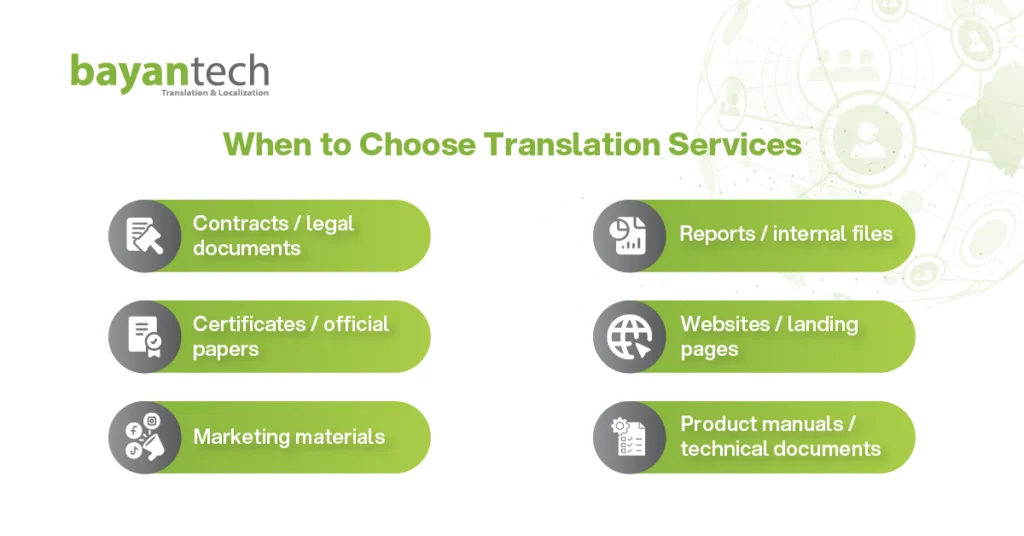
Need to convert documents, websites, or marketing materials into another language? That’s where translation services come in.
Common use cases include:
- Document translation for contracts, reports, or internal files
- Certified translation for legal papers, academic records, or immigration documents (like those handled in legal translation services)
- Website translation to make your digital content accessible across markets
Because translators work with text, they can leverage computer-assisted translation tools, glossaries, and quality checks to ensure consistency that is especially important for technical, medical, or brand-sensitive content. But always remember that even when machine translation speeds up the first draft, human expertise remains essential for accuracy and nuance.
When to Choose Interpreting Services
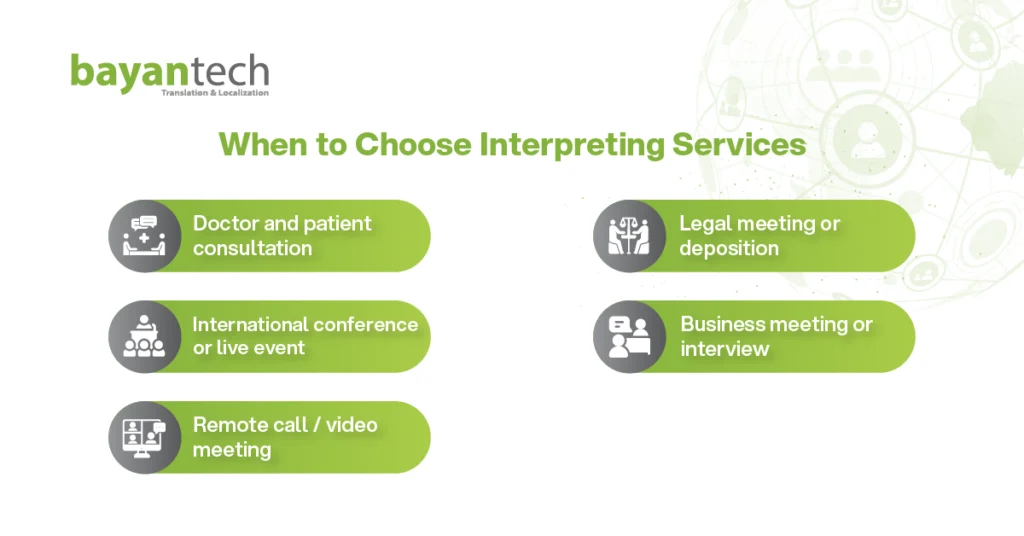
Need people to understand each other right now, across languages? That’s the moment for interpreting services.
That may happen when:
- A doctor and patient are discussing symptoms, so medical interpreting is used
- A legal deposition with non-English speakers makes legal interpreting a must
- An international conference with live speakers, conference interpreting will be the right choice
Again, interpreting is not only one kind of service but has several forms of interpreting depending on the need and scenario. For example;
Simultaneous interpreting: Interpreter speaks while the presenter continues (ideal for large events)
Consecutive interpreting: Speaker pauses; interpreter delivers the message (great for meetings or interviews)
Remote interpreting or video remote interpreting: Live interpreting via telephone or video where the interpreter cannot be physically present
With no script, edits, just pure clarity of mind, all through a well-prepared and highly knowledgeable interpreter.
Quick Reference: Which Service Fits Your Need?
| Situation | You Need | Why |
| Translating a contract or manual | Translation | Written content needs accuracy, review, and formatting |
| Supporting a live meeting or call | Interpreting | Real-time conversation requires instant language conversion |
| Launching a website in a new market | Translation + Localization | Content must be linguistically and culturally adapted |
| Assisting a patient during a consultation | Medical Interpreting | Clear, empathetic, real-time communication is critical |
| Preparing birth certificates for official use | Certified Translation | Documents require formal validation for legal acceptance |
| Hosting a global virtual summit | Remote + Simultaneous Interpreting | Attendees need to follow speakers without delay |
Tools and Workflow: Behind The Scenes of Both Services
Translation and interpretation also differ when it comes to the process.
When it comes to translating, a person can use the help of computer-aided translation (CAT Tools), glossaries, term bases, and translation memories to ensure consistency throughout all written texts. When machine translation is possible, human editing is a must for technical, medical, legal, and brand-related texts.
An interpreter does not have enough time during live conversations to refer to any kind of tool. Although interpreters may prepare for the conversation before it starts, once they start talking, they must be quick to respond.
At the end, it is subject matter expertise that guarantees accuracy in translation and interpretation.
Why Expertise Matters More Than Just “Knowing Two Languages”
Here’s another confusion need clarification. Knowing two languages doesn’t necessarily mean you can interpret or translate.
A professional translator working on financial reports needs to understand accounting terms, regulatory language, and regional conventions. A professional interpreter in a courtroom must grasp legal procedure, tone, and intent, while keeping pace with fast-moving dialogue.
That’s where subject matter expertise becomes non-negotiable. Whether it’s healthcare, law, tech, or manufacturing, the right language professional doesn’t just translate words; they protect meaning, reduce risk, and build trust.
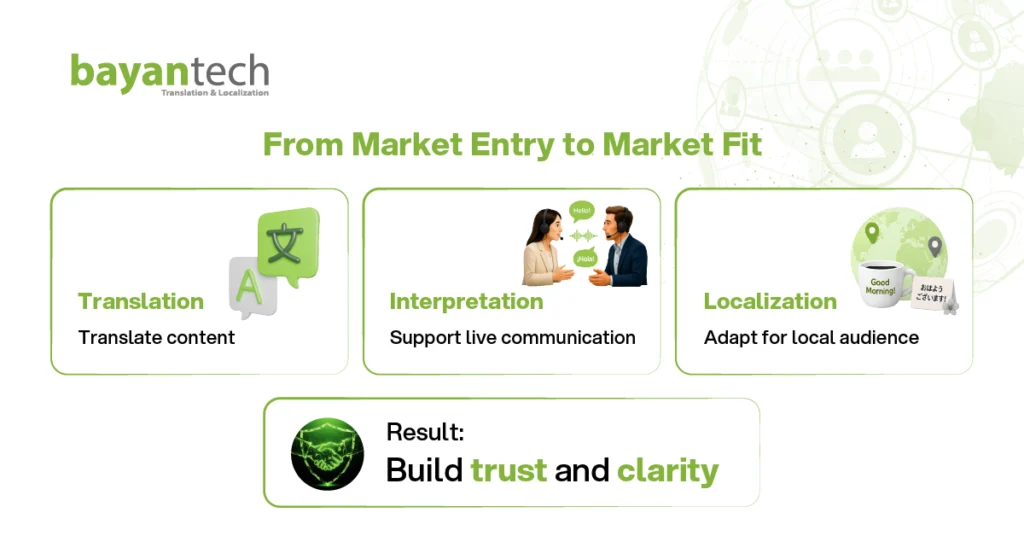
How Translation, Interpreting, and Localization Work Together
For businesses going global, these services aren’t siloed—they’re strategic partners.
Imagine launching in a new market:
- You’ll need website translation to localize your digital presence
- Interpreting services to support sales calls or partner negotiations
- Localization services to adapt messaging, UX, and cultural references
Together, they create seamless multilingual communication that fuels smarter international business communication. It’s not about picking one; it’s about building the right mix for your goals.
The Business Impact: Clarity Drives Results
Choosing the right professional language services isn’t just about accuracy; it’s about outcomes.
It affects how clearly people understand your business, how quickly work moves, and how much trust your message builds.
Language gaps can create real business friction. DeepL’s 2025 research found that 69% of U.S. enterprise leaders face unexpected daily operational challenges because of language barriers, while 61% say language-related challenges have delayed or limited global expansion plans.
That is why the right mix of translation, interpreting, and localization helps businesses:
- Minimizing confusion in legal or regulatory documents
- Reducing friction during meetings involving international teams or partners
- Increased credibility since everyone feels understood in their native tongue
- Quick market penetration through culturally relevant material
Clear communication isn’t a nice-to-have. It’s how you scale with confidence and build trust.
One Last Quick Decision: Translator or Interpreter?
Still unsure which service fits your project? Start with one simple question:
Is your content written, or is the communication happening live?
- If written (documents, websites, manuals): You need a translator.
- If live (meetings, calls, events): You need an interpreter.
When in doubt, share your project details. The right professional language services partner can help you choose and deliver exactly what your audience needs.
Because at the end of the day, it’s not just about words. It’s about making sure your message lands clearly, confidently, and in the right language.
Get Help Choosing the Right Language Service
Global content needs accurate decisions. At bayanTech, we help you move forward without hesitation, matching your goals to the right translation services or interpreting services.
Whether you’re launching in a new market, hosting an international event, or finalizing legal documents, our professional language services team ensures your message resonates clearly across languages and cultures.
Let’s build your multilingual strategy together.